
Afghanistan launches airstrikes inside Pakistan as cross-border conflict deepens
Afghanistan's Taliban government confirmed its air force struck alleged Islamic State positions in Pakistan's Balochistan and Khyber Pakhtunkhwa provinces on Tuesday, the latest exchange in a cross-border conflict that has killed hundreds of civilians since February and defied repeated diplomatic ef
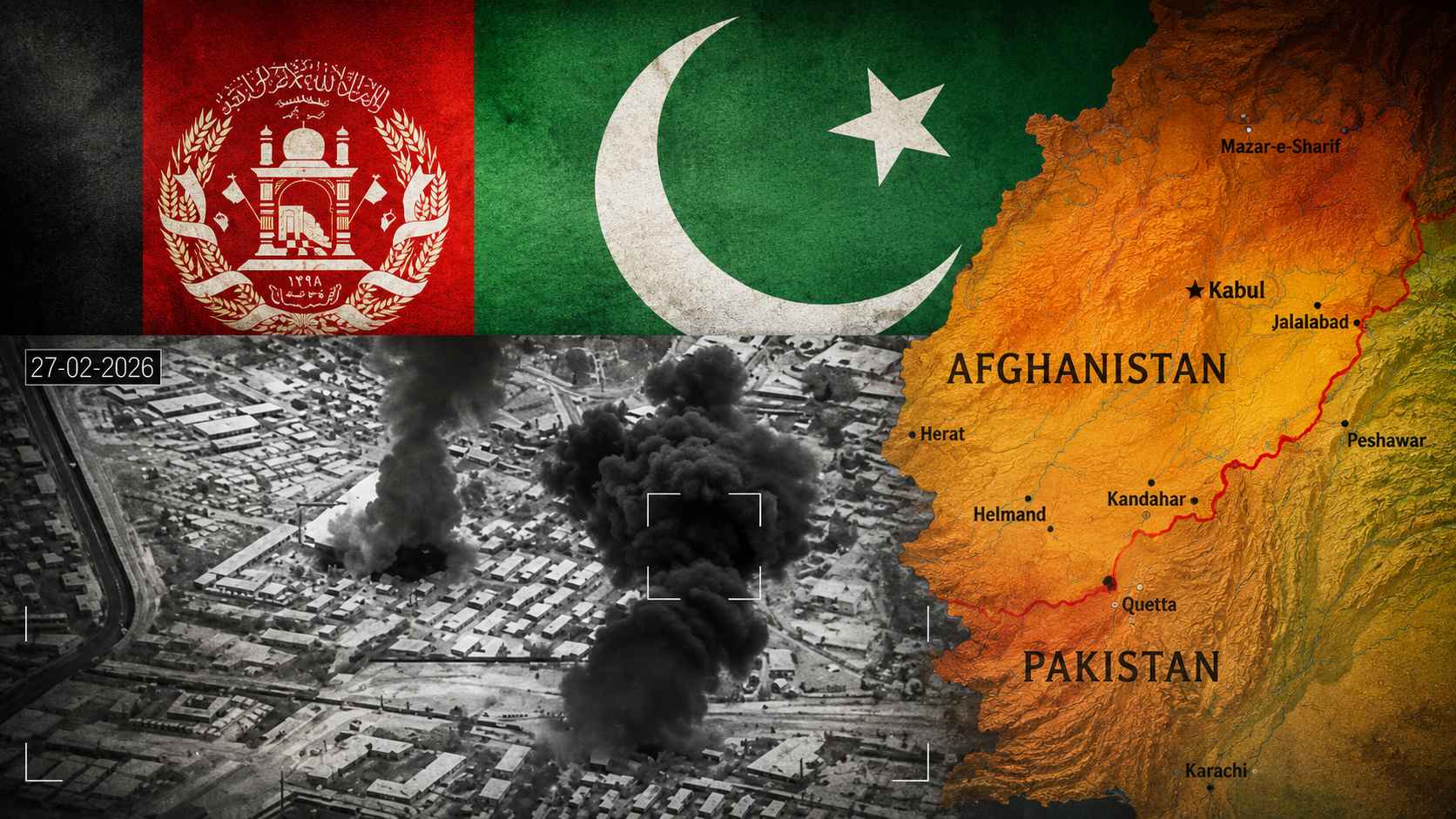
Afghanistan's Taliban government confirmed on Wednesday 1 July that its air force had carried out strikes on alleged Islamic State positions inside Pakistan's Balochistan and Khyber Pakhtunkhwa provinces, in what it described as a retaliatory operation following days of deadly Pakistani cross-border strikes.
Afghanistan's Ministry of Defence said its forces targeted what it described as joint centres used by Islamic State Khorasan Province (ISIS-K) militants and affiliated networks to plan sabotage operations and attacks against civilians inside Afghanistan. Among the locations named were a facility in the Saranan area of Pishin district in Balochistan and sites in the Shah Salim Valley of Chitral and the Kambar Khel area of Khyber Pakhtunkhwa.
The ministry said "the air forces of the Afghan Ministry of Defence tonight conducted airstrikes on an ISIS joint centre and elements of evil and corruption in the Saranan area of Pushin district, Balochistan province." It warned that any location posing a threat to Afghanistan's security would continue to be targeted.
Pakistan rejected the claims. Its Ministry of Information and Broadcasting described the Afghan account as false and said no evidence — including satellite imagery, flight data, ground footage or eyewitness accounts — had been provided to substantiate it. No independent verification of the Afghan strikes was possible at the time of filing.
The trigger: strikes on 29 June
The Afghan operation followed Pakistani air and ground strikes late on Sunday 29 June. Pakistani forces' ground operations and strikes killed at least 36 civilians in Afghanistan overnight and wounded more than 160 others, Afghan officials said on Monday, as tensions between the neighbours escalated.
Security forces carried out a ground operation along the border late Sunday, followed by strikes against militant hideouts and safe havens, killing 29 fighters, Pakistan's Information Minister Attaullah Tarar said. Pakistan said the operation was launched in retaliation for militant attacks across Pakistan, including an assault on the Rangers' regional headquarters in Karachi. Jamaat-ul-Ahrar claimed responsibility for the Karachi attack.
Hamdullah Fitrat, the deputy spokesperson for Afghanistan's Taliban government, said Pakistani forces targeted a home in Paktia's Chamkani district, killing an older man and a child; when residents gathered to rescue people, the area was struck again, killing 28 villagers and wounding 158. Six people, mostly women and children, were killed in a village in Giyan district, Paktika province, when another home was struck.
Chief Taliban spokesman Zabihullah Mujahid told CBS News the figures provided by his deputy were correct, but CBS News could not independently verify the claims from Pakistani or Afghan officials.
On Monday, Afghanistan and Pakistan summoned each other's top diplomats to protest the attacks. Zia Ahmad Takal, the Afghanistan Foreign Ministry's deputy spokesperson, accused Islamabad of repeatedly blaming Afghanistan for security incidents inside Pakistan without "credible evidence."
A conflict that began in February
The war began in late February 2026 between Afghanistan and Pakistan following Pakistani airstrikes on militant targets in eastern Afghanistan. Pakistan said the strikes targeted militant camps belonging to the Pakistani Taliban (TTP) and the Islamic State – Khorasan Province (ISIS-K), in retaliation for recent cross-border attacks in Pakistan, while Afghan authorities and UNAMA reported casualties, though with different figures.
The initial strikes escalated into a broader cross-border confrontation involving airstrikes, artillery exchanges, drone incidents, and clashes at multiple points along the border. On 26 February, Taliban forces launched retaliatory attacks on Pakistani military positions and border outposts, describing them as a calculated response. Pakistan's defence minister Khawaja Asif announced the start of an "open war" between the two countries.
At least 372 Afghan civilians were killed and 397 injured as a result of cross-border violence between Taliban forces and the Pakistani military in the first three months of 2026 alone, the United Nations has reported, with more than half the deaths attributed to air raids on a drug rehabilitation facility in Kabul.
The high proportion of men in the casualty count was attributed to the 16 March strikes on a Kabul drug treatment hospital, which admitted only male patients. At least 269 people were killed and 122 wounded in the attack, although "the real figure may be significantly higher."
Diplomacy and what comes next
On 8 April, the Taliban-run Afghan foreign ministry stated that talks with Pakistani officials in China had concluded and described the discussions as constructive. Chinese officials said that representatives of Pakistan and the Taliban had agreed to work toward an early easing of tensions and to avoid actions that could escalate the situation.
Since ceasefire talks took place in China in early April, Pakistan and Afghanistan had reportedly committed to avoiding any escalation. Incidents had decreased but had not stopped entirely.
Ibraheem Bahiss, an Afghanistan analyst at the International Crisis Group, described Pakistan's posture as maximum pressure built on an unproven premise. "The underlying assumption is that a Taliban crackdown will produce a reduction in violence inside Pakistan," he told Al Jazeera. "Whether that premise is correct, valid, and sound is genuinely up for debate."
Diplomatic efforts, including talks facilitated by China, have so far failed to secure a lasting ceasefire, raising fears of further escalation along the volatile Afghanistan-Pakistan border.
Pakistan accuses Afghanistan's Taliban government of harbouring militants who carry out deadly attacks inside Pakistan, especially the TTP. Kabul denies the charge.
India's Ministry of External Affairs condemned the Pakistani strikes on Afghan territory, calling them "a direct threat to regional peace and stability" and describing the pattern of behaviour as an attempt to "externalise internal failures through desperate acts of violence beyond its borders." Islamabad had not publicly responded to that statement at the time of filing.
This is a developing story.