
Algeria heads to the polls as fears of record-low turnout overshadow legislative vote
Algerians vote on Thursday 2 July to elect 407 members of parliament in the first legislative contest since President Tebboune's re-election, with the central question being whether citizens will show up at all after the 2021 poll recorded a 23 percent turnout — the lowest since independence.
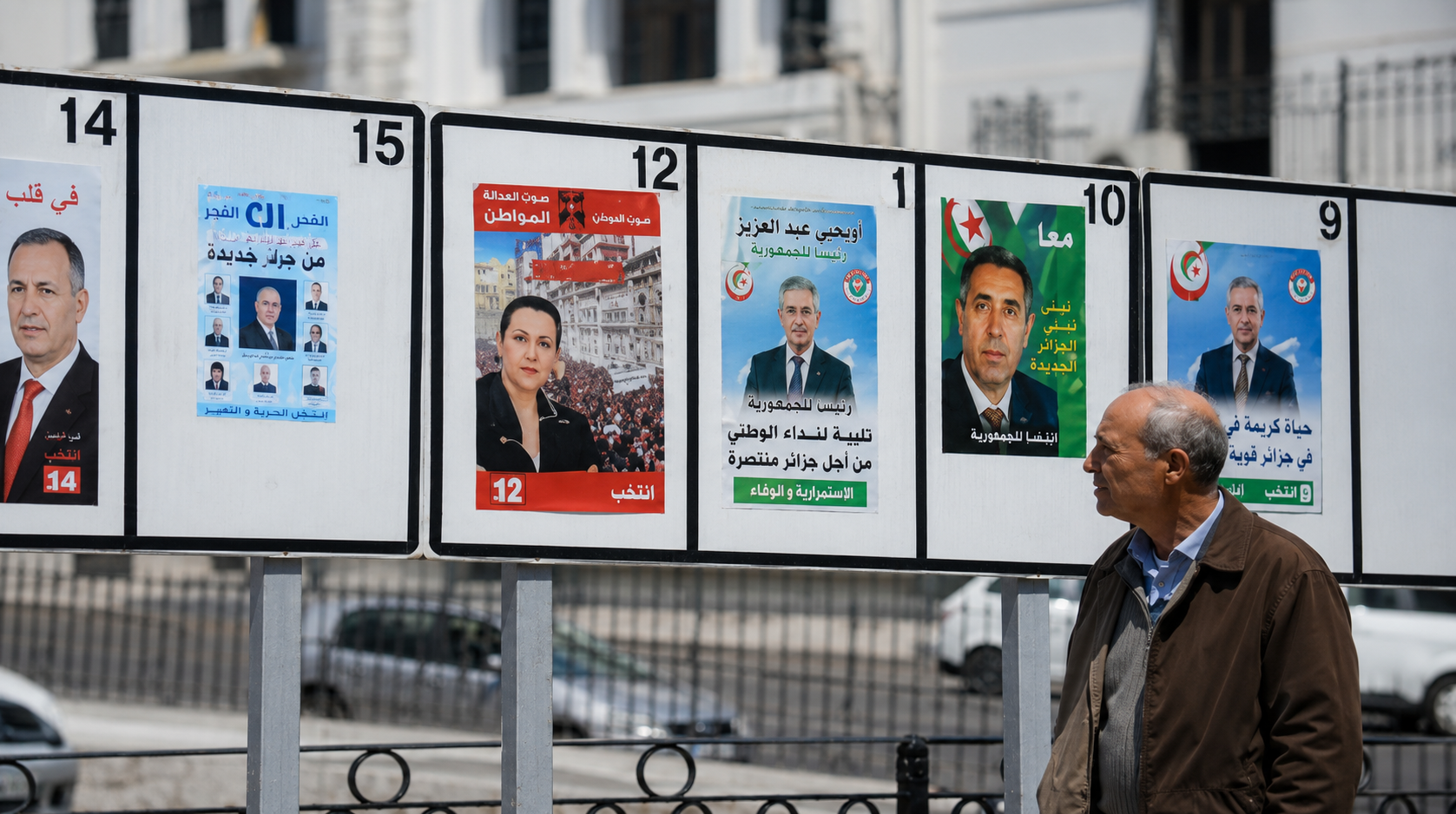
Algerians vote on Thursday 2 July to elect the 407 members of the People's National Assembly (APN), the country's lower house of parliament, in a ballot widely regarded as a test of public engagement rather than a contest between competing political forces.
More than 24.7 million registered voters, including around 854,000 living abroad, are eligible to take part, according to the Independent National Authority of Elections (ANIE). Turnout is the dominant concern. The 2021 parliament was elected with just 23 percent of the vote — the lowest in any legislative election since Algeria gained independence in 1962 — and analysts expect a similarly low figure on Thursday, if not lower.
"Low turnout was already an issue before 2019, but since the Hirak we are witnessing catastrophic numbers," said Abdelmoumene Khelil, former secretary-general of the Algerian League for the Defence of Human Rights (LADDH). The organisation, founded in 1985, says it was effectively forced to cease operations in 2023 alongside several other civil society groups. During the same period, hundreds of people were arrested for participating in demonstrations or expressing dissent online.
An Algerian official told Middle East Eye that a result above 35 percent would be presented as a sign of political normalisation after the Hirak upheaval, while a figure below 20 percent would constitute what the official called "a scathing rebuke".
The Hirak shadow
The vote comes seven years after the Hirak protest movement, which began in February 2019 and forced the resignation of longtime President Abdelaziz Bouteflika. That uprising ushered in the presidency of Abdelmadjid Tebboune, who has framed the election as part of building a "new Algeria". Critics, however, argue that executive power remains dominant, parliament plays a limited legislative role, and opposition activity is constrained by legal and political pressure. Tebboune has rejected that characterisation, arguing reforms have strengthened institutions and preserved stability.
Human rights groups, including Amnesty International and Human Rights Watch, have raised concerns over restrictions on opposition activity, independent media and civil society. Algerian authorities say reforms have expanded political participation while safeguarding stability.
Candidate exclusions and the new electoral law
The pre-election period was marked by controversy over who could stand. According to Karim Khalfane, interim head of ANIE, more than 3,700 prospective candidates were barred from running while around 10,000 were approved. Authorities said many of those excluded were connected to business interests or what the law describes as "suspicious activities". The legal basis was Article 200 of Algeria's electoral law, introduced under amendments adopted in April 2026 officially aimed at preventing money from influencing elections; critics argued its broad wording granted authorities wide discretion over who could stand.
Several activists linked to the Hirak movement have also faced prosecution or restrictions since 2019, including Karim Tabbou, a prominent opposition figure repeatedly arrested and a vocal critic of what he describes as shrinking political space.
Observers also noted the irony that the outgoing parliament passed legislation that ultimately barred many of its own members from standing again.
Opposition returns — under pressure
Several parties that boycotted the 2021 election have returned to the contest this time, among them the Socialist Forces Front (FFS), which is fielding 30 candidate lists in an attempt to regain parliamentary representation. The FFS is joined by the Rally for Culture and Democracy (RCD) and the Workers' Party (PT). Opposition figures and analysts say the return reflects, in part, a new provision in Algeria's party law that allows courts to dissolve any political formation that fails to field candidates in two consecutive national elections. Critics describe the provision as coerced participation.
The governing National Liberation Front (FLN), which held 105 of 407 seats in the outgoing parliament according to Al Jazeera's reporting, and its pro-government ally the National Democratic Rally (RND), face competition from those opposition parties as well as the Movement of Society for Peace (MSP) and a range of nationalist, Islamist and independent lists.
Who might win, and what it means
With no independent polling institutes operating in Algeria, seat projections are limited. Nouri Dris, a sociology professor at the University of Sétif, said the ruling establishment was likely to return the FLN to a dominant position, while parties prominent in the immediate post-2019 period — including the RND and El Bina — appeared to be losing ground.
Voters will choose under an open-list proportional representation system across 77 constituencies, covering Algeria's 58 provinces and eight diaspora electoral zones. North America and Latin America have been separated into their own diaspora constituency for the first time under Executive Decree No. 26-165 of 3 May 2026, a change announced by Algerian consular authorities.
Some commentators pointed to the difficulty of mobilising voters during the summer holiday period. Others argued the problem ran deeper: parliament is widely seen in Algeria as a rubber stamp for executive decisions, generating little public appetite for participating in its election. Results are expected in the days following Thursday's vote.