
Analysis: Settler sanctions leave the machinery of occupation untouched
Western governments are preparing new sanctions over settler violence, but Palestinians in the West Bank face a wider system of land seizure, movement restrictions and military backed displacement.
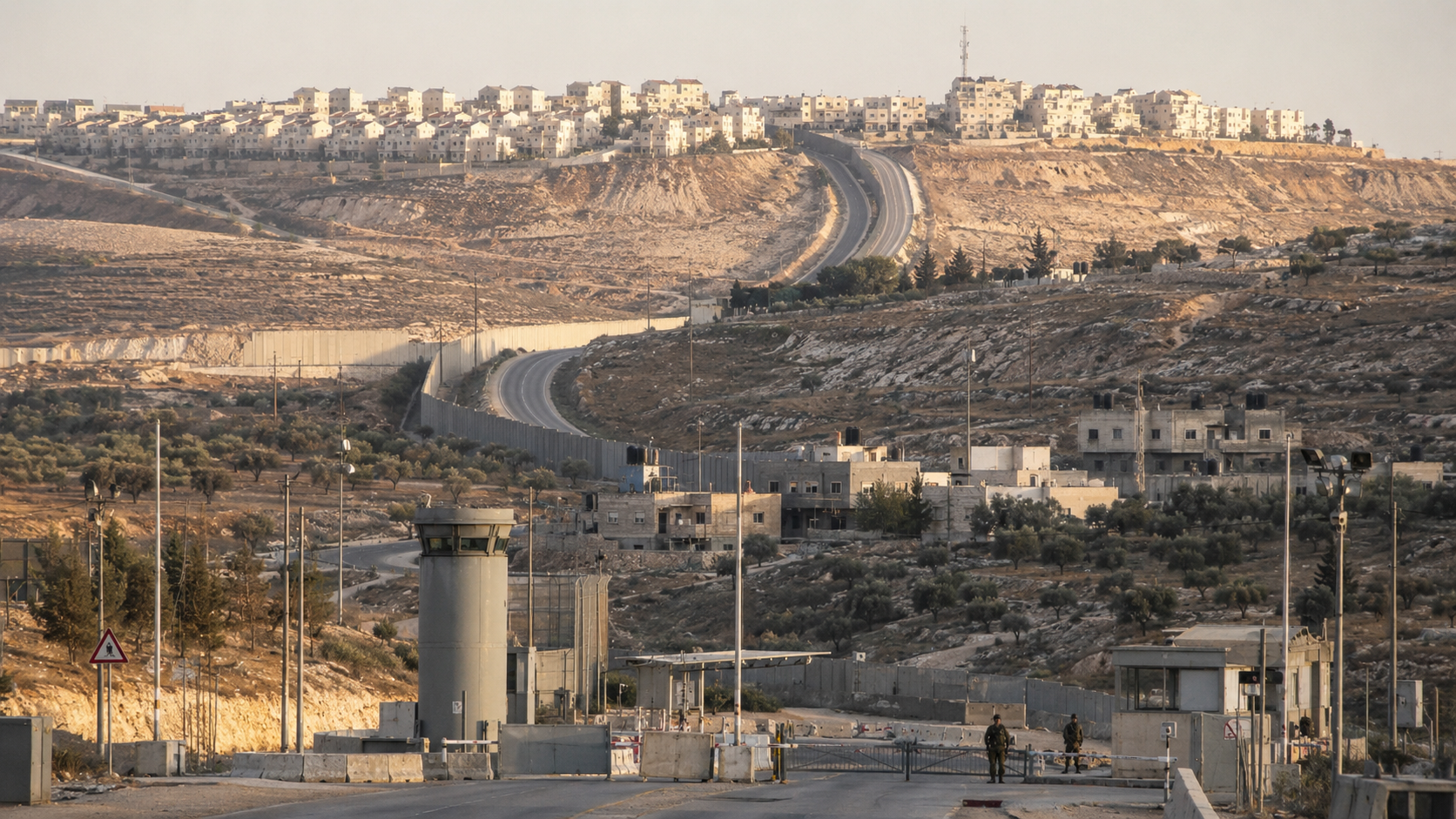
Western governments are again preparing sanctions against Israeli settlers and groups linked to settlement activity in the occupied West Bank.
France says more measures could come in the coming days. Britain and other Western states are also considering sanctions linked to the proposed E1 settlement plan, which would place more than 3,000 homes between occupied East Jerusalem and Ma’ale Adumim.
The sanctions debate matters because it shows that parts of the international community are treating settler violence as a structural problem rather than a marginal security issue.
For Palestinians, the daily violence of occupation reaches far beyond individual attacks. It is carried through land seizure, settlement roads, military protection for settlers, discriminatory planning rules, home demolitions, movement restrictions and political encouragement from senior Israeli officials.
Earlier this month, Finance Minister Bezalel Smotrich announced plans for 2,162 new settler homes, including units near Jerusalem, Nablus and Hebron. He said the aim was to strengthen Israeli control and prevent the creation of a Palestinian state.
Smotrich said the objective openly. The settlement plan is a declared political project.
The E1 plan carries the same message. Palestinians and many diplomats have warned for years that construction there would cut through a key part of the West Bank and make any viable Palestinian state harder to establish. E1 is a territorial decision presented through the language of housing and planning.
This is why sanctions against a handful of violent settlers, while necessary, remain too small for the scale of the problem.
UN humanitarian reporting shows how deep the pressure has become. OCHA said in April that 925 movement obstacles were recorded across the West Bank, including occupied East Jerusalem, the highest number in 20 years and 43 percent above the two decade average.
OCHA said those obstacles restrict movement for about 3.4 million Palestinians.
The same reporting said that since January 2023, 45 Palestinian communities had been fully displaced because of settler attacks and related access restrictions, with 116 communities experiencing full or partial displacement.
More than 5,800 people were displaced in that context, including more than 3,500 people from communities that were fully displaced.
Those numbers describe a landscape of pressure. Movement, land, work, schooling and basic safety are all shaped by an occupation that gives one population protection and expansion while exposing the other to restriction and removal.
OCHA has described a coercive environment in which settler violence and access restrictions are driving displacement, with Israeli forces involved through acquiescence, support or participation in some cases.
That language matters because it moves the discussion away from isolated incidents.
Settler violence is one method through which occupation is lived on the ground.
A Palestinian family can lose access to land because of a settlement road, a military order, settler intimidation or a planning regime that makes legal building almost impossible. A herding community can be pushed out by repeated attacks and restrictions on grazing. A village can be surrounded by checkpoints, settler outposts and roads its residents cannot freely use.
Palestinians and rights groups describe this as a racist and discriminatory system. Different populations live in the same territory under different rules, different protections and different futures. One population expands with state support. The other faces demolition, restriction and displacement.
The killing of seven month old Sam Fahd Abu Haikal near Hebron last week underlined the wider brutality Palestinians face. Reuters reported that Israeli forces opened fire on the family car in Tel Rumeida, killing the infant and wounding his parents. The Israeli military said soldiers had perceived the vehicle as a threat and later opened an investigation. The family disputed that account.
That case involved Israeli forces, not settlers. It showed the danger Palestinian civilians face from the military structure that protects the occupation as well as from armed settlers.
Sanctions can help. They can restrict travel, freeze assets and signal that settler violence has consequences. They can also make companies and financiers more cautious about dealing with illegal settlements.
The international community knows the law. Most countries regard Israeli settlements in the West Bank as illegal under international law. The International Court of Justice has said Israel’s presence in the occupied Palestinian territory is unlawful. UN bodies, rights groups and humanitarian agencies have documented the pattern of displacement, restrictions and violence for years.
The missing element is consequence.
A serious response would target the organisations, companies, state linked bodies and financial channels that sustain settlement expansion. It would include stronger restrictions on trade with illegal settlements, closer scrutiny of business activity that supports land seizure and real conditions on military and diplomatic support where international law is repeatedly violated.
Without that shift, the same cycle will continue.
A settler attack draws condemnation. A new settlement plan brings concern. A demolition produces regret. Then the land changes hands, the road expands, the family leaves, and the map shifts again.
That is the reality Palestinians in the West Bank face.
Western governments can already identify the problem. The question is whether they are prepared to confront the system that produces it.