
BCT governor calls for faster reforms to consolidate Tunisia's economic gains
Speaking at the 22nd Tunisia Investment Forum on Thursday 25 June, Central Bank of Tunisia governor Fethi Zouhaier Nouri said the stability Tunisia has rebuilt is a foundation to build on, not a destination, urging accelerated reform and stronger investment to lock in the progress made.
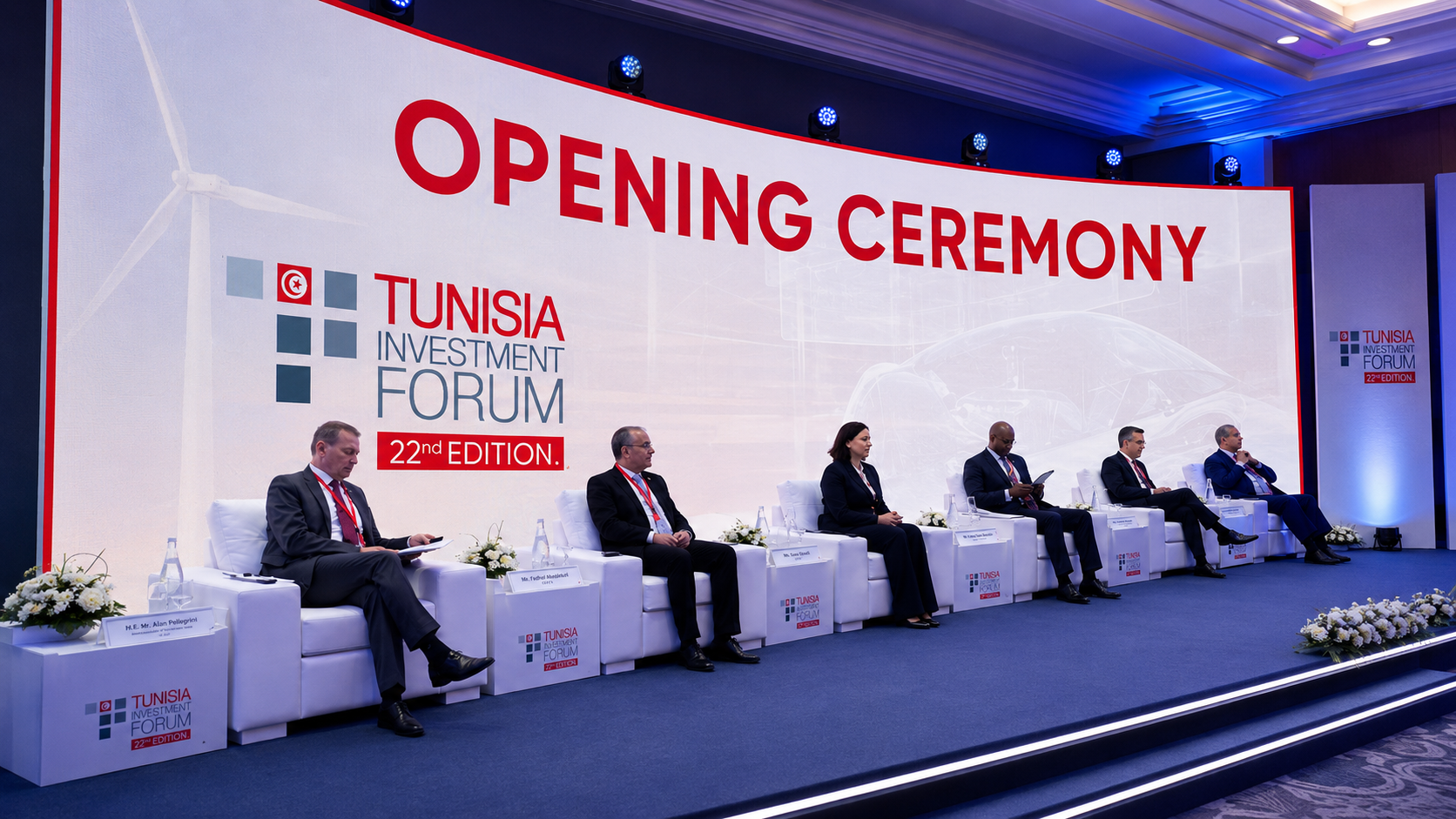
The Central Bank of Tunisia (BCT) governor Fethi Zouhaier Nouri called on Thursday 25 June for Tunisia to move faster on structural reform, telling the opening session of the 22nd Tunisia Investment Forum (TIF) that the economic stability the country has achieved must now be consolidated through accelerated investment and deeper reform.
Nouri said the recovery in macroeconomic fundamentals was real, but warned it remained fragile. The BCT, he said, continued to keep a close watch on inflation, the exchange rate, foreign currency reserves and external vulnerabilities in order to preserve financial and economic stability.
He highlighted that Tunisia had met all its external financial commitments on time, which had strengthened the country's credibility with international partners. He also pointed to improvements in sovereign bond yields and the country's credit rating, and said Tunisia had entered a phase of reducing its external debt stock since 2023, according to Mosaique FM's report of his remarks.
FDI up more than 30 percent
Addressing foreign investors directly, Nouri said foreign direct investment (FDI) exceeded 3.5 billion dinars in 2025, a rise of more than 30 percent on the previous year. Outside the energy sector, those investments generated 921 operations and created more than 14,000 jobs, he said.
The forum, organised by the Foreign Investment Promotion Agency (FIPA-Tunisia) under the Ministry of Economy and Planning and in partnership with the African Development Bank (AfDB), brought together around 1,000 government officials, investors and representatives of international institutions at the El Mouradi Gammarth hotel in Tunis on 25–26 June under the slogan "Tunisia: Renewed Dynamic, New Opportunities".
Tunisia's prime minister, speaking at the same opening session, said GDP growth reached 2.6 percent in 2025, up from 1.4 percent in 2024, driven mainly by strong performances in agriculture and manufacturing industries. The country currently hosts 4,296 foreign companies with a combined investment volume of 53 billion dinars, she said, according to allAfrica.
Steady rate, rising inflation
The BCT's board held its key interest rate at 7 percent at its most recent policy meeting on Wednesday 3 June 2026, citing persistent inflationary risks and a high degree of global uncertainty. The board said it would maintain a prudent monetary policy to preserve price stability, anchor inflation expectations and support the resilience of macroeconomic balances.
Inflation picked up to 5.5 percent in April 2026, against 5.0 percent in March, driven chiefly by a sharp acceleration in fresh food prices, which rose 13.3 percent year-on-year. Core inflation — excluding fresh food and administered prices — reached 5.0 percent, up from 4.8 percent the previous month, the BCT said.
The board noted that external inflationary pressures had recently intensified and that their transmission to domestic prices represented an upside risk to inflation over coming months.
External balances improving
On the external side, the current account deficit narrowed to 2,731 million dinars at end-April 2026, equivalent to about 1.5 percent of GDP, compared with 2,957 million dinars, or 1.7 percent of GDP, at the same point a year earlier, BCT data show. Outside energy, the current account recorded a surplus of 1,461 million dinars at end-April, against 726 million dinars a year earlier.
Net foreign exchange reserves stood at 25.5 billion dinars as at 2 June, the equivalent of 104 days of imports, compared with 22.6 billion dinars and 98 days of imports a year earlier.
Economic growth came in at 2.6 percent year-on-year in the first quarter of 2026, a slight easing from 2.7 percent in the previous quarter but well above the 1.6 percent recorded a year earlier, the BCT said.
The TIF forum also marked the launch of Tunisia's new national investor portal, a digital platform designed to centralise administrative procedures and streamline the investment process. The 2026–2030 national development plan, prepared through a participatory process, is to be accompanied by major legislative reforms, the prime minister said.