
Bomb blast at Damascus café kills nine and wounds 20 as Syria's fragile recovery faces a new test
A planted improvised explosive device tore through a crowded café metres from Syria's Palace of Justice on Thursday, killing nine people and wounding 20 in the deadliest attack in Damascus since a church bombing a year ago — one day after President Ahmed al-Sharaa completed his country's first post-
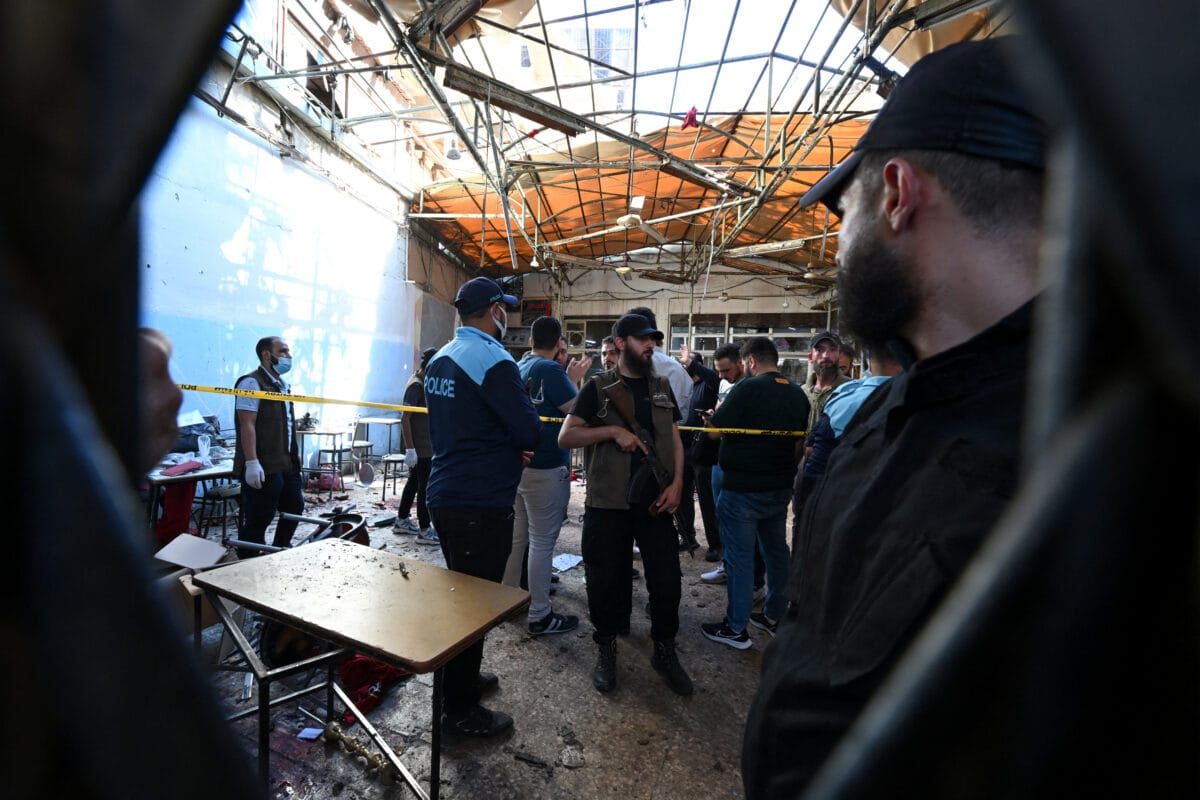
A bomb blast tore through a crowded café in central Damascus on Thursday 2 July, killing nine people and wounding 20 others in an attack Syria's government has described as a terrorist act, the Interior Ministry said on Friday.
The explosion struck a café on al-Nasr Street in the al-Marjah district at around 3:24 pm local time, near the Palace of Justice — the Syrian capital's main courthouse — according to Syria's Health Ministry and Syrian state media. The Interior Ministry said preliminary investigations showed the blast was caused by a crudely made improvised explosive device weighing about one kilogram and packed with metal shrapnel.
Security sources told Al Jazeera that a person entered the café, placed the device under a table and then left the building. No group had claimed responsibility as of Friday morning.
A popular spot at a sensitive address
The café is popular with lawyers, courthouse employees and visitors to the Palace of Justice, Al Jazeera's correspondent at the scene reported, a detail that amplified the casualty count in what is a busy district of the capital. The Syrian Observatory for Human Rights, a UK-based war monitor, said the courthouse was evacuated following the explosion.
Syrian state television confirmed the blast was caused by a planted explosive device. Emergency crews evacuated the wounded to hospitals and security forces cordoned off the area, in part over fears of a secondary explosion, according to multiple reports. Officials warned that some of those wounded and being treated at al-Mouwasa Hospital had severe injuries, leaving open the possibility of the death toll rising.
Damascus Governor Maher Marwan arrived at the scene and told reporters that those responsible would be held to account. "The coming hours will reveal everything and those who shed the blood of Syrians will pay," he said. An investigation has been opened using government and private surveillance cameras in the area, Al Jazeera's Syria correspondent said.
International condemnation
The UN Secretary-General's spokesman, Stéphane Dujarric, extended condolences to the families of the victims and called for those responsible to be brought to justice. The UN's deputy special envoy for Syria, Claudio Cordone, said on X that the perpetrators "should be brought to justice."
Turkey, which has close ties with Syria's new authorities, condemned the attack and said it would "maintain its solidarity with Syria throughout this process," according to a foreign ministry statement. Iraq, Jordan, Qatar and Egypt also issued condemnations, and the Arab League and the Gulf Cooperation Council described the attack as a terrorist bombing.
A direct challenge to Syria's new order
The attack is the deadliest in Damascus since a suicide bombing at a church in June 2025 killed 25 people; that attack was later claimed by a Sunni Islamist group, while Syrian authorities blamed the Islamic State group.
Thursday's blast came one day after President Ahmed al-Sharaa completed the formation of Syria's first post-Assad parliament — a 210-member People's Assembly whose first session is set for Monday 6 July.
Damascus has witnessed a series of security incidents since al-Sharaa's forces toppled longtime ruler Bashar al-Assad in December 2024. A car bomb outside a Defence Ministry building in May killed one Syrian soldier and wounded at least 18 others. A bombing on 22 June targeting the Mar Elias church in Dwelaa was claimed by the Islamic State group.
Although no group claimed responsibility for Thursday's attack, Reuters reported that the Islamic State has sought to exploit the security vacuum created by Assad's fall by reactivating sleeper cells and moving weapons, and has announced what it described as a new phase of operations against al-Sharaa's government. The group is far weaker than it was during its self-declared caliphate, which collapsed in 2019, but remains capable of carrying out deadly insurgency-style attacks and is viewed by Syrian, Iraqi and Western officials as one of the biggest threats to Syria's transition, Reuters said.
The attack lands at a sensitive moment. The US military completed its withdrawal from Syria in April, with al-Sharaa offering assurances that his government could keep extremism at bay. The bombing is a test of that assurance as Syria seeks to project stability to international partners and investors alike.
The death toll and the investigation's findings are expected to develop in the hours ahead.