
Burkina Faso severs all diplomatic ties with France, accusing Paris of neocolonial ambitions in the Sahel
Burkina Faso's military junta broke off diplomatic relations with France on Friday 26 June, with immediate effect, deepening a rupture that has reshaped Western influence across the Sahel and leaves the future of the French embassy in Ouagadougou uncertain.
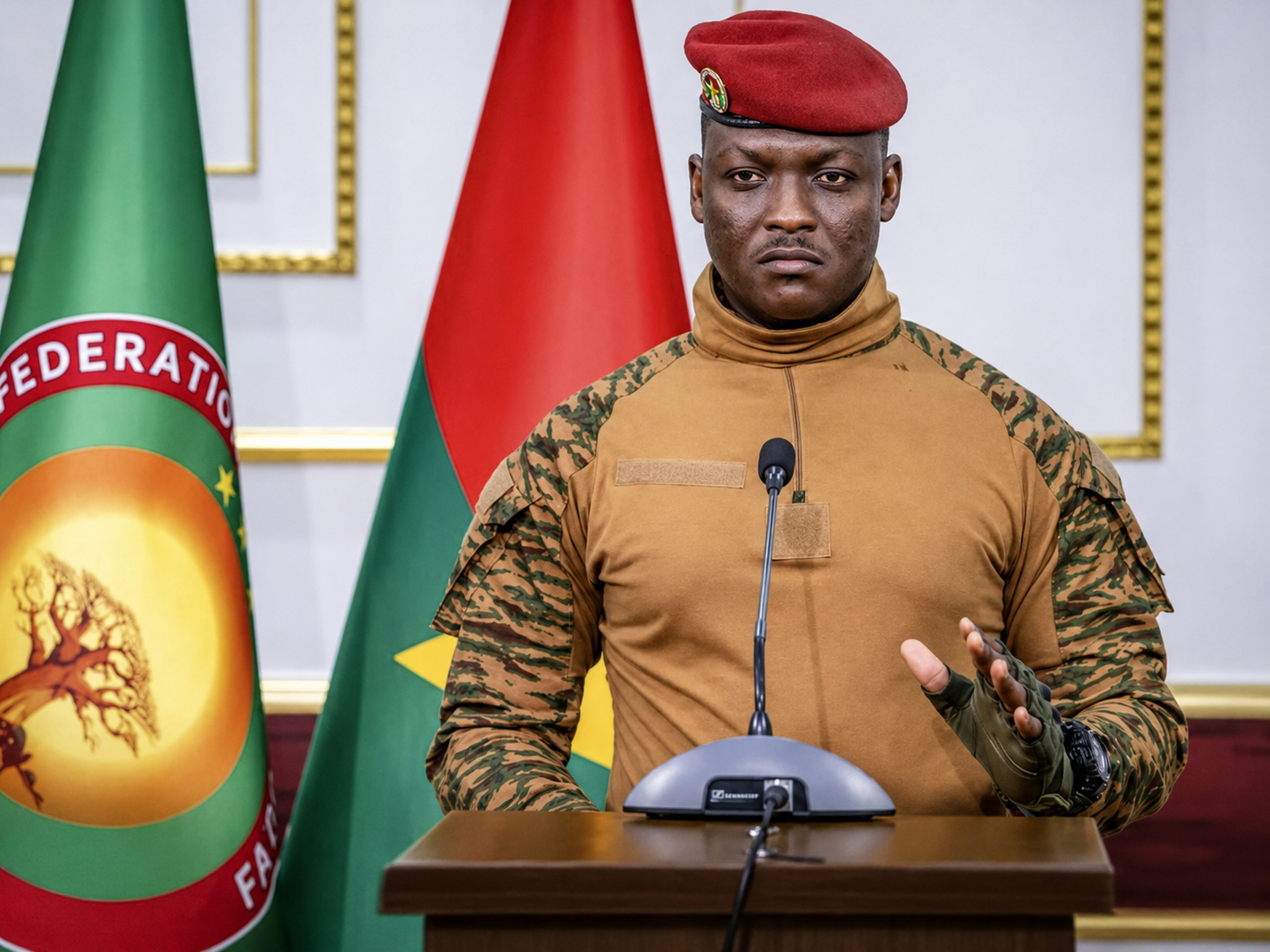
Burkina Faso's military government severed all diplomatic relations with France on Friday 26 June, with immediate effect, in the most dramatic rupture yet between the West African nation and its former colonial ruler.
The announcement was read out on national television: "The government of Burkina Faso hereby informs the national and international community that it has decided to sever diplomatic relations with France with effect from today, June 26, 2026."
The junta accused France of "blatant neo-colonial ambitions and active support for subversive networks and terrorists," without providing evidence.
What the government said
Communications Minister Pingdwende Gilbert Ouedraogo said in a statement that "the conditions essential for fostering relations based on mutual respect, reciprocal trust, and respect for the principle of non-interference in internal affairs and national sovereignty are no longer met."
He accused France of having "neo-colonial ambitions, made evident by its active support for subversive networks and the terrorists who are plunging our country and the Sahel into mourning."
According to the government statement, the decision "exclusively concerns diplomatic relations between the two states" and "does not call into question the historical, human, cultural and social ties between the people of Burkina Faso and France." The government reaffirmed its commitment to ensuring the protection of foreign nationals on its territory and called on citizens to demonstrate "responsibility, restraint and civic-mindedness" toward French nationals and all other expatriates.
Paris responds
France's Foreign Ministry spokesman Pascal Confavreux said in a statement that France regrets the "hostile and unfounded decision, which illustrates the worrying drift of the Burkinabè authorities," adding that "necessary reciprocal measures are currently under review."
Confavreux added that France is monitoring the safety of French government personnel and citizens in Burkina Faso and urged them to exercise heightened vigilance. France also "reiterates its solidarity with the people of Burkina Faso and recalls the strong ties that unite our two nations," the Foreign Ministry's statement concluded.
It was unclear what would follow the end of diplomatic relations or how the French embassy in Burkina Faso would be affected.
A relationship long in collapse
France had been Burkina Faso's major security partner until the September 2022 coup, after which the junta dismissed hundreds of French forces that had been deployed to fight extremist groups.
In 2023, the junta asked France to recall its ambassador and declared the United Nations' resident and humanitarian coordinator in the country persona non grata. In 2024, it expelled three French diplomats for alleged subversive activities. France denied the accusations, calling them baseless.
The military government, led by Captain Ibrahim Traoré, came to power in a coup in September 2022 and has since pursued a policy hostile to Western countries, especially France. Since then, it has adopted a tougher stance toward Western countries, particularly France, while strengthening ties with Russia.
In January, political parties in Burkina Faso were formally dissolved by the military government, which also seized all their assets — a move analysts described as a major blow to democracy in the West African nation.
A wider Sahel shift
The break further consolidates the Alliance of Sahel States (AES), a confederation formed by Burkina Faso, Mali and Niger following their exit from the Economic Community of West African States (ECOWAS).
Burkina Faso, a country of 23 million people, has been battered by years of violence perpetrated by extremist groups linked to al-Qaeda and the Islamic State group, as well as government forces often accused of extrajudicial killings. The wider Sahel region is considered the world's deadliest for extremism.
Landlocked Burkina Faso is grappling with several armed groups that have seized control of land in the country's north, south and west, including the al-Qaeda-backed Jama'at Nusrat al-Islam wal-Muslimin (JNIM) and Islamic State Sahel Province (ISSP), which also operate in neighbouring Mali and Niger.
In the two years following the coup, Burkina Faso government forces allegedly killed twice as many civilians as the extremists themselves, according to a Human Rights Watch report, which attributed at least 1,200 of the 1,837 civilians killed between January 2023 and August 2025 to government forces.
Burkina Faso's government reaffirmed its determination to pursue an independent foreign policy based on the diversification of partnerships, strengthened South-South cooperation, and the development of balanced relations with all countries.