
Coordinated attacks hit five locations across Mali as rebels claim northern gains
Army positions from the northern Kidal region to an area south of Bamako came under attack on Saturday. The military said one soldier and 26 assailants were killed, while separatist rebels claimed control of the strategic town of Anefis.
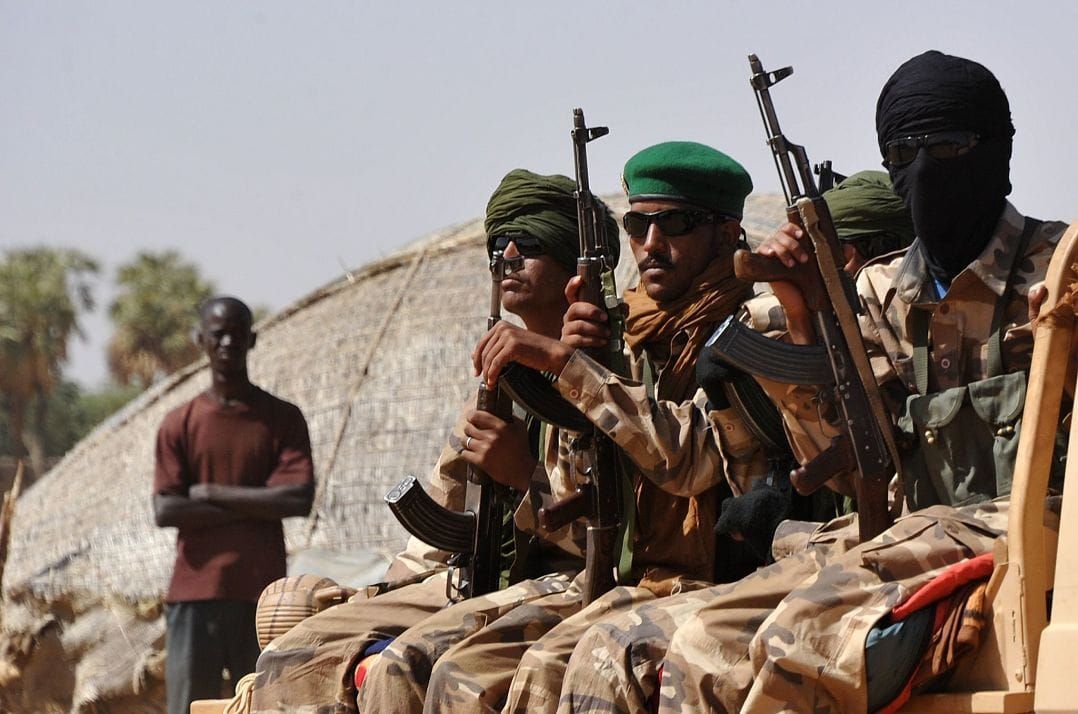
Coordinated attacks struck military positions across Mali early on Saturday, 4 July, as armed groups opened several fronts stretching from the country’s far north to an area south of the capital, Bamako.
The Malian Armed Forces said positions in Anefis, Aguelhok and Gao in northern Mali, Sévaré in the centre and Kenioroba in the south were attacked. The army later said its forces had repelled the assaults and brought the situation “fully under control”, although operations continued in several areas.
The army said 20 assailants travelling on motorcycles and armed vehicles were killed in Sévaré. It reported that six more were killed in Gao, where one soldier died and four others were wounded. A vehicle belonging to the attackers was also destroyed, according to the military statement.
The casualty figures have not been independently verified. The army provided no consolidated account of civilian casualties or losses at the other attacked positions.
Residents in Gao reported sustained gunfire and rocket fire directed towards a military camp before dawn. Security forces later blocked roads and carried out searches inside the city amid reports that some attackers remained in residential areas.
In Sévaré, residents heard gunfire followed by several large explosions. Further detonations were reported later in the morning, while aircraft were seen flying above the area.
The attacks also reached Kenioroba, south of Bamako, where a major prison complex was targeted. Security sources said the attackers were repelled, although the authorities had not released a detailed account of the assault by Saturday evening.
Rebels claim control of Anefis
The Azawad Liberation Front, known as the FLA, confirmed that its fighters were involved in Saturday’s operation.
FLA spokesperson Mohamed Elmaouloud Ramadane said rebel forces had entered Anefis in the Kidal region. Another FLA official claimed that the town had fallen under the group’s control and that fighting was drawing to a close.
Those claims could not be independently confirmed. Accounts from inside Anefis indicated that armed groups had entered the town while government forces continued to resist around the military camp.
Anefis has assumed greater strategic importance since the major insurgent offensive in April. Malian troops and Russian Africa Corps personnel were stationed there after government forces lost their positions in Kidal, a longstanding centre of the northern separatist movement.
Control of Anefis would give the FLA a stronger position along routes connecting Kidal with Gao and could complicate any attempt by the government to recover territory lost during the April fighting.
Wassim Nasr, a senior research fellow at the Soufan Center, said Anefis was important because a government operation to reverse the northern territorial losses would probably have been launched from the town.
Aguelhok, another northern position attacked on Saturday, is also among the remaining government outposts in the wider Kidal region.
A new front in Mali’s deepening conflict
Saturday’s attacks came just over two months after the FLA and Jama’at Nusrat al-Islam wal-Muslimin, or JNIM, launched one of the most extensive coordinated offensives Mali had experienced in years.
The April attacks struck Bamako airport, the military centre of Kati, Gao, Mopti, Sévaré and several northern towns. Mali’s defence minister, Sadio Camara, was killed during an attack on his residence, while government and Russian-backed forces lost important positions in the north.
JNIM is al-Qaeda’s principal affiliate in the Sahel. The FLA is a Tuareg-led separatist coalition seeking self-determination for Azawad, the name used by separatists for northern Mali.
The two movements have different political and ideological objectives, but they cooperated during the April offensive against the military-led government. Their coordination placed simultaneous pressure on the authorities in Bamako and on government forces deployed across the north.
The FLA acknowledged its role in Saturday’s attacks. JNIM had issued no immediate claim of responsibility by Saturday evening. The identities and affiliations of the forces attacking every location therefore remained unclear.
Ibrahim Yahaya Ibrahim of the International Crisis Group assessed that the latest attacks were smaller than the April operation. He said reports of simultaneous violence across Mali and neighbouring Burkina Faso could indicate an effort to divide the attention of government forces while armed groups secure more limited territorial gains in the north.
Mali’s military leaders took power following coups in 2020 and 2021 and made the restoration of national security central to their rule. They later expelled French forces and reduced cooperation with other Western partners, turning towards Russia for military support.
Russian Africa Corps personnel continue to support the Malian military, including at some of the northern positions targeted on Saturday. The force succeeded the Wagner Group as Moscow’s principal security presence in the country.
The government’s security strategy has faced growing pressure as JNIM has expanded operations across central and southern Mali and separatist forces have renewed their challenge in the north.
The army said aerial and ground clearance operations remained under way following Saturday’s attacks. The status of Anefis, the full casualty toll and the extent of rebel gains remained unresolved.