
Court delays Bar Association case as 580 lawyers join defence
The Tunis Court of First Instance has postponed a case brought by the prosecution against the National Bar Association, after 580 lawyers filed to defend their professional body.
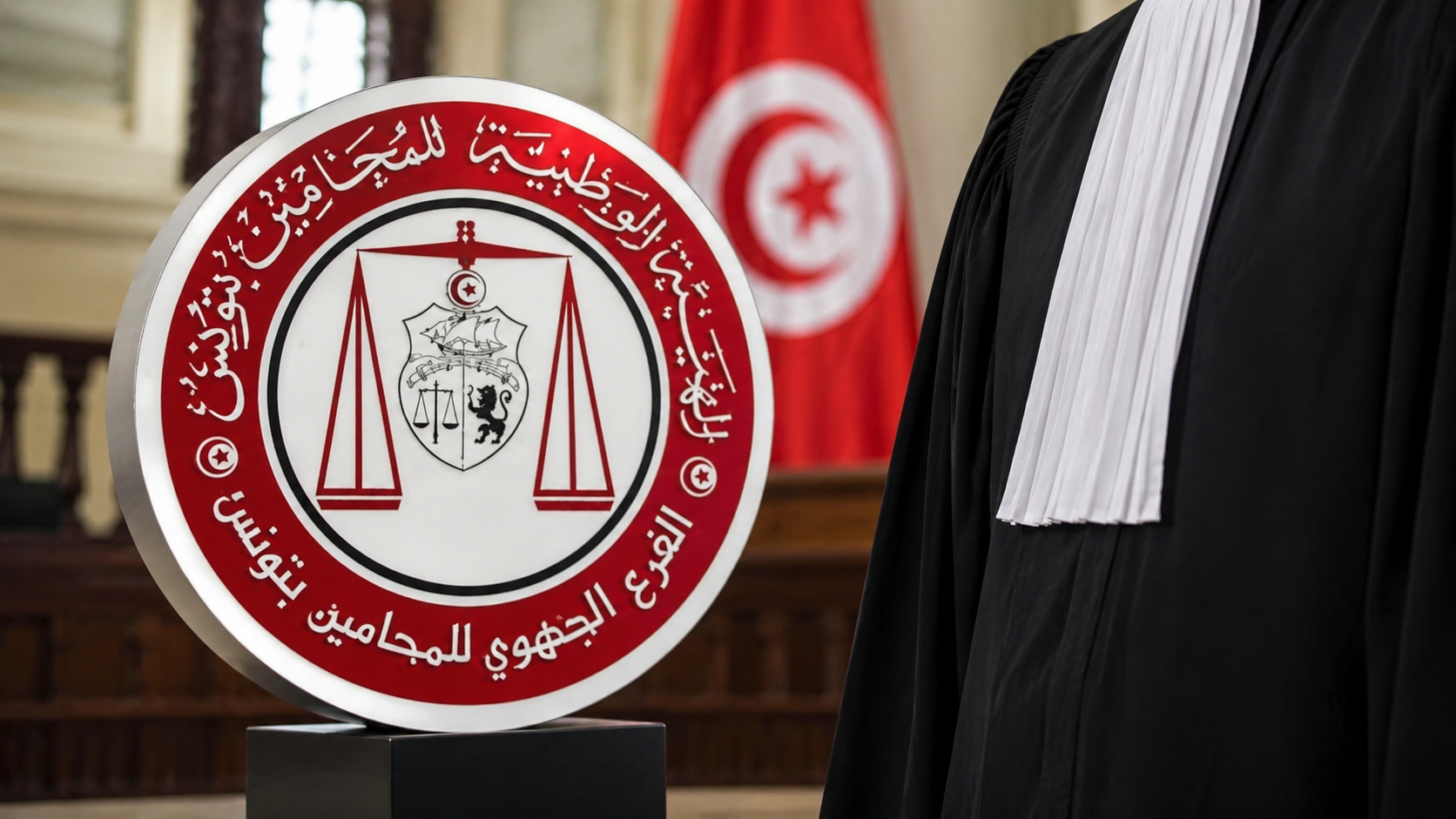
The Tunis Court of First Instance has postponed until 28 October a case brought by the prosecution against the National Bar Association of Tunisia.
The case concerns the extraordinary general assembly held by the Bar Association on 1 May, which approved a series of regional strikes and a national strike planned for 18 June as part of the profession’s protest movement.
Business News reported that the hearing on Wednesday 10 June took place in a tense atmosphere, with around 40 lawyers present in support of the Bar.
The lawyers asked the president of the chamber to call the names of all 580 lawyers who had filed formal notices of representation to defend the Bar Association.
The request was accepted. The judge read the names one by one, a process that reportedly took around 40 minutes.
The case follows a challenge by the prosecutor general near the Tunis Court of Appeal over the procedures used to organise and hold the 1 May extraordinary general assembly.
The challenge was brought under article 74 of decree-law No. 79 of 2011 on the organisation of the legal profession, which allows the competent prosecutor general to contest decisions of lawyers’ general assemblies and the conditions under which they are held.
The dispute has centred on the legality of the assembly and the decisions it adopted, including the regional strikes and the planned national strike.
The prosecution’s challenge focuses in particular on quorum requirements. Article 54 of the same decree-law sets the conditions for the validity of extraordinary general assemblies, including the required level of participation.
The postponement to 28 October means the court will examine the case after the dates set for the strike decisions adopted by the 1 May assembly.
The hearing has become another marker of tension between the Bar Association and judicial authorities, with the legal profession arguing that its mobilisation is linked to defence rights, fair trial guarantees and the functioning of the justice system.
The next scheduled step is now the October hearing, unless further procedural developments take place before then.