
EBRD cuts Tunisia growth outlook as food prices and regional shocks weigh on recovery
The European Bank for Reconstruction and Development expects Tunisia’s economy to grow by 2.2 percent in 2026, down from 2.5 percent in 2025, as renewed food price pressures slow disinflation and regional shocks weigh on the wider southern and eastern Mediterranean outlook.
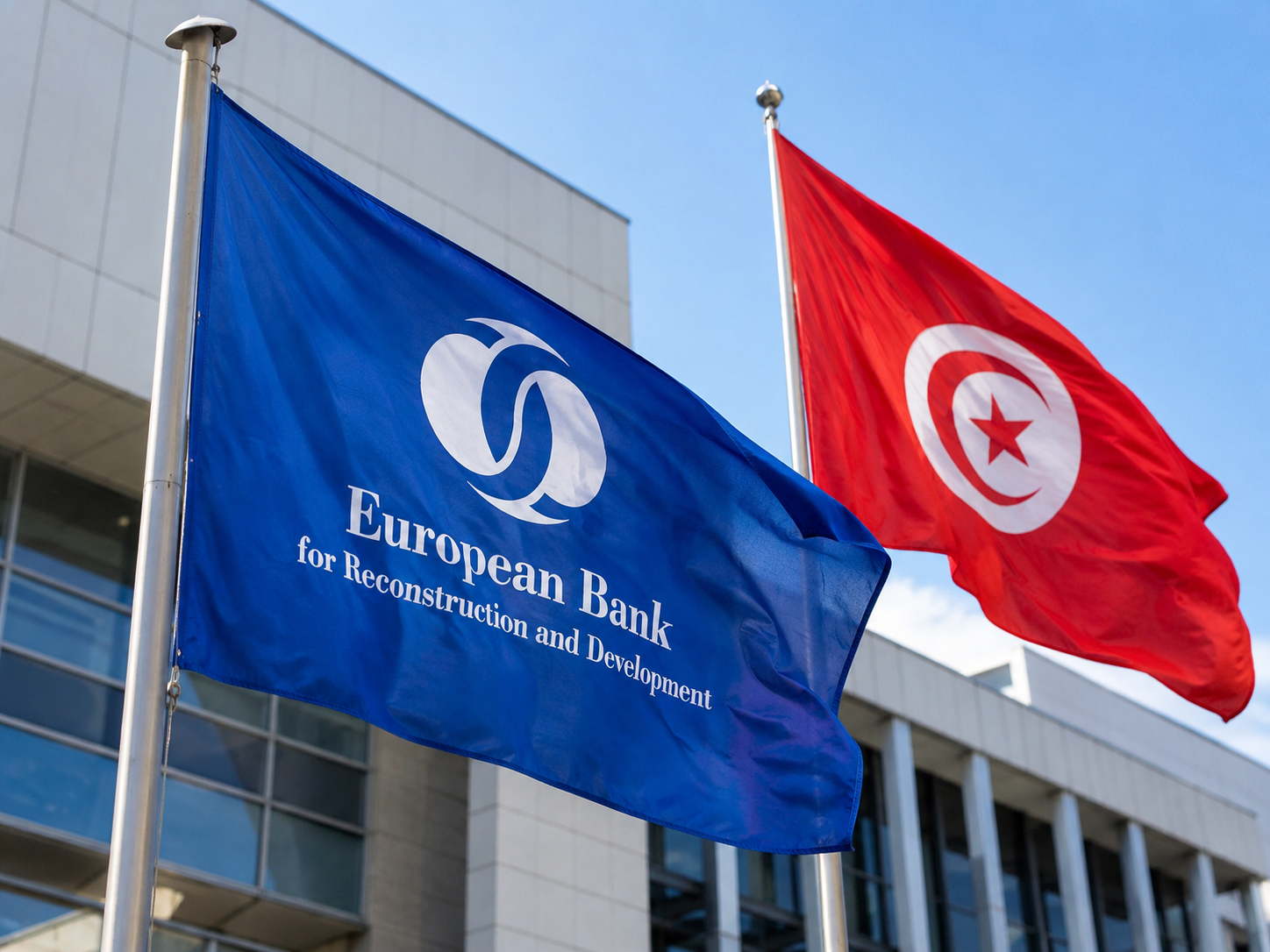
The European Bank for Reconstruction and Development expects Tunisia’s economic growth to slow this year, after a stronger performance in 2025 supported by agriculture, industry, trade and hospitality.
In its June 2026 Regional Economic Prospects update, the EBRD said Tunisia’s real GDP growth is projected to ease from 2.5 percent in 2025 to 2.2 percent in 2026, and to remain at 2.2 percent in 2027.
The bank said the 2025 recovery was supported by stronger agricultural output, particularly olive oil and cereal production, as well as growth in mechanical and electrical industries, wholesale and retail trade, and hospitality.
Inflation has continued to ease, but the EBRD said rising food prices slowed the pace of disinflation in early 2026, pointing to renewed price pressures.
Average annual inflation fell to 5.4 percent in 2025, from 7.0 percent in 2024, according to the bank. It averaged 4.9 percent between January and March 2026.
The Central Bank of Tunisia kept its policy rate at 7.0 percent in March, after cutting it by 50 basis points in December 2025. The EBRD said the decision reflected renewed inflation risks.
The bank also pointed to pressure on Tunisia’s fiscal and external accounts. The government is targeting a budget deficit of 6.0 percent of GDP in 2026, but the EBRD said the target could come under pressure if international fuel prices rise.
Tunisia’s current account deficit widened from 1.6 percent of GDP in 2024 to 2.5 percent in 2025. International reserves stood at 8.4 billion dollars in March 2026, equivalent to around three and a half months of imports.
The Tunisia forecast forms part of a wider EBRD update for the southern and eastern Mediterranean region. The bank expects regional growth to slow to 2.5 percent in 2026, from 3.1 percent in 2025, before rising to 4.2 percent in 2027.
Across the EBRD regions, the bank said growth had been affected by the Middle East conflict, which has driven up energy prices, disrupted supply chains and added pressure on inflation.
In a separate Reuters interview ahead of the EBRD’s annual meeting, EBRD President Odile Renaud Basso said governments affected by the regional shock should keep support measures temporary and targeted, given limited fiscal space and higher borrowing costs.
The EBRD’s latest Tunisia country strategy, covering 2026 to 2031, also points to longer term constraints on growth, including regulatory barriers for businesses, foreign exchange controls, limited access to finance and fiscal vulnerabilities.