
EU member states remain split over Israel sanctions as pressure mounts on the Commission
Despite agreeing in May to sanction violent settlers, EU governments have failed to reach consensus on broader measures against Israel — including trade restrictions and personal sanctions on ministers Ben-Gvir and Smotrich — exposing widening fault lines within the bloc and straining the European C
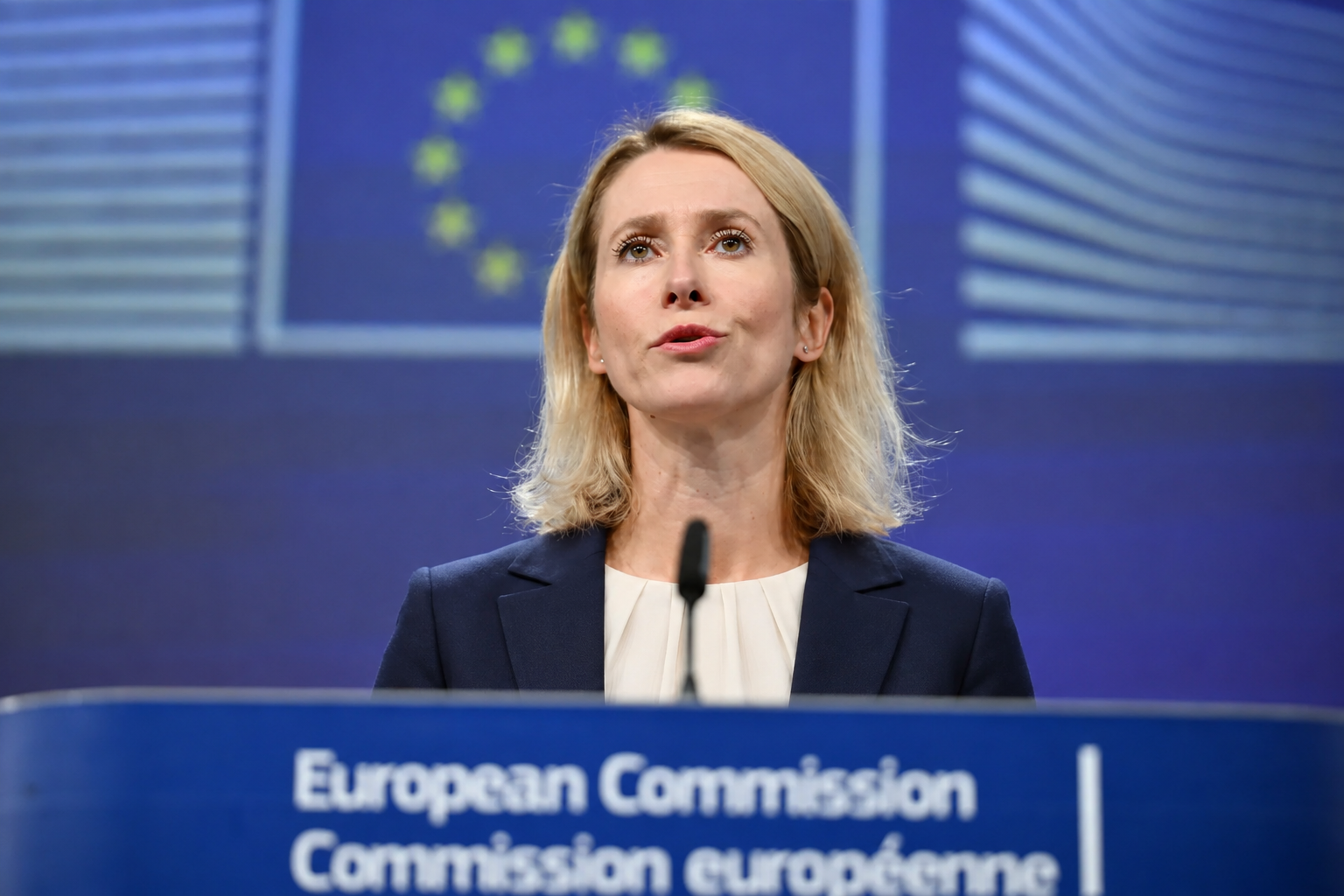
EU member states remain deeply divided over how far to go in sanctioning Israel, with the bloc's foreign ministers failing on 15 June to agree on personal sanctions against Israeli National Security Minister Itamar Ben-Gvir and wider trade measures still blocked by key capitals, exposing growing strains inside the European Commission.
A floor, not a ceiling
The European Union agreed in May to impose sanctions on Israeli settlers and leading Hamas figures, with consensus reached at a meeting of member states' foreign ministers on 11 May. The restrictive measures were issued under the EU Global Human Rights Sanctions Regime and target four entities and three individuals, among them the Nachala Settlement Movement and its director Daniella Weiss. An asset freeze applies to the persons and entities listed, including a prohibition on making funds available to them directly or indirectly, and a travel ban applies to the natural persons listed.
Far-right ministers Bezalel Smotrich and Itamar Ben-Gvir were removed from the potential sanctions list, allowing the measures to gain the support of 26 out of 27 EU member states. The agreement was widely described as incremental rather than transformative.
Ben-Gvir sanction fails
EU member states have failed to agree on proposals to sanction Ben-Gvir, with foreign policy chief Kaja Kallas confirming at a press conference on 15 June that while "many" EU states had proposed economic restrictions, "no consensus on that was reached today".
Ben-Gvir had been criticised by several individual EU states for his treatment of activists aboard the Global Sumud Flotilla, who were detained by Israeli soldiers as they tried to reach Gaza last month. With unanimity required, the bid failed to win full approval. Prague said it would oppose sanctions.
With decision-making blocked in Brussels, some EU members — including Spain, the Netherlands and Belgium — moved forward unilaterally and banned Ben-Gvir and Smotrich from visiting their territory. In June 2026, the governments of Ireland and France also sanctioned Smotrich bilaterally. France banned Ben-Gvir from entering the country, joining a growing number of European states to denounce Israel's alleged abuse of the flotilla activists.
Trade suspension: qualified majority still out of reach
Commission President Ursula von der Leyen — a longtime ally of Israel — announced a proposal for a partial trade suspension in her September 2025 State of the Union address, after which the Commission formally presented the Council with a proposal to suspend certain trade-related provisions of the EU-Israel Association Agreement.
A partial suspension requires a weighted majority of 15 member states, representing 65 percent of the EU population. That threshold has not yet been crossed. A separate proposal to suspend preferential trade tariffs with Israel, which would increase costs for Israeli exports to Europe, also faces Italian and German opposition.
The primary obstacle to suspending the agreement lies in the EU's complex voting mechanisms and deep internal divisions rooted in different national histories. A full suspension would require a unanimous decision from all 27 member states, which is currently impossible. Suspending only the commercial arrangements requires a qualified majority of at least 15 EU countries representing 65 percent of the EU population, giving heavily populated nations like Germany what amounts to a veto.
The bloc's economic weight
The EU is Israel's biggest trading partner, far surpassing the United States in terms of bilateral goods exchanges. According to EU data, trade in goods between the bloc and Israel amounted to €42.6 billion in 2024. If enough EU nations agree, tariffs amounting to about €230 million would be applied to 37 percent of the €15.9 billion total of Israeli goods imported to the EU, according to the Commission's trade representative Maroš Šefčovič.
Kallas presses for settlement trade options
At the 15 June meeting, Kallas added that many member states called for the Commission to prepare options on how to limit trade with illegal settlements across the occupied West Bank. "I will convey this request and ask the Commission to prepare, ahead of the next Foreign Affairs Council, a list of options for possible trade measures, including measures aimed at preventing imports of goods originating from illegal settlements," she said.
The EU is examining other options, including a trade ban on products from the settlements or higher EU tariffs on imports. However, many of those measures will be hard to adopt, as they would need either unanimous agreement or a qualified majority among member states.
Israel has become increasingly isolated on the European continent, given the extremism of the current Israeli government and its military conduct in Gaza and across the Middle East. Throughout 2026, Israel's government has accelerated unlawful settlement expansion and annexation of the occupied West Bank. According to a UN report in March, this has led to the forced displacement of over 36,000 Palestinians and enabled a drastic escalation in settler violence.
Israel has rejected the measures. Foreign Minister Gideon Saar said the EU had "chosen, in an arbitrary and political manner, to impose sanctions on Israeli citizens and entities because of their political views and without any basis." Israel denies that its conduct in Gaza and the occupied West Bank breaches the human rights clauses of its Association Agreement with the bloc.
The next Foreign Affairs Council meeting, at which settlement trade options are expected to be tabled, has not yet been formally dated.