
EU Migration Pact Applies From 12 June — What It Means for Tunisia
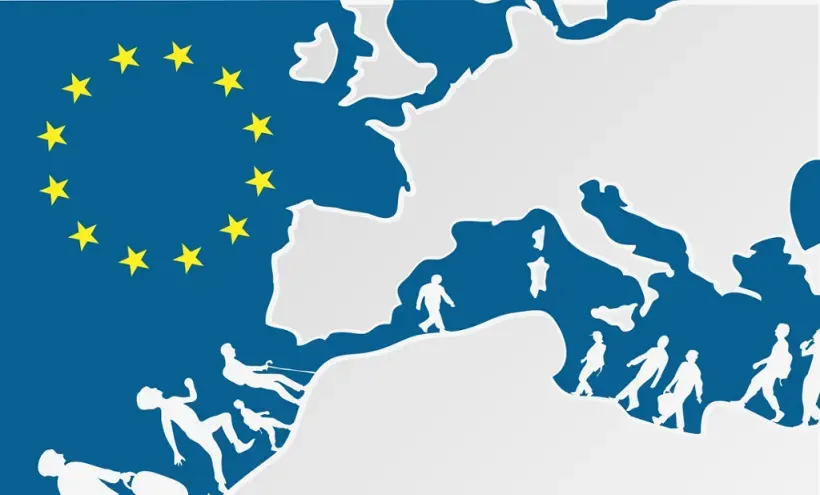
The European Union's Pact on Migration and Asylum enters into application on Friday 12 June 2026, after a two-year transition period following its entry into force on 11 June 2024. The package is the most comprehensive overhaul of the bloc's asylum rules in decades, replacing a system long criticised as ineffective and fragmented across 27 national approaches.
The legislative package comprises ten separate instruments that together reshape how the EU manages arrivals at its external borders, processes asylum claims and handles the return of rejected applicants. The reforms were negotiated over four years and survived bitter opposition from some member states over the mandatory solidarity mechanism.
A mandatory Screening Regulation requires identity, security and health checks for all third country nationals crossing the external border irregularly, to be completed within seven days at the border and three days for those apprehended inside a member state. An expanded Eurodac database will capture biometric data on all arrivals, including children aged six and over, storing facial images alongside fingerprints to track repeat applicants and secondary movements between member states.
The Border Asylum Procedure allows faster processing of claims from nationals of countries with an EU recognition rate of 20% or lower — a category that includes Tunisia — though a member state may ask to raise that threshold to 50%. Under the Returns Border Procedure, rejected applicants can be returned directly from border facilities without first entering national territory, shortening the timeline between arrival and removal.
A Crisis and Force Majeure Regulation lets member states apply exceptional measures during mass arrivals or the instrumentalisation of migrants by third countries. A mandatory Solidarity Mechanism requires every member state to contribute through relocations of asylum seekers, financial payments or operational support, the provision that drew the strongest opposition from Poland and Hungary during negotiations.
The European Commission has identified Greece, Cyprus, Spain and Italy as the frontline states under the heaviest migratory pressure. Most measures take effect from 00:00 CET on 12 June, with the solidarity mechanism and a subset of operational provisions following on 1 July.
What the pact means for Tunisia
The pact governs how member states act at their own borders, and that in turn shapes the terms on which they negotiate readmission and returns with partner countries. Applications from nationals of low recognition rate countries can be processed at the border and rejected applicants removed more rapidly.
Eurostat data show recognition rates for Tunisian asylum applicants in the EU sitting in the low single digits, meaning almost all Tunisian nationals who apply are ultimately subject to return. Italy, the main arrival point for Tunisian migrants crossing the Mediterranean, is expected to make full use of the accelerated procedures.
The EU deepened its migration partnership with Tunisia through the memorandum of understanding signed in July 2023, which tied development aid, macro-financial assistance and investment to border management, anti-smuggling operations and readmission cooperation. The deal's migration package was worth EUR 105 million, funding the refitting of coast guard vessels, thermal cameras, border surveillance and voluntary return programmes, on top of around EUR 100 million channelled through the EU Trust Fund for Africa in 2021 and 2022. Disbursement has been uneven: in October 2023 President Kais Saied rejected a EUR 127 million tranche, saying it breached the terms of the memorandum.
The Commission has described the pact as "a balanced approach between border management and the protection of fundamental rights." The Council of Europe, the UN refugee agency UNHCR and several non-governmental organisations have cautioned that accelerated border procedures limit access to legal counsel and raise the risk of collective expulsions. Rights groups have also questioned the new monitoring mechanism, arguing that the independent national border monitors the pact requires have no power to halt violations and that member states face no meaningful penalty for non-compliance.
The pact takes effect at the start of the peak summer season, when crossings on the Central Mediterranean route, the corridor running from the Tunisian and Libyan coasts to Italy, have historically risen. Its accelerated procedures are likely to face their first real test within days of coming into force.