
Fatma Samet is keeping Kerkennah’s oldest craft alive
For decades, the Tunisian artist and entrepreneur has taken an endangered island tradition and pushed it into the future. Her recent UNESCO-backed distinction recognises more than embroidery. It honours a lifetime spent protecting a place through the work of its hands.
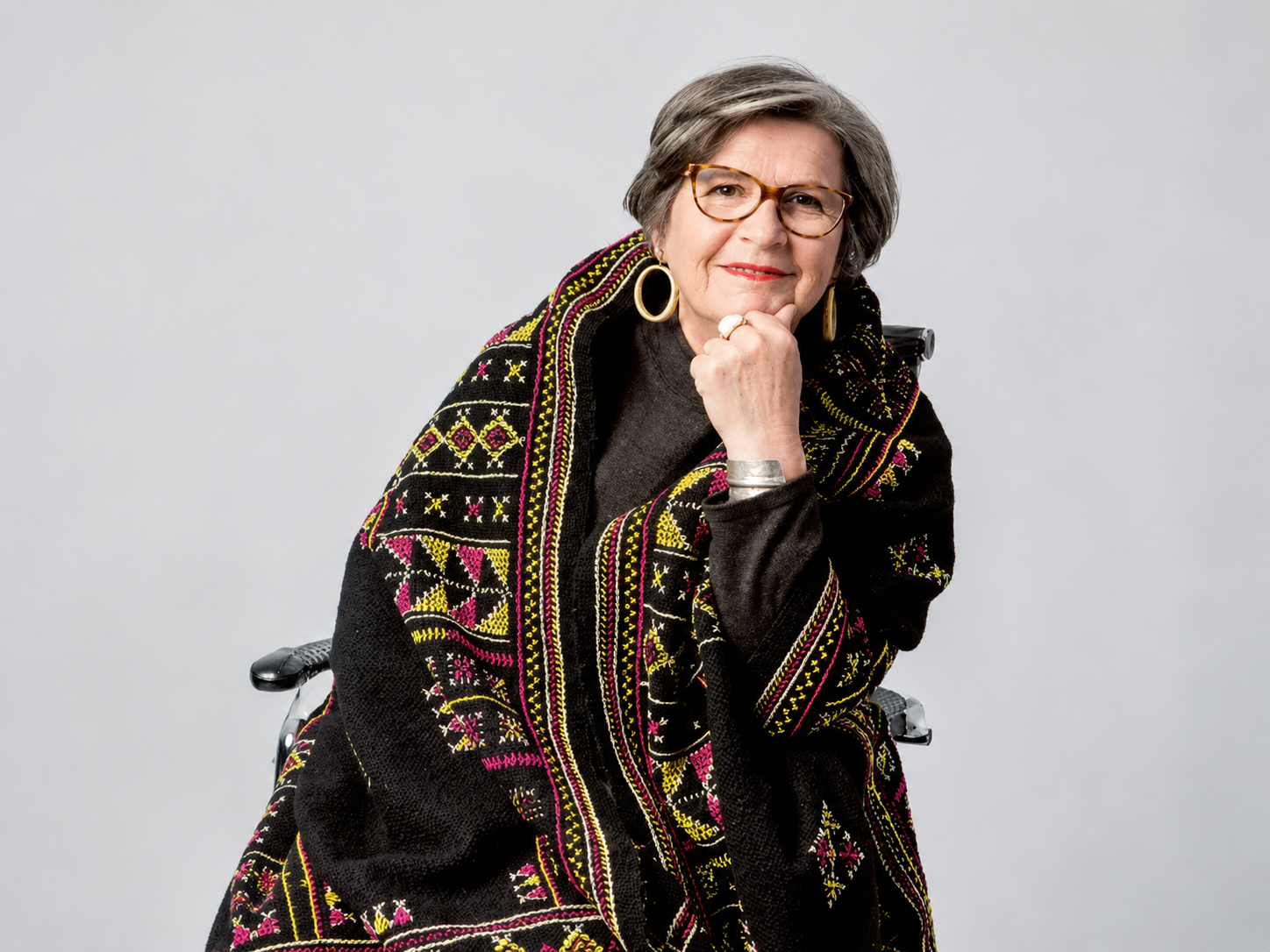
There is a particular kind of determination required to preserve something the modern world has quietly decided it can live without.
For Fatma Samet, that something was the embroidery of Kerkennah: geometric, painstaking and inseparable from the islands themselves. It belonged to a slower economy, built around looms, wool, palms and the intelligence of hands. By the time Samet realised how quickly the tradition was fading, nostalgia was never going to be enough. The work needed structure, buyers and a new generation willing to carry it forward.
Samet became the person who built that bridge.
In June, she was among seven Tunisian artisans honoured through a UNESCO-supported programme recognising traditional skills at risk of disappearing. Her distinction was awarded for Kerkennah embroidery, bringing an island practice that had been shrinking for decades back into national view.
The public recognition came late in a career defined by quieter work: learning from older artisans, training younger ones, developing new products and finding ways to make heritage commercially viable without stripping it of meaning.
Samet grew up in El Ataya, in the Kerkennah archipelago, surrounded by fishermen, weavers and women who embroidered. Men traditionally produced the plain cloth. Women transformed it through counted stitches, colour and ornament.
The knowledge was rarely written down. Patterns were remembered. Measurements lived in the hand and eye. Women with little formal schooling could work through complex systems of symmetry, sequence and proportion with remarkable precision.
Samet saw artistic and intellectual value in that skill. She studied the aesthetics of art, later taught at the University of Crafts in Sfax and worked within Tunisia’s craft sector. The more she moved through the institutional world, the more clearly she understood what was being lost at home.
Kerkennah’s embroidery was weakening along with the ecosystem that sustained it. Industrial materials displaced older fibres and natural dyes. Experienced artisans grew older. Younger people left the islands. Skills once passed through everyday life became fragile.
Samet responded by learning, collecting and producing.
She did not treat the tradition as something to be sealed behind glass. She approached it as a living design language. Linen met wool. Cotton was combined with silk and camel hair. Traditional embroidery appeared on cushions, scarves, dresses, coats, rugs and household objects. Palm materials entered the collection through basketry.
The aim was to prove these forms could still belong in contemporary life.
That approach eventually became Kerkenatiss, the company Samet formally established in 2009. She was approaching retirement, an age when most people are encouraged to scale back. Instead, she gave the project a clearer structure and turned decades of cultural work into a functioning enterprise.
Kerkenatiss grew through a network of women who could embroider from their communities while the company supplied materials, developed designs and connected the finished work to buyers. The model created income while allowing artisans to remain rooted in the islands.
It also changed the status of the work itself.
Craft is often praised as culture while being undervalued as labour. Samet understood that survival depended on correcting that contradiction. A stitch could carry memory and still have a price. Heritage could remain local while entering international markets. The women who held the knowledge could also benefit from it economically.
She brought artisans into contact with designers, encouraging collaborations that reworked traditional motifs without erasing their identity. This is where Samet’s work feels especially modern. She resisted the easy extraction of heritage as decoration. The original makers remained central. Design became a conversation between inherited skill and contemporary taste.
Her work also challenged the false divide between artisan and artist. In Samet’s world, a technically accomplished stitch contains an idea. A woven surface can hold memory, mathematics and personal expression at once.
That may explain why Kerkenatiss pieces never feel trapped by heritage. They are made to be worn, carried and lived with. Their continued use is part of their preservation.
Samet’s legacy is visible in the survival of the stitch, though it also lives in the network around it: the women whose precision found a market, the designers who learned from them and the customers who carried a piece of Kerkennah beyond the archipelago.
On islands shaped by departure, she built something around staying.
A thread passes through cloth, disappears beneath the surface and rises again somewhere else. From a distance, the movement becomes a pattern.
Fatma Samet has spent a lifetime making sure it rises again.