
Five Tunisian writers to read in English this year
Tunisian literature remains under translated in English, but the books that have crossed over offer a strikingly rich map of the country: colonial Tunis, the post independence state, exile, family memory, dictatorship, revolution and the private lives shaped by public pressure.
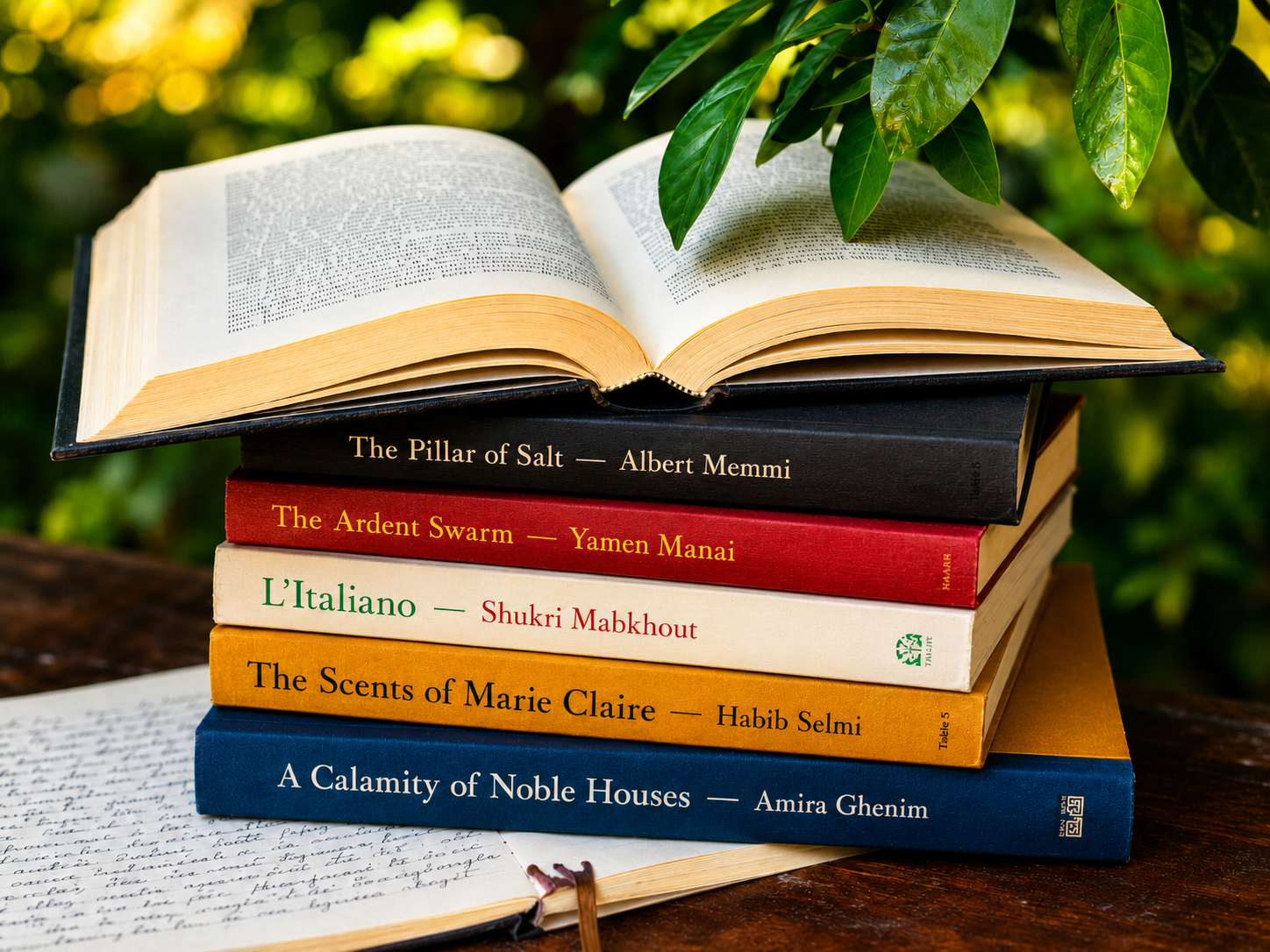
For English language readers, Tunisia often arrives through news: politics, migration, beaches, elections, debt, protest. Its literature gives something else. It gives the texture of homes, streets, families, old neighbourhoods, failed promises, class codes, desire, shame, humour and survival. These five writers are a good place to start.
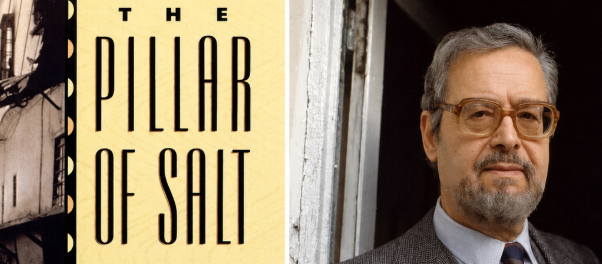
Albert Memmi
The Pillar of Salt or The Colonizer and the Colonized
Albert Memmi remains one of the essential Tunisian voices of the twentieth century. Born in Tunis in 1920 into a Jewish family, he wrote from the difficult borderlands of identity: Tunisian, Jewish, French educated, colonised and yet also marked by the privileges and exclusions of colonial society.
The Pillar of Salt, his semi autobiographical first novel, is still one of the most powerful books about growing up in colonial Tunis. It is not a nostalgic portrait. It is sharper than that: a study of belonging and estrangement, of a young man trying to escape the narrow worlds that formed him, only to discover that every escape has a cost.
For readers trying to understand Tunisia before independence, Memmi is indispensable. He writes about the country from inside its fractures. His work also matters beyond Tunisia. The Colonizer and the Colonized remains one of the major texts of anti colonial thought, read alongside Fanon and Césaire, but Memmi’s Tunisian roots give his writing its particular tension and moral force.
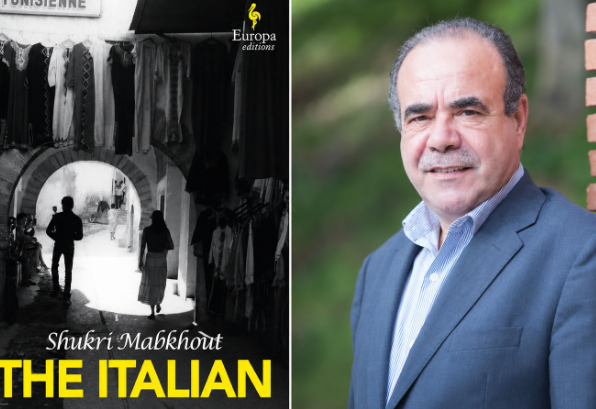
Shukri Mabkhout
The Italian
Shukri Mabkhout’s The Italian is one of the major Tunisian novels now available in English. First published in Arabic, it won the International Prize for Arabic Fiction in 2015 and was later translated into English by Miled Faiza and Karen McNeil.
The novel follows Abdel Nasser, known as “the Italian” because of his looks, through the political and social atmosphere of Tunisia in the 1980s and 1990s. It is a book about student politics, ideology, ambition, masculinity, love and disappointment. But it is also about the making of a generation that believed change was possible, then watched compromise, repression and personal failure close in.
For English language readers, The Italian is valuable because it gives access to a Tunisia that is rarely explained properly: the late Bourguiba and early Ben Ali years, not as a timeline of presidents and policies, but as a lived environment. Mabkhout shows how politics enters friendships, marriages, universities and bodies.

Yamen Manai
The Ardent Swarm
Yamen Manai is one of the most accessible contemporary Tunisian writers in English translation. The Ardent Swarm, translated by Lara Vergnaud, is short, sharp and deceptively simple. It tells the story of a beekeeper in a fictional North African village whose hives come under threat from an aggressive foreign hornet.
The book can be read as a fable, an ecological warning, a political allegory, or a post revolution story about how fragile communities are when they are exposed to imported threats and internal weakness. That is part of its strength. It is light enough to read quickly, but not slight.
Manai’s work captures something important about Tunisia after 2011: hope, vulnerability, rural intelligence, the danger of political manipulation, and the feeling that ordinary people are often left to defend the country’s real life while louder men fight over its symbols.
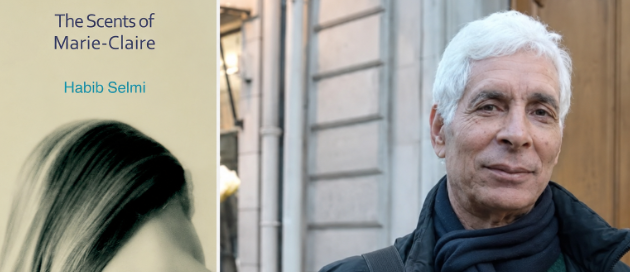
Habib Selmi
The Scents of Marie Claire
Habib Selmi offers a quieter Tunisia. Born near Kairouan and long based in Paris, he writes with restraint about intimacy, exile and the uneasy encounter between Tunisian and European lives.
The Scents of Marie Claire, translated by Fadwa Al Qasem, is a compact novel about a relationship between a Tunisian man and a French woman. It is not a grand political book, but politics is there in the background: in the distance between people, in language, in habits, in the assumptions each person carries into love.
Selmi is worth reading because he does not force Tunisia into spectacle. His fiction is attentive to small gestures, domestic space, memory and unease. For readers used to seeing Arab literature framed through war, revolution or crisis, Selmi’s work is a reminder that the private life is also a serious subject.
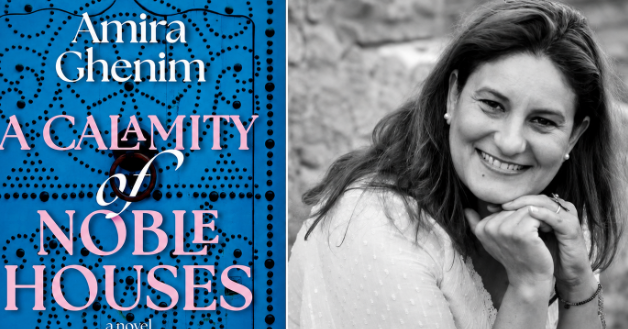
Amira Ghenim
A Calamity of Noble Houses
Amira Ghenim’s A Calamity of Noble Houses brings one of the most ambitious recent Tunisian novels into English. Set in 1930s Tunisia, it turns on a suspected affair involving Zubaida Rassaa, the wife of Mohsen Ennaifer, and Tahar Haddad, the reformist thinker whose work on women’s rights made him one of the most controversial figures of his time.
The novel is built through multiple voices, allowing family memory, social reputation and national history to collide. It is a story of elite Tunisian households, but also of women’s lives, reform, gossip, honour and the violent pressure of respectability.
Ghenim should be read because she opens a door onto a Tunisia that is both historical and recognisable: a society arguing with itself over women, modernity, class and moral authority. Her English language debut is also a sign of something larger. Tunisian literature is slowly becoming more available to readers who cannot read Arabic or French. It should not have taken this long.
Together, these five writers do not offer a single Tunisia. That is precisely the point. Memmi gives the colonial wound. Mabkhout gives the political generation before the revolution. Manai gives allegory after rupture. Selmi gives exile and intimacy. Ghenim gives history through family and gender.
For anyone wanting to read Tunisia beyond the headlines, this is where to begin.