
Germany’s UN Defeat Exposes the Price of Double Standards on Gaza
Berlin’s failed Security Council bid points to a wider problem for Western diplomacy: international law has lost much of its persuasive force when applied selectively.
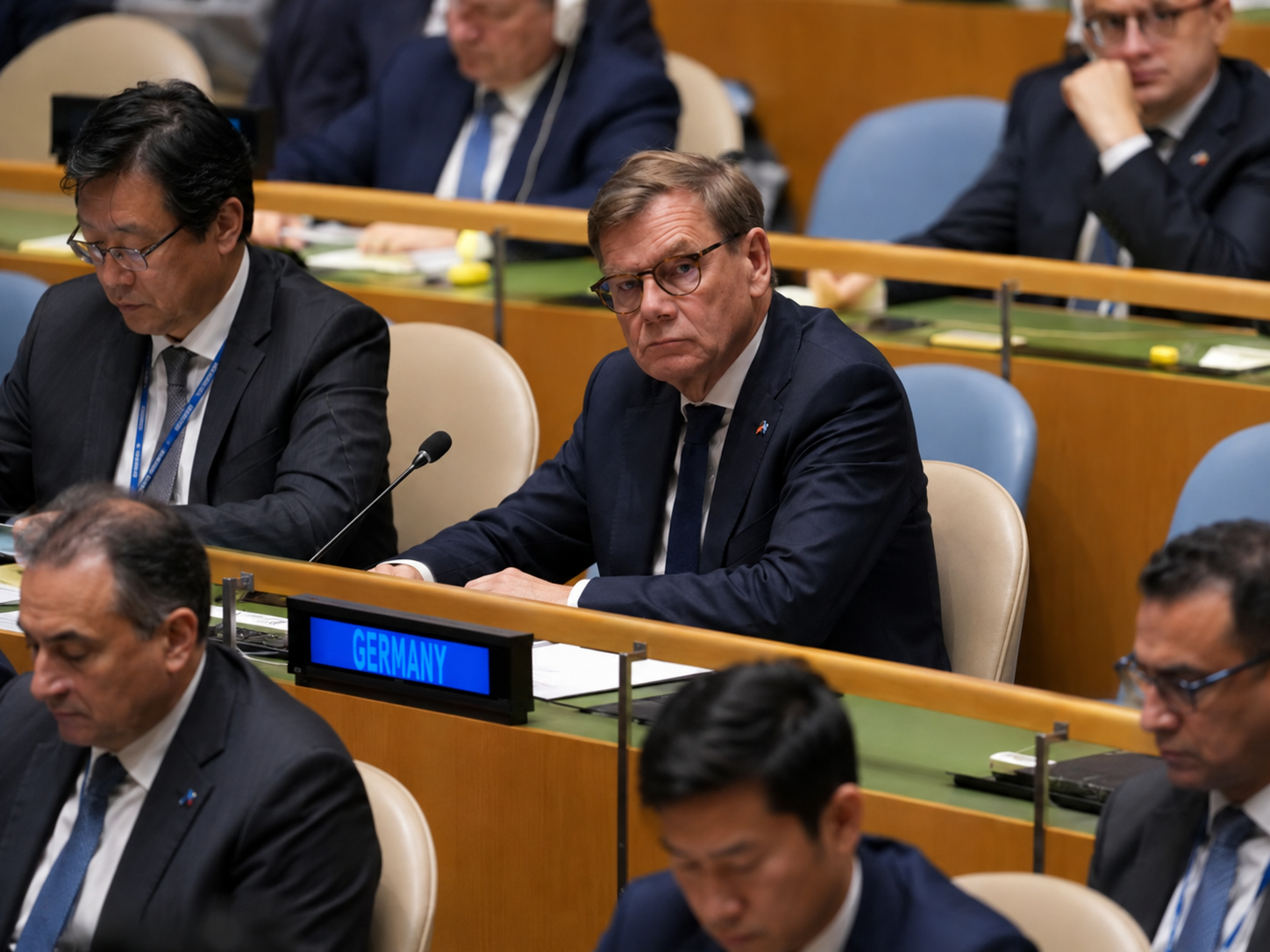
Germany's failure to win a rotating seat on the UN Security Council is an unusually visible setback for a country that has long regarded multilateral influence as one of the pillars of its foreign policy.
On June 3, the UN General Assembly elected Austria, Portugal, Kyrgyzstan, Trinidad and Tobago, and Zimbabwe to serve two year terms on the Council from January 1, 2027. Germany, competing for one of the two seats allocated to the Western European and Others Group, was defeated in the first round. Portugal received 134 votes, Austria 131 and Germany 104, below the 127 required.
For Berlin, the result is difficult to dismiss as a routine diplomatic disappointment. Germany is among the UN's largest financial contributors, has served on the Council several times before, and has made permanent membership central to its argument for Security Council reform. The failure to secure a temporary seat weakens that claim, at least politically.
The symbolism was acute. Annalena Baerbock, Germany's former foreign minister and now President of the General Assembly, read out the result from the UN podium. Her successor, Johann Wadephul, described the outcome as a bitter defeat. He pointed to Russian lobbying against Germany because of Berlin's support for Ukraine, but also acknowledged that Germany's position on the war in Gaza may have cost it votes.
That second admission is the more consequential one.
Security Council elections are rarely referendums on a single issue. Austria had campaigned early and benefited from its neutrality and non NATO status. Portugal was a serious candidate with a long diplomatic reach. Russia had an obvious interest in denying Germany another platform after Berlin became one of Ukraine's most important European supporters.
Yet the Gaza war has changed the environment in which Western diplomacy is judged. Germany's defeat should be read against that wider shift. Across much of Africa, Asia, Latin America and the Arab world, Gaza has become a test of whether Western governments apply the principles they invoke in Ukraine with any consistency.
Germany has been among Europe's clearest voices on Russian aggression. It has defended sovereignty, civilian protection and the authority of international law. On Gaza, its language has been more constrained, its criticism more cautious, and its political posture more protective of Netanyahu's government. The contrast has damaged Berlin's credibility.
Germany's support for Israel is often explained by reference to historical responsibility. That explanation carries little diplomatic weight when it is used to soften the application of universal principles. Among many UN member states, Germany is increasingly seen as treating Palestinian suffering as politically secondary to its relationship with Israel.
The vote in New York suggests that this perception is beginning to matter in practical terms. States rarely need to advertise their reasons in Security Council elections. They can register disapproval quietly, by backing another candidate. Germany's missing votes may have had several causes, but Gaza gave them a sharper political meaning.
This is part of a broader erosion of Western authority at the UN. The war in Ukraine initially gave Europe and the US a powerful legal and moral case. Russia had violated the sovereignty of a neighbouring state. Civilian infrastructure was struck. Occupation and annexation were presented as direct assaults on the UN Charter.
The same legal vocabulary has proved harder for Western governments to sustain on Gaza. Calls for restraint, humanitarian access and future political processes have not carried the same weight as demands for accountability. For many states outside the West, the distinction looks less like diplomatic nuance and more like selectivity.
Germany is particularly exposed because it has invested heavily in the idea of rules based leadership. It presents itself as a serious, responsible power, committed to multilateral institutions and legal order. That reputation remains valuable, but Gaza has become a stress test for the credibility behind it.
The election result does not erase Germany's influence. It remains central to European policy, NATO planning and support for Ukraine. It remains a major donor and an important diplomatic actor. But the Security Council vote shows that financial weight and institutional seriousness are no longer enough to secure support across the wider UN membership.
The phrase "Global South" can flatten very different governments and interests. Some states may have voted against Germany because of Ukraine. Others may have preferred Austria's neutrality or Portugal's campaign. Some may simply have calculated that Berlin took their support for granted. But the cumulative message is clear: Western powers are facing a more sceptical diplomatic audience, and Gaza has intensified that scepticism.
For Germany, the lesson is severe. It cannot build a case for global leadership on international law while appearing to apply that law unevenly. It cannot expect its stance on Ukraine to compensate for the damage caused by its posture on Gaza. It cannot assume that economic power will overcome political resentment.
At the UN, influence is counted in votes. Germany needed 127 and received 104, and in that gap of 23 sits a plain warning, that the tables the West once set are beginning to turn, and that Gaza is the measure of how fast.