
Ghannouchi handed life sentence as Ennahda faces its heaviest legal blow yet
The 84 year old opposition leader now faces a life term on top of the four decades already handed down in earlier cases. Here is what this verdict adds to the record.
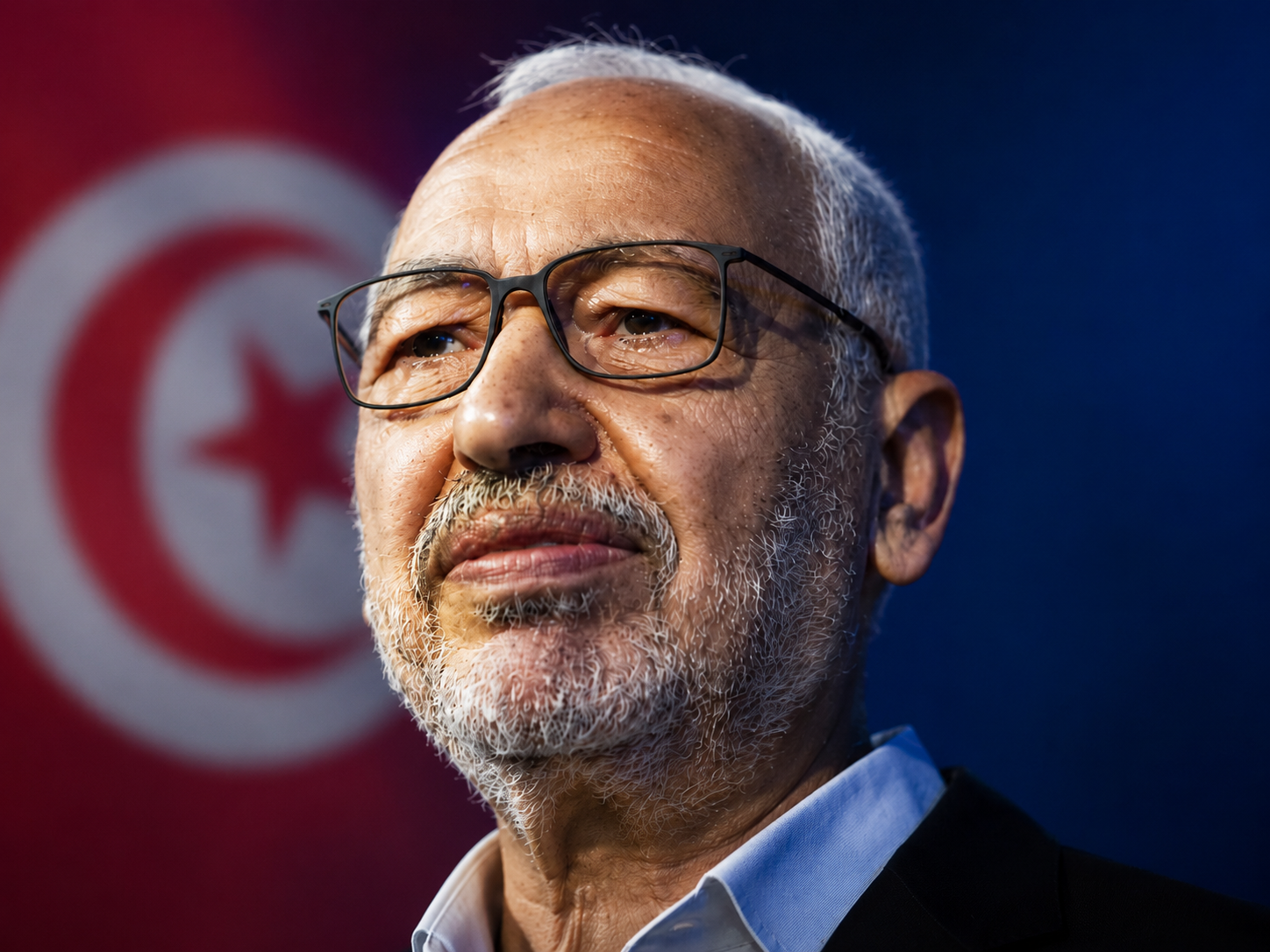
The Criminal Chamber specialising in terrorism cases at the Tunis Court of First Instance has sentenced Rached Ghannouchi, Ennahda’s historic leader and former speaker of parliament, to life in prison plus 30 years in the so called “secret apparatus” case.
The ruling, issued Tuesday evening, is one of the heaviest sentences handed down against the movement that shaped much of the decade following the 2011 revolution. According to Tunis Afrique Presse, sentences in the case ranged from 10 years to life imprisonment and involved dozens of defendants linked to Ennahda.
The case centres on allegations that Ennahda operated a “secret apparatus” tied to security and intelligence activity outside official state structures. The party has denied the accusations, and its leaders have repeatedly described the proceedings against them as politically motivated. The authorities have presented the prosecutions as judicial cases handled through the courts.
Ghannouchi, 84, has been detained since April 2023 and already faces a series of heavy prison sentences in separate cases. Earlier this year, an appeals court increased one of his sentences from 14 to 20 years on charges related to state security. Amnesty International said in February that the total prison terms issued against him in multiple cases had reached 56 years before the latest ruling.
The latest verdict also reportedly includes heavy sentences against other figures. Arab News and other outlets reported that former prime minister Ali Laarayedh received a 42 year sentence, while several other defendants received terms ranging from 10 years to life imprisonment. The case is one of the largest legal proceedings yet involving senior figures from Ennahda’s political and security environment.
The ruling comes at a moment when Ennahda’s political presence has been sharply reduced. The party won the first election after the revolution, participated in successive coalition governments, and remained one of the central forces in parliamentary politics for a decade. Ghannouchi became speaker of the Assembly of the Representatives of the People after the 2019 elections, before President Kais Saied froze parliament on July 25, 2021, and later dissolved it.
Since then, Ennahda has lost much of the organisational space it once occupied. Its headquarters were closed, several senior officials have been arrested or prosecuted, and the party has been pushed to the margins of public life. The latest judgment deepens that trajectory and places its historic leader under a sentence that, at his age, carries obvious finality unless overturned on appeal.
The “secret apparatus” file has long been one of the most politically charged cases in the country. Opponents of Ennahda have for years accused the party of maintaining informal security networks and links to political violence. Ennahda has rejected those accusations and says they are part of a campaign to criminalise the movement and rewrite the history of the post revolution period.
The case also revives some of the deepest disputes of the last decade, including the unresolved political memory of the 2013 assassinations of Chokri Belaid and Mohamed Brahmi, the role of security institutions after the revolution, and the mistrust between Ennahda and its opponents. For many anti Ennahda voices, the ruling will be seen as long delayed accountability. For the party and its supporters, it will be viewed as another stage in the dismantling of the opposition through the courts.
Human rights groups have placed the case within a wider pattern of prosecutions against opposition figures, former officials, journalists, lawyers and activists since 2021. They argue that the judiciary has been used to narrow political space. President Saied has rejected accusations of political interference, saying that those facing prosecution are being held accountable under the law and that no one is above justice.
Ghannouchi’s health has added another dimension to the case. Reuters reported in April that he was urgently hospitalised after what Ennahda described as a sharp deterioration in his condition. The party called for his release, citing his age and medical situation. The latest sentence is likely to renew those calls from his family, lawyers and supporters.
The legal process is not over. Defence lawyers are expected to challenge the ruling through the appeals process. International rights organisations are also likely to call again for fair trial guarantees, access to defence, and transparency in terrorism related proceedings.
Politically, the judgment marks another step in the closure of the post 2011 era. Ghannouchi was one of its central figures: first as the leader of a movement returning from exile and repression, then as a power broker in coalition governments, and later as speaker of a parliament that became the centre of Tunisia’s institutional crisis.
His sentencing does not only affect Ennahda. It raises again the central question that has shaped domestic politics since July 2021: whether Tunisia is carrying out legal accountability for the failures and abuses of the last decade, or whether the courts are being used to remove the political class that emerged after the revolution.
For now, the ruling leaves Ennahda facing its heaviest legal blow yet, and Tunisia with another major case that will deepen the divide between those who see the post 2011 order as a decade of impunity, and those who see its dismantling as a retreat from political pluralism.