
Historic marine heatwave grips north-west Mediterranean as ocean records tumble worldwide
The north-west Mediterranean has registered the most intense marine heatwave ever measured in the basin, with sea surface temperatures running 5.2°C above normal, as the EU's Copernicus Marine Service confirms June 2026 as the hottest month ever recorded for global oceans — raising urgent questions
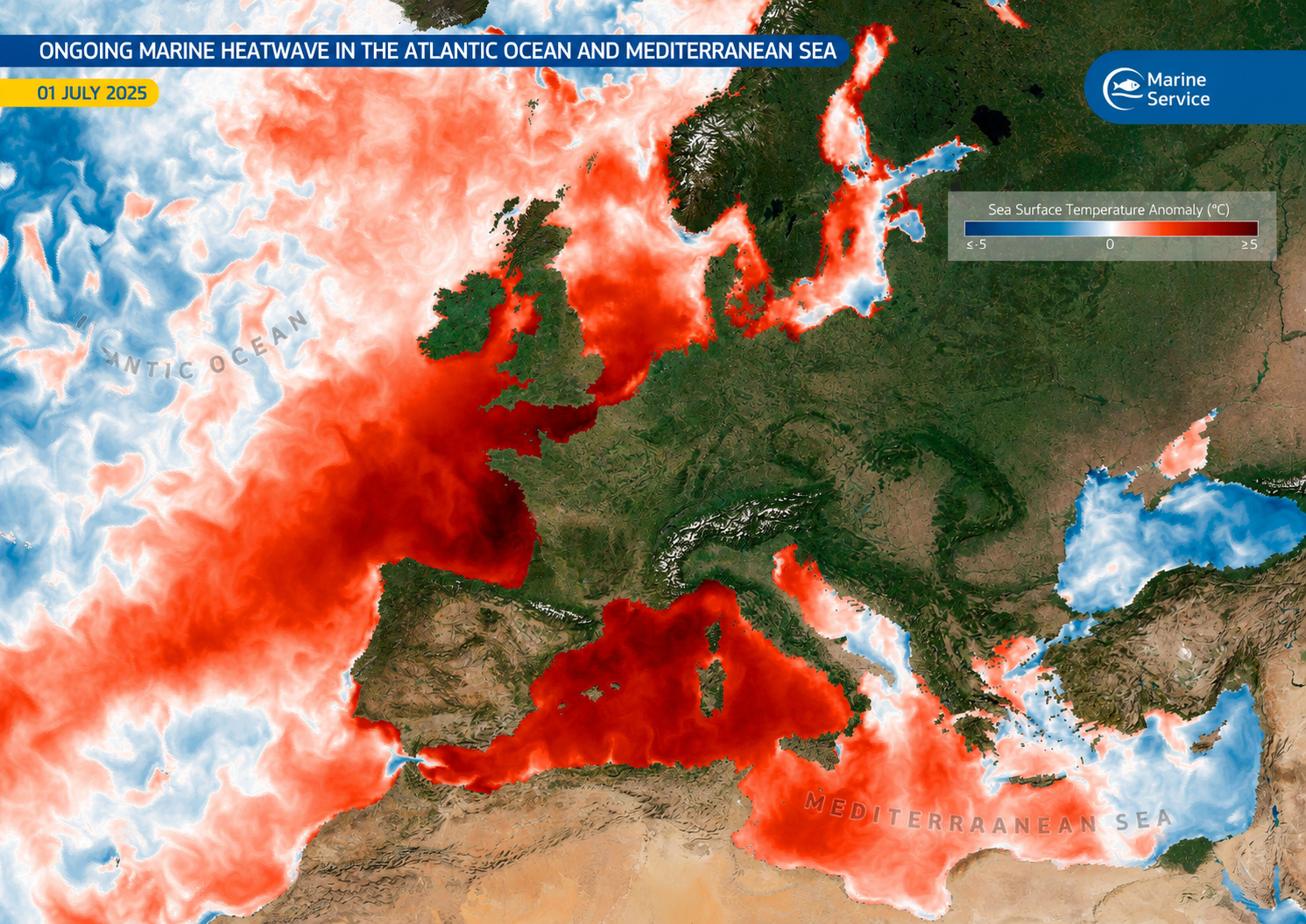
The north-west Mediterranean recorded the most intense marine heatwave ever measured in the basin on Monday 30 June, with sea surface temperatures running an average of 5.2°C above seasonal norms, Spain's Institut des Sciences de la Mer (CSIC) said on Tuesday — the same day that the EU's Copernicus Marine Service confirmed June 2026 as the hottest month ever recorded for global oceans.
The north-west Mediterranean heatwave reached its record intensity peak on Monday, with an average anomaly of 5.2°C above normal values, the CSIC, based in Barcelona, said, noting the record was due in large part to the heatwave that had just swept across Europe.
Justino Martinez, a researcher at the CSIC, told AFP: "The average of this heatwave is higher than any other average we have had before in terms of intensity."
A Mediterranean in crisis
The Mediterranean broke its June temperature record at 24.3°C, surpassing the previous highs set in 2023 and 2025, with marine heatwaves hitting 98 percent of the basin during the first six months of the year.
The largest anomalies reached approximately 6°C in the western Mediterranean, particularly in the Gulf of Lion off the coast of southern France, and in the Ligurian and Tyrrhenian seas along the western coast of Italy — driven further by the intense air temperatures that affected western and central Europe during the third decade of June.
Marine heatwaves put severe pressure on the least mobile marine species, causing mass die-offs among corals, gorgonians, sea urchins and molluscs.
Tunisia's coast: jellyfish on the move
The warming carries a direct consequence for Tunisia's beaches and fishing industry. Mahdi Aïssa, a marine biologist and director of the marine programme at the World Wide Fund for Nature, warned of the appearance of new jellyfish species on Tunisian coasts, a phenomenon he attributed to climate change and rising Mediterranean water temperatures.
Aïssa called on bathers to take necessary precautions and avoid any direct contact with new species, whose characteristics and potential effects on the human body remain poorly understood. He was speaking on Mosaique FM's morning programme on Wednesday.
Warmer Mediterranean waters have also altered broader migration patterns. Warming waters are changing where marine animals live, with fish and jellyfish that prefer high temperatures now being found further north in the Mediterranean, migrating from southern areas where the water has become too hot, while cold-water species struggle to survive.
Global oceans hit a new record
The world's oceans experienced their "warmest June ever observed" and could see further record-breaking highs in the months ahead as El Niño and climate change push temperatures higher. The EU's Copernicus Marine Service said that global sea surface temperatures of 21.0°C in June beat the previous records set in the same month in 2023 and 2024.
"The first six months of 2026 were characterised by persistently elevated sea-surface temperatures and widespread marine heatwaves across much of the global ocean," the EU's marine environment monitor said in a statement.
Marine heatwaves affected around 82 percent of the global ocean during the period, said Simon van Gennip, lead oceanographer for the Copernicus Marine Service. The first half of 2026 is now the second warmest on record, trailing only the first half of 2024.
El Niño raises the stakes further
Scientists said the onset of a potentially powerful El Niño weather pattern could boost global heat in the oceans and atmosphere even further in 2026 and into next year.
"Current conditions could indicate the beginning of a new phase, leading, once more, to uncharted territory," said Carlo Buontempo, director of the Copernicus Climate Change Service. "With ocean temperatures at these levels and El Niño on the horizon, we are likely to see more temperature records fall in the coming months."
Scientists tracking the heatwaves warned that elevated sea temperatures can supply additional energy to the atmosphere, creating favourable conditions for extreme rainfall events of the kind known in the region as "Mediterranean episodes".
Marine heatwaves — prolonged periods of unusually high sea temperatures — can affect weather patterns, trigger coral bleaching and prove fatal for marine wildlife. A major UN scientific assessment published last month declared that the world's oceans were in a "deepening crisis" as seas warmed and rose faster.
For Tunisia's 1,300 kilometres of Mediterranean coastline — a tourism asset drawing over 11 million visitors a year and a fishing ground supporting thousands of livelihoods — the summer of 2026 is opening under conditions with no recorded precedent.