
Infantino's FIFA has a rulebook for the weak and a phone line for the powerful
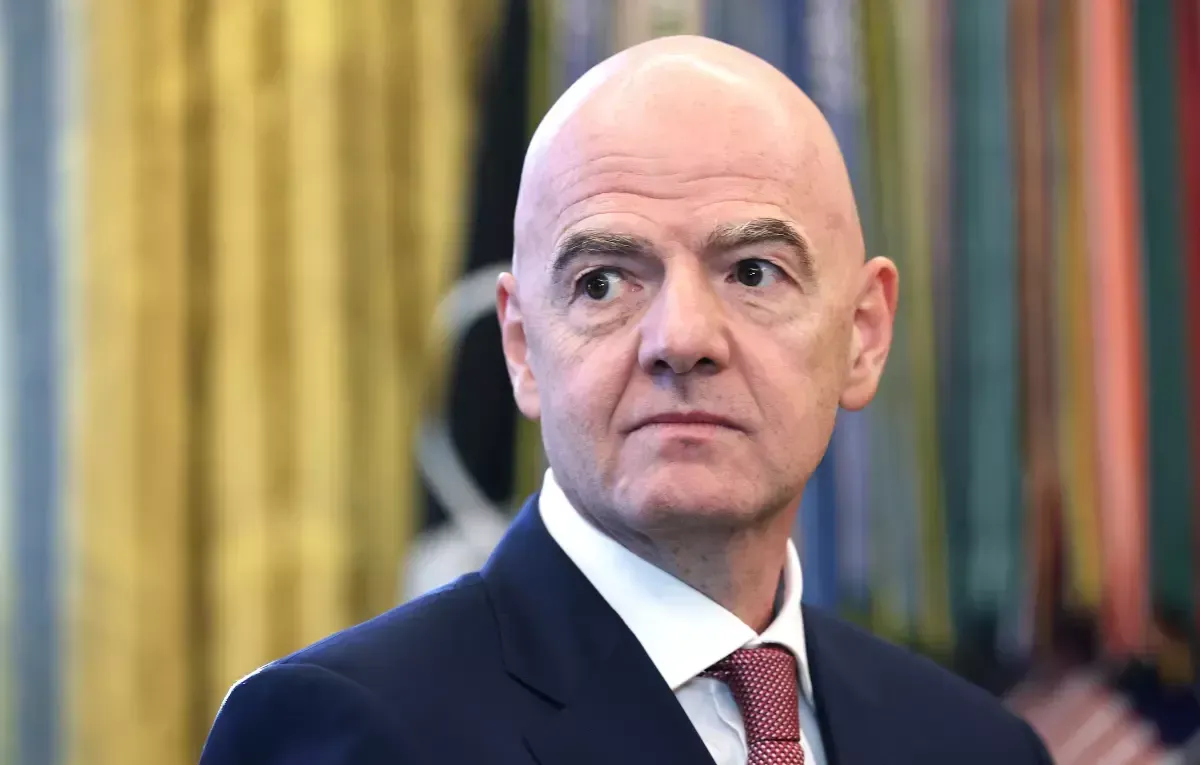
Consider what happened this week, because it will be studied for years as the moment the mask came off. The president of the United States picked up a telephone, called the president of FIFA, and complained about a red card shown to an American striker. Four days later, for the first time in more than sixty years of World Cup football, FIFA lifted an automatic suspension, invoked a dusty article of its disciplinary code, and sent Folarin Balogun out to face Belgium as though nothing had happened. Belgium's federation called itself astonished. It should save its astonishment. Nothing about this was new except the visibility.
Because the question worth asking about Gianni Infantino has never been whether he would do such a thing. It is why anyone still expected otherwise.
Follow the man, and follow the money
Look at the arc of this presidency honestly, without the press releases. Infantino was installed in 2016 as the answer to the greatest corruption scandal in sporting history, the candidate of reform, transparency and never again. Within eighteen months, the independent ethics investigator and the ethics judge, the two men who had banned his predecessor, were gone, removed at his congress and replaced with safer hands. The reform architecture he inherited was dismantled piece by quiet piece. When Swiss prosecutors opened criminal proceedings over his secret, undocumented meetings with the very attorney general whose office was supposed to be investigating FIFA, the attorney general lost his job. Infantino kept his.
Then watch where he went, because the geography tells the story. To Moscow, where he collected the Order of Friendship from Vladimir Putin. To Doha, where he moved his home before the Qatar World Cup and delivered the speech in which he felt Qatari, felt Arab, felt like a migrant worker, words spoken in defence of a tournament built by workers whose deaths FIFA has never fully counted. To Riyadh, for which he engineered a bidding process so airtight that the 2034 World Cup was awarded without one rival candidate, a coronation dressed as a contest. And now to Washington, where the sequence reaches its logical destination: an invented FIFA Peace Prize handed to Donald Trump weeks after the Nobel committee declined to oblige, fifteen thousand dollars of match tickets recorded on the president's own financial disclosure, a promise on Instagram to make the entire world great again, and finally a disciplinary decision delivered to order, by phone.
Each ruler got what he wanted. What did football get? Ask instead what Infantino got: two re elections without an opponent, a congress that applauds him even after European delegates walked out of the one in Paraguay he kept waiting while he toured the Gulf, and a personal position no FIFA president, including the disgraced one, ever dared to occupy this openly.
The other rulebook
Now put beside this the FIFA experienced by everyone without a throne or an army. A Somali referee, Omar Artan, flew to Miami to officiate at the World Cup, was turned back at the border and erased from the tournament, his career forfeited to the host country's politics. Infantino's considered response was that sometimes it is good to chill. .
Iran's federation president was refused a visa for the draw. Iran's team spent months as a bargaining chip in someone else's war while a Trump envoy floated giving its place to Italy.
Cape Verde, the smallest nation ever to reach this stage, went out to Argentina amid refereeing decisions its press has catalogued in fury, hours before Infantino was filmed confiding that he had suffered with Argentina that night, then remembering, a beat too late, to declare himself neutral.
For all of them, the rulebook proved to be granite. For the striker of the host superpower, it turned to water in four days. That, precisely, is the system: granite downward, water upward. The weak get procedure. The powerful get a number that rings.
Complicity has a wide circle
And let no one pretend this is one man's failing. The federations that re elect him unopposed, fattened on his expanded tournaments and development cheques, own this. The sponsors who fund it and the broadcasters who paid record sums to show it own this. The European associations that walk out of congresses and then walk straight back in own it most of all, having discovered that their outrage has a term limit of one news cycle.
Football's entire claim on the world's devotion rests on a single promise: that on the pitch, and only there, Brazil and Cape Verde are equals. Infantino has spent ten years selling that promise to whoever governs the room he is standing in, and this week he finally produced a receipt. The final on 19 July will end with him at Trump's elbow, handing over the trophy of a tournament whose rules he has already handed over. The game will outlive him. The question is how much of its meaning survives the wait.