
Iran war anxiety sends global container shipping rates soaring as Hormuz remains effectively closed
The cost of shipping a container from Asia to the United States has doubled since the Iran conflict began in late February, driven by spiking bunker fuel prices, mass rerouting around the Cape of Good Hope, and frontloading by importers bracing for worse to come.
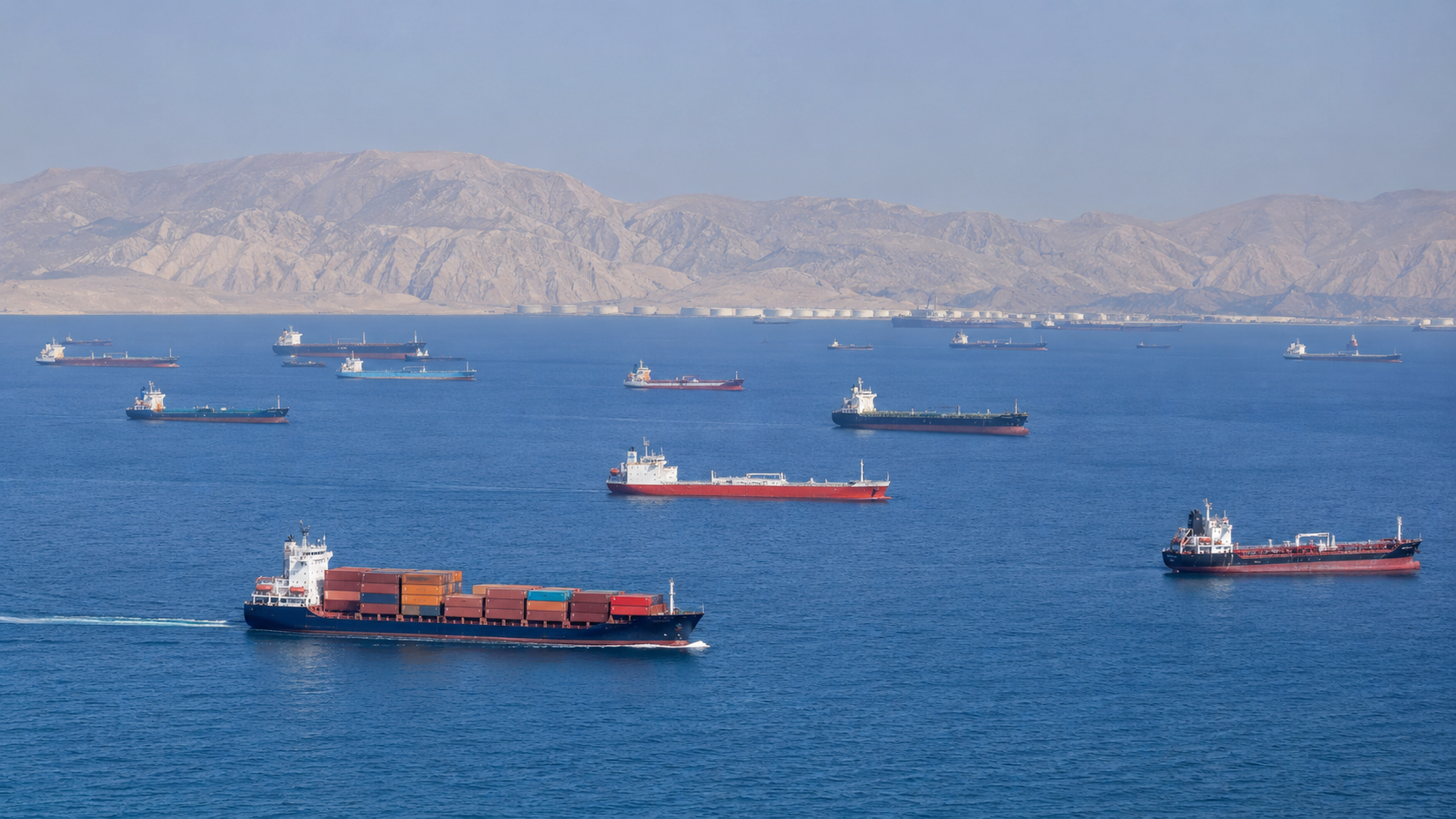
The cost of shipping a 40-foot container from Asia to the United States has roughly doubled since the start of the Iran war, Reuters reported on Wednesday 10 June, as spiking fuel prices and anxious frontloading by importers push global freight rates sharply higher more than 100 days into the conflict.
Asia-to-US spot rates tracked by both Xeneta and Drewry's World Container Index are up almost 100 percent from levels at the end of February, when US and Israeli strikes on Iran triggered the crisis. The Drewry index put the off-contract rate for a 40-foot container from Shanghai to Los Angeles at $4,565 on Thursday, with the Shanghai-to-New York rate at $5,505, according to the latest weekly Drewry World Container Index. A broader composite of the index surged 23 percent to $3,433 per 40-foot container in the week ending 4 June as peak season demand set in across all major trade lanes.
The fuel shock behind the rates
The proximate cause is the cost of bunker fuel. Very-low-sulfur fuel oil (VLSFO) — the marine fuel grade most container ships use — rose 55 percent to an average of $845 across 20 major fuelling hubs since the start of the Iran war, according to Ship & Bunker, a global marine fuel price publisher. Prices vary sharply by location: $1,211 per tonne in Fujairah, UAE — a key Gulf refuelling point — $770.50 in Singapore, $676 in Rotterdam and $918 in Los Angeles. Bunker fuel can account for as much as 60 percent of a container ship's voyage cost, analysts said, meaning even moderate swings in the fuel price quickly feed into freight rates well above what underlying cargo demand alone would justify.
"If you want to know how seriously to take the threat of an energy crisis, look at container shipping rather than oil markets because the risk is priced into the spiralling freight rates far more clearly," Peter Sand, chief analyst at freight pricing platform Xeneta, said.
Hormuz closed, fleets rerouting
The disruption traces back to 28 February 2026, when US and Israeli strikes killed Iran's then supreme leader Ali Khamenei and prompted Iran's Islamic Revolutionary Guard Corps (IRGC) to move against shipping in the Strait of Hormuz. The strait — normally the conduit for around 20 percent of the world's seaborne oil supply and 20 percent of global liquefied natural gas trade — has been effectively closed to Western-allied commercial traffic since early March. Tanker transit dropped by more than 95 percent from pre-war levels, the International Maritime Organization reported in April that around 20,000 mariners and 2,000 ships were stranded in the Persian Gulf, and the IRGC issued a formal ban on shipping linked to the US, Israel and their allies on 27 March.
Houthi-controlled Yemen simultaneously resumed attacks on commercial vessels in the Red Sea on 28 February, collapsing the partial recovery in Suez Canal transits that had followed the October 2025 Gaza ceasefire. Most major carriers — Maersk, CMA CGM, MSC and Hapag-Lloyd — suspended Hormuz and Red Sea transits and rerouted via the Cape of Good Hope, adding around 3,800 nautical miles and 10 to 14 days to voyages between Asia and Europe or the US East Coast.
The rerouting has tightened effective fleet capacity significantly: vessels making multiple annual voyages lose two to three full rotations per year on the longer route, reducing available space even though the global container fleet itself has not shrunk.
No quick fix on fuel
Even if a diplomatic resolution were reached promptly, the fuel supply shock would take time to unwind. Fuel analysts and maritime experts warn it could take around a year for bunker fuel supplies to return to normal, according to Reuters. US Energy Secretary Chris Wright said on Friday that lowering fuel prices will ultimately require a deal with Iran to restore oil flows through the strait. Global oil inventories and emergency reserves are being rapidly depleted as a result of the disruption.
Gisele Widdershoven, founder of Blue Water Strategy, a maritime and energy advisory firm, warned: "If Hormuz remains closed or only partially usable into the second half of 2026, shortages are to be expected, not necessarily everywhere, but in key grades and key locations."
The rates remain far below the peak of the COVID-19 pandemic era, when the composite Drewry index reached around $16,000 per 40-foot container at its height. But the current surge, compounded by an early peak season driven partly by importers pulling forward bookings ahead of possible US tariff changes expected in July, has nonetheless created one of the most active early peak seasons in recent years, freight analysts said.
Tunisia imports a significant share of its fuel, machinery, cereals and industrial goods by sea and is directly exposed to elevated bunker-driven freight costs on Asia–Europe and Asia–Mediterranean lanes. The Cape reroute lengthens transit times on goods moving from Asian manufacturing centres toward North African ports, compounding import costs in an economy already contending with elevated food and energy prices. UN agencies warned in April that import-dependent economies across the region face a widening economic shock as freight and fuel costs rise in tandem.
No diplomatic resolution has been confirmed. Military exchanges between US forces and the IRGC continued as recently as Wednesday 10 June, with the US military striking Iranian air-defence and radar systems near the strait and Iran's Khatam al-Anbiya Central Command reporting retaliatory strikes on US bases in the region, according to Iranian state media. Analysts at Drewry said the effects of the Hormuz disruption on fuel availability and pricing are "expected to keep freight rates elevated in the short term," with further increases likely as costs continue passing through to market.