
Iran's IRGC warns ships against Oman's Hormuz corridor as Rubio arrives in Bahrain to reassure Gulf allies
Iran's Islamic Revolutionary Guard Corps has rejected a temporary shipping corridor through the Strait of Hormuz established by Oman and the International Maritime Organization, warning vessels they risk enforcement action if they use any route not designated by Tehran — a direct challenge to the IM
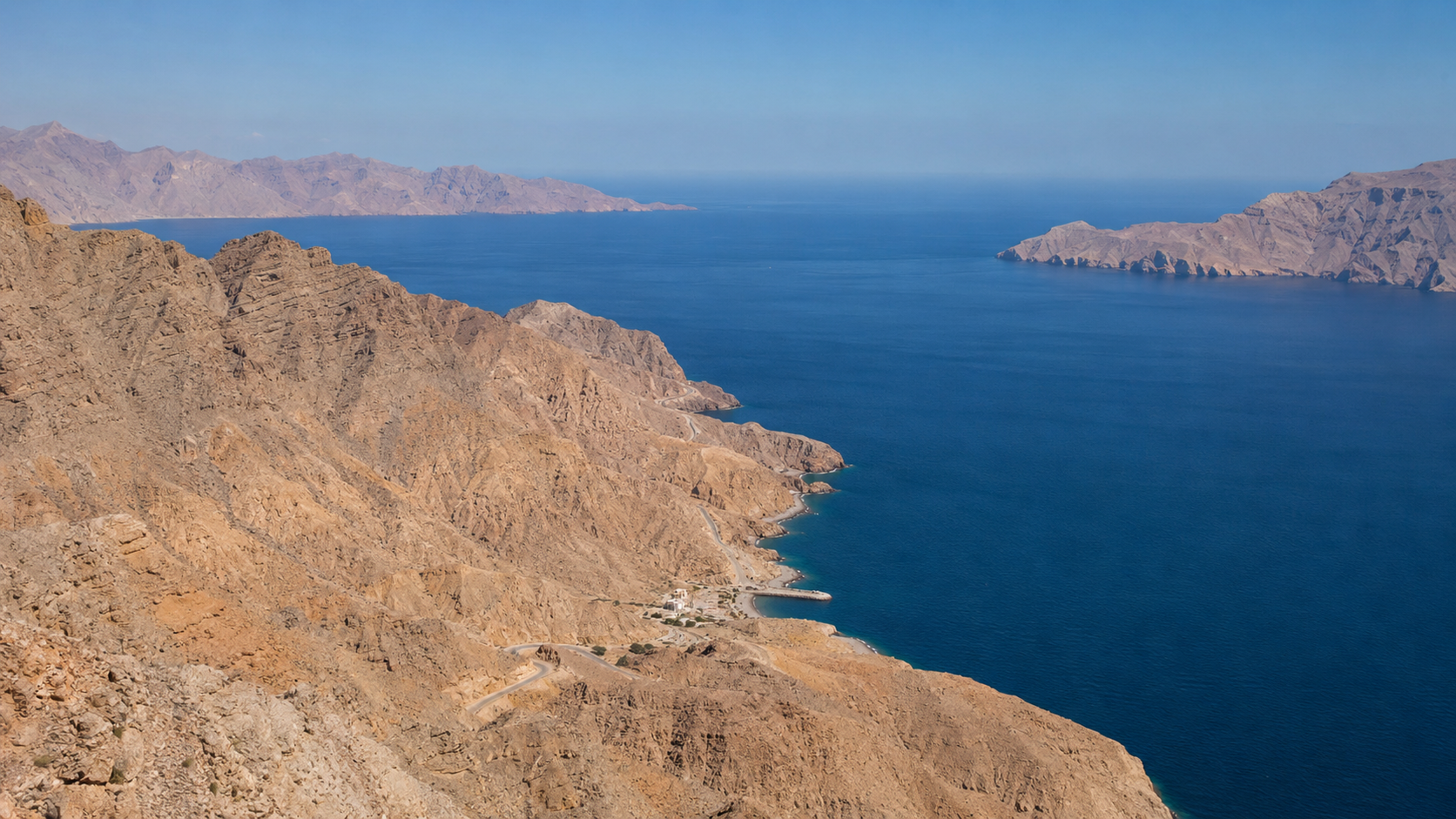
Iran's Islamic Revolutionary Guard Corps Navy warned commercial shipping on Thursday not to use a temporary transit corridor through the Strait of Hormuz established by Oman and the International Maritime Organization, saying the route was created without Tehran's knowledge and that vessels using it risk enforcement action.
The IRGC Navy said in a statement that safe passage through the strategic waterway would only be possible through officially approved routes, describing any alternative passage as "unacceptable and completely dangerous." The force said coordination with the IRGC Navy via VHF Channel 16 was "mandatory" and that "action will be taken against violating vessels."
The IRGC Navy said "certain authorities" had announced a new maritime transit route through the strategic waterway without prior notification to or coordination with Tehran. It did not name those authorities.
The Oman-IMO corridor
Oman's Transport Ministry had announced a temporary maritime corridor through the Strait of Hormuz on Thursday, established in coordination with the International Maritime Organization, enabling ships to transit at a greater distance from Iranian territorial waters than the IRGC-designated route.
The International Maritime Organization had released details of its plan to evacuate more than 11,000 seafarers stranded in the Strait of Hormuz. IMO Secretary-General Arsenio Dominguez said: "We will begin the implementation of the evacuation plan for over 11,000 seafarers still stranded in the region," also highlighting the confirmed deaths of 14 seafarers during the conflict.
The framework was promulgated to ships on 23 June through a Navigation Warning Request issued by the Oman National Hydrographic Office, and relies on temporary routing arrangements outside the existing Traffic Separation Scheme, which authorities said remains unsafe for navigation. Two emergency corridors have been established outside the normal traffic management structure, including an Oman-authorised route south of the existing separation scheme for eastbound transits.
The IRGC's warning appears to contradict the IMO plan, which said on Tuesday it had secured "necessary safety guarantees." The conflicting instructions create new uncertainty for ships weighing how to leave the Middle East Gulf safely.
The immediate risk of an outright closure of the strait has "substantially" decreased, but security consultancy Marisks said recent diplomatic developments should not be read as a return to unrestricted commercial navigation. The IRGC has reportedly stopped issuing new transit permits for the Tehran-controlled northern corridor, with only vessels already holding permission currently allowed to pass. The southern route through Omani territorial waters is being widely used by vessels with no Iranian affiliation, and those ships are transiting without incident under US coordination so far, Marisks said.
Traffic recovering but split
Traceable traffic through the strait jumped 270 percent to 119 transits last week after a memorandum of understanding between Washington and Tehran partially reopened the waterway, according to Lloyd's List Intelligence tracking data. The surge masks what Lloyd's List described as a confused, two-tier system, with the strait split between the Iran-controlled northern route and a US-protected southern passage, and the pre-war lanes rendered unusable by the risk of mines.
Five more South Korean-operated vessels exited the Strait of Hormuz on Thursday following last week's ceasefire agreement, bringing the total South Korean departures to 11, South Korea's Ministry of Oceans and Fisheries said. The ships safely passed through the strategic waterway and are sailing normally. The number of South Korean-linked ships remaining inside the strait has fallen to 13.
Under the ceasefire agreement reached with Washington, Tehran agreed to allow vessels to transit the Strait of Hormuz without any fees for 60 days following the signing of the interim pact.
Rubio in Bahrain
US Secretary of State Marco Rubio arrived Thursday for a meeting of the Gulf Cooperation Council in Bahrain, where he is expected to reassure regional allies that Washington will protect their security and economic interests as it seeks to reach a peace deal with Iran. Differences remain over the future of Iran's nuclear programme.
Rubio visited the United Arab Emirates and Kuwait on Wednesday before travelling to Bahrain, where he met Gulf Cooperation Council leaders in Manama. He said the US would ensure any agreement with Iran reflects the security and economic concerns of its regional allies and pledged not to undermine their interests during the negotiations.
Rubio acknowledged he faces a delicate mission pitching Washington's Iran peace deal to Gulf Arab leaders who fear excessive concessions will strengthen Tehran. The accord as written also appears to concede that Iran could have a key role in controlling the Strait of Hormuz going forward, a major concern for Gulf exporters who rely on the strait to ship oil and gas.
Rubio said on arriving in the UAE: "It's an international waterway. No country is allowed to charge tolls or fees on an international waterway. That's existing international law."
Differences also remain over Iran's nuclear programme. The head of the International Atomic Energy Agency said its inspectors will return to Iran's nuclear sites, but Tehran insisted inspections will resume only once a final agreement with the United States has been reached.
Iran's Ministry of Foreign Affairs separately accused NATO of being complicit in what it called an "unlawful war of aggression" after NATO Secretary-General Mark Rutte said European allies supported the US and Israeli strikes. Tehran said NATO members involved, including Italy and Romania, must be held accountable for their role.
Iran's Parliament Speaker Mohammad Baqer Qalibaf had signalled earlier this week a shift in Tehran's approach to managing the chokepoint. Speaking to Press TV, Qalibaf said the strait "will never go back to the way it was before the war."
The GCC-US Ministerial Meeting in Manama is expected to continue into Thursday afternoon. No joint communiqué had been released at the time of publication.
This is a developing story.