
Italian ambassador says Tunisia can become a fundamental energy crossroads for Europe and Africa
Italy's ambassador to Tunisia, Alessandro Prunas, used a radio interview on Friday to argue that the Elmed electricity interconnection and a surge in bilateral trade make Tunisia a pivotal bridge between the two continents, as construction contracts for the cable's converter stations were awarded ju
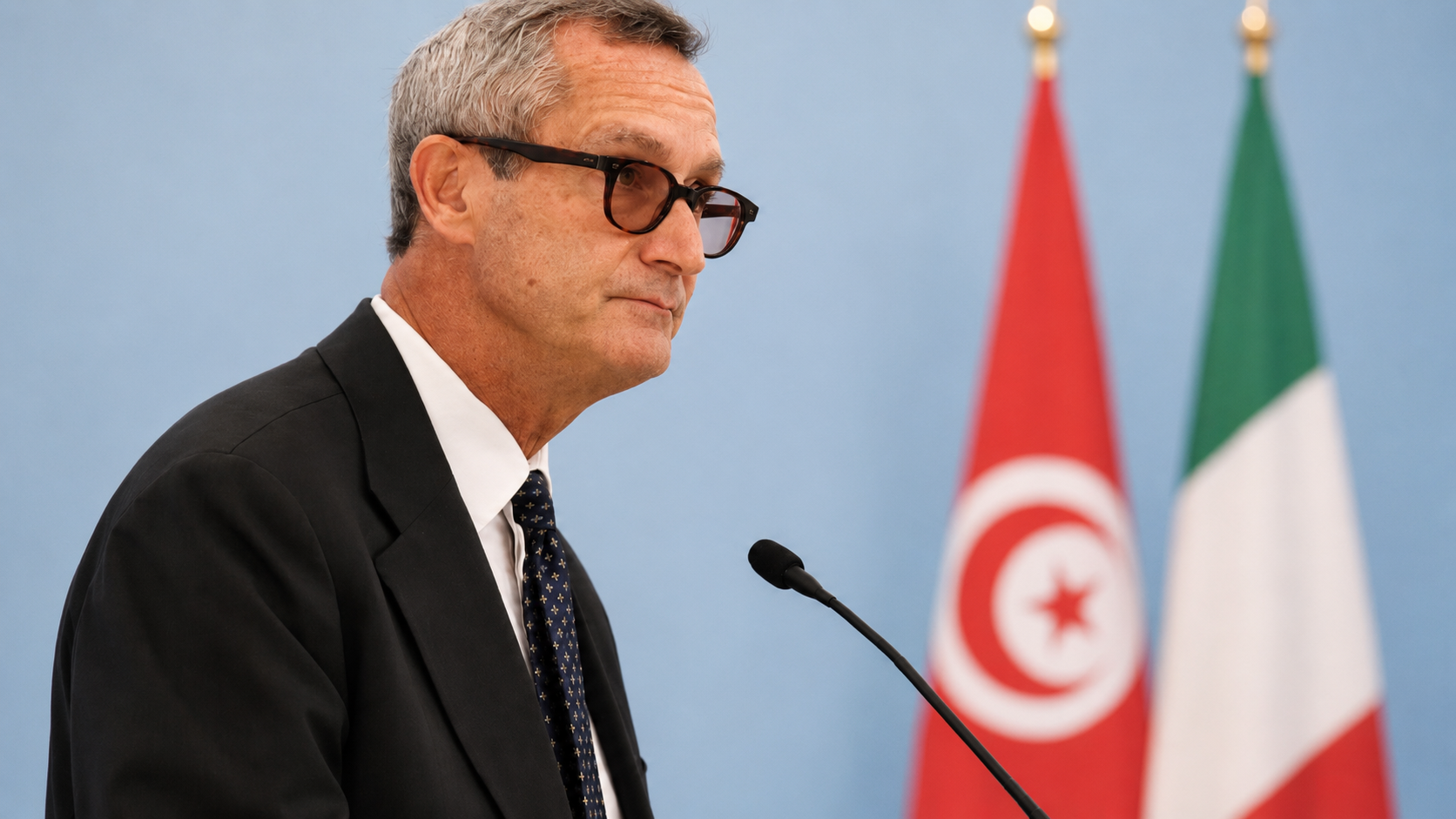
Italy's ambassador to Tunisia, Alessandro Prunas, said on Friday 3 July that Tunisia has the potential to become a fundamental energy crossroads between Europe and Africa, pointing to the Elmed electricity interconnection project and a deepening bilateral economic relationship as the two pillars of that ambition.
Prunas was speaking on the Expresso programme on Tunis-based business radio Express FM, taking stock of a week that had seen both the Italian-Tunisian Economic and Business Forum and the Tunisia Investment Forum (TIF 2026).
A continental-scale cable
On the energy front, the ambassador highlighted the Elmed electricity interconnection project between Italy and Tunisia, describing it as intended "to connect the electricity systems of the two countries and, in effect, two continents for the first time."
His remarks came days after a landmark procurement milestone. Terna, the company that manages the Italian national electricity transmission grid, and STEG, the Tunisian Electricity and Gas Company, awarded Hitachi Energy a contract worth approximately €770 million for the construction of the converter stations for the Elmed project, the first electricity interconnection between Italy and Tunisia.
The awarding of that contract marks the completion of the procurement process for the first high-voltage direct current (HVDC) submarine link between Europe and North Africa. The link will connect the two countries with a 600-megawatt transmission line stretching about 220 kilometres, most of it running beneath the Mediterranean Sea, reaching depths of around 800 metres in the Strait of Sicily.
The converter stations will be built in Partanna, in the Sicilian province of Trapani, and in Mlaabi, on the Cape Bon peninsula in Tunisia. A separate cable contract was awarded to Prysmian, which received an order from Terna and STEG to proceed with construction of the submarine interconnection, with a contract worth around €460 million.
Of the total investment of €1.42 billion, €307 million has been allocated by the European Commission through its Connecting Europe Facility programme — the first time the EU has financed an energy infrastructure project involving a non-member country. The project is also backed on the Tunisian side by the World Bank, the European Investment Bank, the European Bank for Reconstruction and Development (EBRD), and Germany's KfW development bank.
The interconnection is expected to be operational by the end of 2028, and represents, in the words of Tunisia's Secretary of State for Energy Transition, Wael Chouchane, "a structuring partnership initiative between the two shores of the Mediterranean."
Forum and trade ties
The Italian-Tunisian Economic and Business Forum, held on 24 June, marked a new step in strengthening an already strong economic relationship in the Mediterranean, with the aim of consolidating investments, promoting Tunisia's integration into European value chains, and opening new opportunities in the energy sector through Elmed.
The Forum was organised on the eve of TIF 2026, held on 25 and 26 June, precisely to encourage the participation of Italian companies in the main investment event in the country, Prunas explained. As evidence of the Forum's impact, the ambassador cited more than 400 business-to-business meetings organised at UTICA's headquarters between Italian and Tunisian companies.
The bilateral relationship already shows a high degree of integration: in 2025, trade between the two countries reached €6.5 billion, with Italian exports amounting to €3.4 billion and imports to €3.1 billion. In the first five months of 2026, total trade flows reached €2.8 billion, with Italian exports growing by 10.9 percent in the first quarter.
More than 1,000 Italian companies operating in Tunisia account for around 85,000 jobs, with the local production system becoming increasingly integrated into European value chains, particularly in the automotive, textile and advanced manufacturing sectors.
Migration and mobility
Prunas also addressed migration, a persistent theme in the bilateral relationship. According to the ambassador, over the period 2024 to 2026, Italy more than tripled the number of work visas issued to Tunisian nationals, with more than 15,000 work visas delivered to date. Study visas doubled over the same period, while legal mobility flows as a whole nearly tripled, he said.
For the first time, he said, regular arrivals of Tunisian citizens in Italy have substantially exceeded irregular arrivals — a shift he described as structurally significant for the protection of workers.
Around 70 percent of Tunisian exports are destined for the European market, while EU member states are among the principal investors in Tunisia, generating hundreds of thousands of jobs in the country, the ambassador noted.
The Elmed project is a central component of Italy's Mattei Plan for Africa. Alongside Elmed, Italy is positioning itself at the forefront of initiatives such as the South H2 Corridor, a project dedicated to transporting green hydrogen from North Africa to Europe over a route of some 3,300 kilometres.