
Mali's collapse is knocking on the Maghreb's door
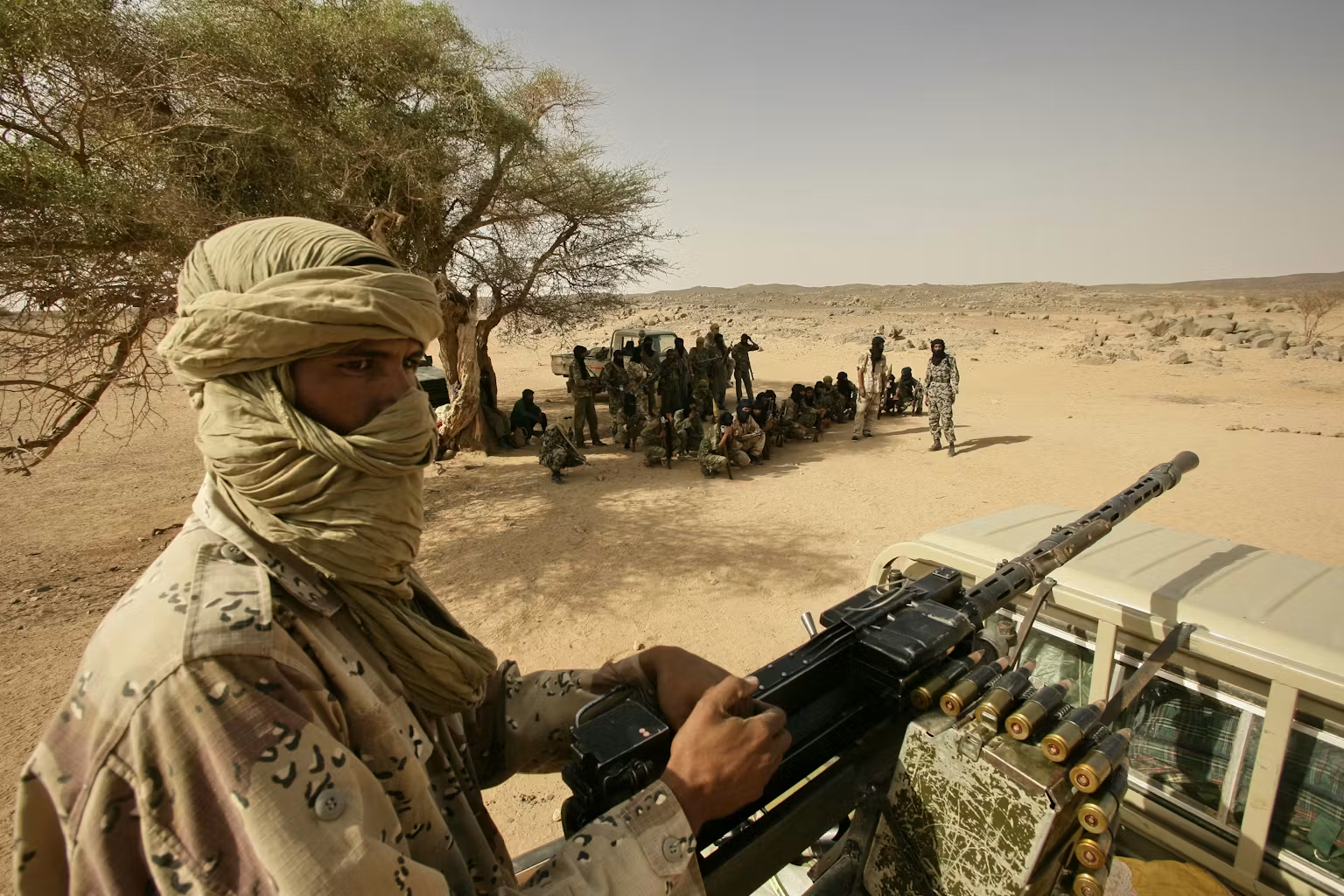
Mali's defence minister was assassinated in April during the largest insurgent offensive the country has seen since 2012. Fighters from JNIM, the al Qaeda linked coalition, struck Bamako, the garrison town of Kati and cities across the centre and north in coordination with Tuareg separatists of the Azawad Liberation Front, who seized Kidal. Since then the capital has lived under blockade, choked of fuel in a country that imports 95 percent of it by road. Schools have closed, the lights have dimmed, and Washington and London have told their citizens to leave.
The Maghreb's capitals have watched all this the way one watches weather in another hemisphere. That detachment is a strategic error, because everything now breaking in the Sahel travels north.
The junta model has failed
Mali's rulers took power promising security through sovereignty. They expelled the French, evicted the UN mission, and hired Russian mercenaries whose successor formation, the Africa Corps, has proved unable to keep a single highway open. Burkina Faso and Niger followed the same script into the same cul de sac. The three juntas left ECOWAS, banded together in their own alliance, and now preside over the widest jihadist expansion West Africa has recorded.
JNIM's strategy deserves sober attention. It has stopped trying to storm capitals and started strangling them: blockading fuel, taxing roads, governing villages, offering justice where the state offers only raids. Its fighters have struck as far as the Senegalese border, into Benin, and for the first time into Nigeria. The group behaves less like a terrorist franchise and more like an insurgent proto state assembling itself along the trans Sahelian corridor.
Why this is a Maghreb problem
Geography allows no quarantine. Algeria shares nearly 1,400 kilometres of border with Mali, and the routes that move fuel, gold, weapons and people through Kidal and Gao run straight toward its southern approaches. Libya's ungoverned south is already the marketplace where Sahelian conflict economies buy their hardware. Tunisia sits at the end of these corridors, receiving the human consequences: Sudanese, Malian and Burkinabe migrants pushed north by war toward a coast that has become Europe's outsourced frontier.
Three specific risks deserve naming. First, weapons flow. Every state collapse in the Sahel since 2012 has recharged the arms bazaars that feed armed groups across North Africa. Second, recruitment. JNIM's success is a demonstration effect for cells from southern Libya to the Tunisian border highlands, where the Chaambi insurgency has never fully died. Third, leverage. A jihadist coalition that controls Mali's trade arteries can price and direct migration flows toward the Mediterranean, acquiring a bargaining chip against Europe and its North African partners alike.
The coordination that does not exist
Against this, the Maghreb fields nothing collective. Algeria runs its own southern security policy and guards it jealously. Morocco, locked out by the closed border and its feud with Algiers, pursues Atlantic initiatives with the Sahel states bilaterally. Libya has no single state to act. Tunisia, absorbed by its internal crisis, has reduced its Sahel policy to coastguard arithmetic. The Arab Maghreb Union, the body designed for exactly this kind of shared threat, has been clinically dead for three decades.
The contrast with the threat is stark. JNIM coordinates across five borders. The states north of it coordinate across none.
A realistic agenda would start small: a shared intelligence picture on trafficking routes, common positions in dealings with Bamako's junta and its Russian patrons, joint contingency planning for the refugee movements a wider collapse would trigger. Tunisia, weak as it is, has one asset the giants lack, credibility with everyone, and could convene what Algiers and Rabat will never accept from each other.
The Sahel's fires have been treated as someone else's emergency for a decade, first France's, then Russia's, always the Sahelians' own. The April offensive should end that comfort. When a capital two borders away is under siege by an organisation that governs highways, the question for Tunis, Algiers and Rabat is no longer whether the crisis reaches them, only in what form and how prepared they are when it does.