
Monastir prepares smart city project built around video surveillance network
Local authorities and security services in Monastir have outlined plans for a camera network covering city entry points and main intersections, with automatic image analysis and licence plate recognition at its core, as Tunisia's coastal cities accelerate urban surveillance programmes.
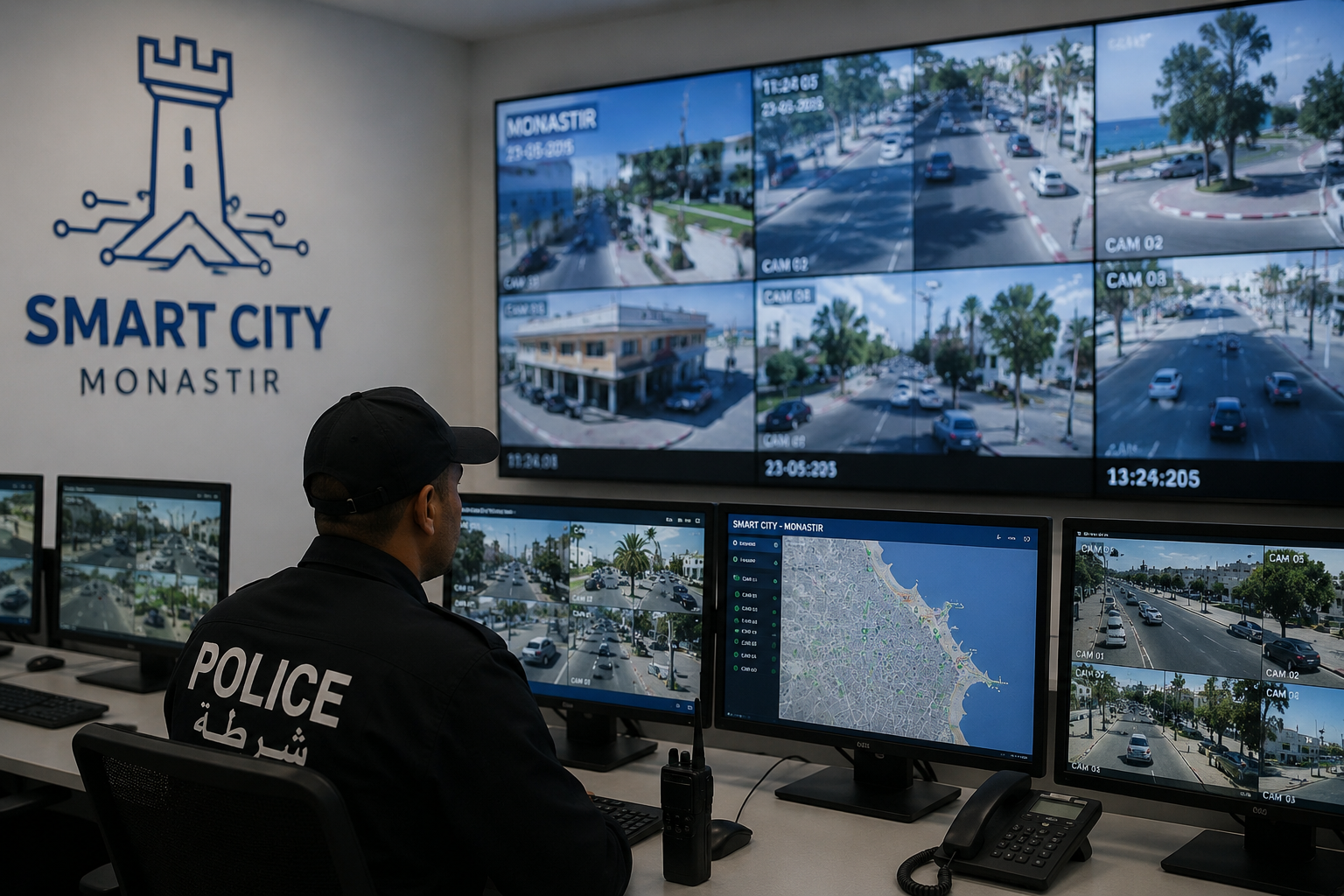
Monastir's governorate is preparing a smart city project centred on an intelligent video surveillance network, following a working session held under the supervision of the governor of Monastir, La Presse de Tunisie and Webdo reported on Wednesday 10 June.
The project aims to deploy cameras at the city's entry points and principal intersections, with stated objectives of reinforcing urban security and modernising crime prevention, according to both outlets. The system would incorporate automatic image analysis and licence plate recognition technology.
Local authorities and security services used the working session to discuss priority locations for equipment installation, focusing on what officials described as strategically sensitive sites, Webdo reported.
Fibre optics and cybersecurity backbone
The technical infrastructure underpinning the project is planned to rest on fibre-optic cabling, dedicated communications networks and cybersecurity systems designed to protect the platform against intrusion and software vulnerabilities, according to Webdo.
No budget figure, installation timeline or contractor was disclosed in the accounts of the working session.
Part of a wider Tunisian trend
Monastir joins a pattern already visible elsewhere on the Tunisian coast. Sousse, its neighbour to the north, has separately expanded its public surveillance infrastructure in recent months, while national digitalisation plans for 2025–2026 include 12 cybersecurity projects and nine digital infrastructure developments across the country.
The practical impact of camera-based urban security programmes depends significantly on integration with operational services, the availability of analysts to monitor footage in real time and the speed of on-the-ground response, Webdo noted.
No date has been given for the start of works or for the system's activation.