
NATO Ankara summit opens Tuesday as allies face pressure on spending, Ukraine and US commitment
Leaders of all 32 NATO member states gather in Ankara on Tuesday and Wednesday for the alliance's 36th summit, with defence spending targets, a €70 billion Ukraine pledge and the future of US engagement dominating an agenda shaped by months of transatlantic friction.
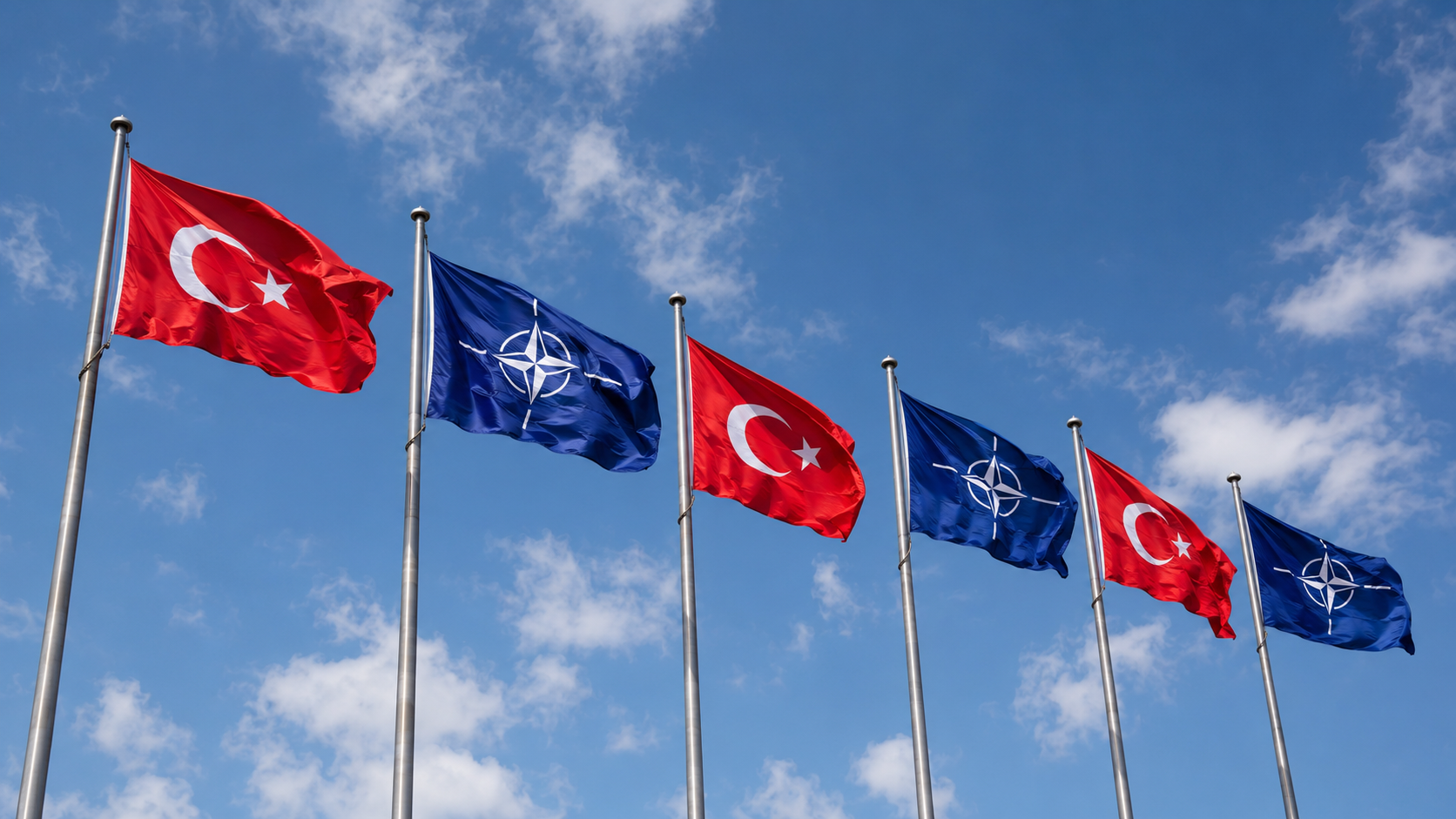
The 36th NATO summit opened in Ankara on Tuesday 7 July, bringing together heads of state and government from all 32 member countries at Turkey's Beştepe Presidential Complex for two days of talks that will shape the alliance's direction on defence spending, Ukraine and the future of US engagement in Europe.
Secretary General Mark Rutte has outlined three core priorities for the gathering: continuing to raise allied defence investment, scaling up transatlantic defence industrial production, and sustaining military support for Ukraine. It is the second time Turkey has hosted a NATO summit, following Istanbul in 2004.
Who is in Ankara
All 32 NATO member leaders are attending, including US President Donald Trump. Ukrainian President Volodymyr Zelenskyy is also present for summit events as a partner, not a member. The White House confirmed on Sunday that Trump will hold bilateral meetings on Wednesday with Zelenskyy and with Syrian President Ahmad al-Sharaa. A senior US official said Trump intended to discuss with Zelenskyy how to end the war in Ukraine, adding that Trump would follow up with Russian President Vladimir Putin by telephone afterward.
Foreign ministers from Bahrain, Kuwait, Qatar and the United Arab Emirates — the four members of NATO's Istanbul Cooperation Initiative, a partnership launched in 2004 to build security ties with Gulf states — are attending separate discussions with their NATO counterparts. Defence ministers from Australia, Japan, New Zealand and South Korea are also in Ankara for parallel talks.
European Commission President Ursula von der Leyen and EU foreign policy chief Kaja Kallas are expected to participate in summit events, with Kallas attending a dinner discussion with Ukraine's foreign minister and NATO foreign ministers.
What is at stake
The summit arrives amid sustained US pressure on European allies to spend more and assume greater responsibility for their own security. Since returning to office, President Trump has repeatedly called for European nations to reduce their dependence on US military resources, and has ordered the withdrawal of 5,000 US troops stationed in Germany while cancelling planned new deployments in Germany and Poland.
At last year's Hague summit, NATO allies agreed to raise annual defence spending to 5 percent of GDP by 2035. NATO figures published in March 2026 showed that all 32 members met the existing 2 percent benchmark in 2025, compared with just three allies in 2014. In 2025, European allies and Canada increased core defence investment by around USD 139 billion in nominal terms, and some allies are expected to reach the 5 percent target in 2026, ahead of schedule.
Rutte has framed the Ankara meeting as a "delivery" checkpoint. He has said he hopes it will realise the concept of a stronger Europe within a stronger NATO — an alliance that is less dependent on the United States while keeping the US firmly committed to European security.
Ukraine pledge and the declaration draft
NATO leaders are expected to reaffirm long-term military support for Ukraine. According to a draft declaration seen by Reuters, allies are expected to pledge €70 billion in military equipment, assistance and training for Ukraine in 2026 and commit to sustaining equivalent levels in 2027. Most of the funding is set to come through existing bilateral commitments and a European Union loan facility rather than new US contributions; the US is not expected to provide direct funding to the package.
The question of a clearer path to NATO membership for Ukraine remains open. Since 2008, NATO summit communiqués have repeated a broad pledge that Ukraine would one day join the alliance but have not set a timetable or specific benchmarks for a formal invitation.
Defence industry forum
Running alongside the summit on Tuesday, the NATO Summit Defence Industry Forum — NSDIF26 — brings together senior officials, industry leaders and procurement officials to focus on how defence investment commitments are being converted into production capacity. The forum is expected to produce announcements of contracts worth tens of billions of dollars covering weapons manufacturing, technology development and drone capability.
The southern neighbourhood dimension
Turkey's role as host gives Ankara an opportunity to advance its own regional priorities. Analysts at the Atlantic Council have noted that the summit is an occasion for NATO to deepen engagement with its southern neighbourhood — defined in previous summit communiqués as the Middle East, North Africa and the Sahel — after limited progress at The Hague in 2025. NATO's special representative for the southern neighbourhood, Javier Colomina, brought together ninety participants from NATO allies and North African and Middle Eastern partners for the first Southern Neighborhood Security Dialogue in Naples in May 2025. The Atlantic Council has called on Ankara to commit to a foreign-ministers-level continuation of that dialogue.
Turkey has also signalled its intention to use the summit to deepen the Istanbul Cooperation Initiative and expand security and defence-industrial cooperation with its Gulf partners — a priority given sharper focus after Gulf states came under Iranian pressure earlier in 2026.
Security in Ankara for the two-day gathering is extensive. Around 70,000 police and gendarmerie are reported to be on duty across the capital, with major roads closed and mass public gatherings banned during the summit.
The summit declaration is expected on Wednesday 8 July. This is a developing story.