
One million Lebanese still displaced as new US-brokered framework offers uncertain path to return
More than a million people remain internally displaced in Lebanon nearly four months after Israeli military operations forced them from their homes, with the occupation of a fifth of the country's territory and widespread destruction blocking safe return despite a newly signed trilateral framework a
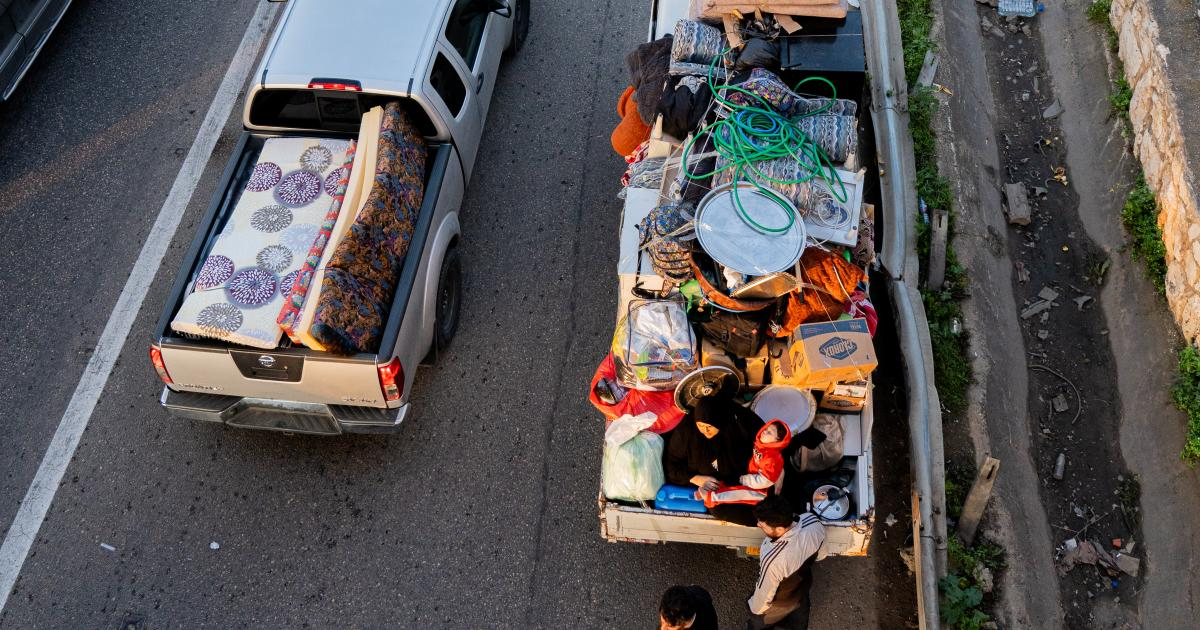
More than one million people remain internally displaced inside Lebanon on Tuesday 30 June, nearly four months after Israeli military operations forced them from their homes, the United Nations has said — with occupation forces still holding roughly a fifth of Lebanese territory and widespread destruction blocking any safe return for the vast majority.
The figure, confirmed by the UN Office for the Coordination of Humanitarian Affairs (OCHA) and the UN Refugee Agency (UNHCR), has remained above one million since mid-March 2026. As of 11 June, 131,200 internally displaced persons remained in 644 collective shelters , with many more staying with relatives, in rented accommodation, or sleeping in vehicles and open spaces.
A crisis rooted in March's escalation
The latest escalation began on 2 March 2026, when Israeli evacuation warnings to residents of more than 53 villages and densely populated areas in Lebanon and intensified airstrikes forced families across Lebanon to flee within minutes.
By October 2025, the IOM had reported that 986,192 internally displaced people had returned home following the Israel-Hezbollah conflict that began in October 2023. But that recovery was short-lived, and a new wave of displacement among Lebanon's population of 5.3 million pushed more than one in five people out of their homes.
According to national authorities, more than one million internally displaced persons had been recorded as of 22 March, including over 134,000 people sheltering in 644 collective sites. The true numbers are likely higher, as the one million figure is based only on those who self-registered with the government.
Israel has been occupying almost 20 percent of Lebanese territory in the south and has killed more than 4,000 people since fighting erupted on 2 March.
Return blocked by destruction and occupation
Even after the ceasefire, insecurity, unexploded ordnance and widespread destruction have prevented people from going home. Tens of thousands of houses have been damaged or destroyed, while access to water, electricity, healthcare and schools remains limited or disrupted.
The ceasefire agreement, instead of reversing displacement, has deepened it. Many displaced families who attempted to go back were displaced again after finding their homes damaged and their villages without water, electricity or services. Satellite imagery has documented extensive destruction of civilian infrastructure in southern Lebanon, and in some areas entire villages have been bulldozed and razed to rubble.
Israel has also established a so-called "Yellow Line" covering 55 Lebanese villages, effectively creating a broader no-return zone.
Israel's evacuation warnings and displacement orders — covering almost 14 percent of Lebanon's territory — led to the displacement of over a million people, according to the Lebanese authorities. The UN Human Rights Office has said that given the scale and circumstances of those orders, they may amount to forced displacement, prohibited under international humanitarian law.
The June 27 framework and its limits
On 27 June, the governments of Lebanon and Israel signed a United States-brokered framework agreement following months of direct negotiations. Israel will withdraw from two areas in southern Lebanon, transferring the sites to the Lebanese military, under the initial agreement.
The agreement describes a "reciprocal and sequenced process" that would see Israeli forces gradually withdraw from the south as the Lebanese army disarms non-state groups and destroys their infrastructure. It outlines a system of "pilot zones" where the Lebanese army will "gradually assume full and effective security responsibility". Civilians displaced by Israeli attacks would be allowed to return to their homes only after the Lebanese army is in full control of these areas.
Lebanese President Joseph Aoun welcomed the deal as "the first step on the path to restoring Lebanon's sovereignty" , while Lebanese Prime Minister Nawaf Salam said he looked forward to Israeli troops beginning their withdrawal from southern Lebanon so that displaced residents could return safely and reconstruction efforts could begin.
The deal does not mandate Israeli withdrawal from the fifth of Lebanese land it occupies. Hezbollah has insisted that Israel must leave Lebanon unconditionally, and maintains it must keep its weapons to fight Israel if the Lebanese army is unable to defend the country. The group's leadership called the agreement null and void.
Funding shortfall compounds the crisis
The 2026 Lebanon Flash Appeal is 32.2 percent funded, with approximately $206.2 million received against $639.9 million requested.
More than 770,000 children are experiencing heightened distress from repeated exposure to violence, loss and displacement, with many unable to return home because of ongoing fighting and the threat of unexploded ordnance.
The UN Spokesperson cautioned that "for many displaced families, ceasefire announcements have yet to translate into improved safety or the ability to return home."
The July timeline for implementation of the first pilot zones under the framework agreement will determine whether displaced families can begin returning to any part of southern Lebanon for the first time since March.