
One thousand days of war in Gaza, with 73,000 dead and the ceasefire fraying
As Gaza marks 1,000 days of conflict since the Hamas-led attack of 7 October 2023, more than 90 percent of the strip lies in ruins, Israeli forces hold nearly 80 percent of its territory, and the US-brokered peace framework has failed to secure reconstruction or withdrawal — though Hamas moved this
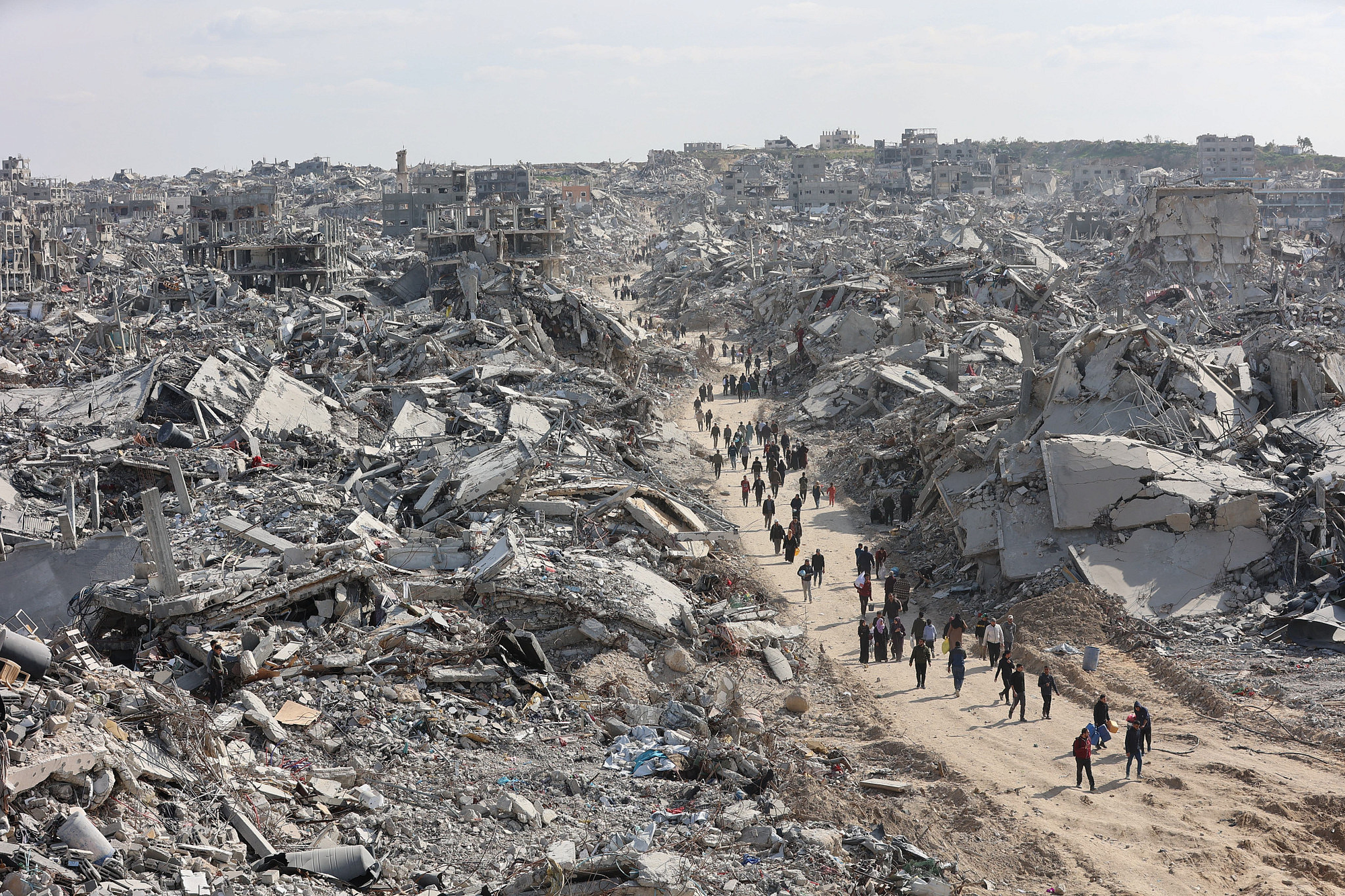
Gaza passed a grim milestone on Wednesday 2 July 2026, one thousand days after the Hamas-led attack on southern Israel on 7 October 2023 that triggered the largest military campaign in the territory's modern history. By 6 July, Gaza's Ministry of Health put the cumulative toll since October 2023 at 73,098 killed , with 1,072 Palestinians killed since the October 2025 ceasefire took effect . The milestone passed without a pause in the killing: Israeli forces killed at least three Palestinians in a drone strike near al-Hilu station on 1 July, and at least seven more over the following 48 hours, among them a child killed by a quadcopter-dropped bomb at the Shujayea junction and 10-year-old Tareq Sabah, killed near Khan Younis.
The scale of destruction
More than 90 percent of the Gaza Strip has been destroyed, and Israeli forces are in control of 80 percent of the besieged territory, Gaza authorities say. More than 21,500 of those killed were children, including 1,022 babies. A further 9,500 people are missing, many believed to be buried under rubble, while 173,514 have been wounded.
The UN said human development in Gaza has been set back 77 years, with life expectancy falling to 40. The scale of destruction has left an estimated 68 million tonnes of rubble, of which only about 310,000 tonnes — less than 0.5 percent — has been cleared, at a pace that would take more than 140 years to finish.
Gaza's Government Media Office said about 223,000 tonnes of explosives have been dropped by Israel on the enclave during the war. Gaza's entire population is at extreme risk of famine, with nearly 400,000 people surviving on one meal a day and 62 percent of primary healthcare medications out of stock.
Gaza's Civil Defence said 145 of its personnel have been killed carrying out humanitarian duties, while 347 others were injured. Some 94 percent of Civil Defence headquarters and centres have been destroyed, and teams have been targeted 38 times during operations.
The Gaza Ministry of Health's figures are maintained by the Hamas-led government and seen as generally reliable by UN agencies and independent experts. A peer-reviewed household survey published in The Lancet Global Health in April 2026 estimated 75,200 violent deaths between October 7, 2023 and January 5, 2025 alone — indicating the Ministry figures represent a floor rather than an overcount. In January 2026, Israel's military accepted the Ministry's death toll as broadly accurate, with a senior security official briefing Israeli journalists that about 70,000 Palestinians had been killed by Israeli attacks since October 2023.
A ceasefire that kills
The ceasefire went into effect on October 10, 2025, though there have been numerous attacks since, including the killing of more than 1,060 Palestinians by Israel. Israeli strikes have lessened considerably since the ceasefire took effect, but they continue almost daily. Nicolas von Arx, the International Committee of the Red Cross regional director, said this week: "Much more needs to be done so that even a semblance of normality can come back, and we are far, far away from this."
Israeli forces controlled over half of the territory under the ceasefire that took effect on 10 October, but Israel's government has expanded that and says it aims to hold 70 percent. The United Nations warned that the Israeli expansion in Gaza increases deadly risks for civilians in areas lacking clear demarcation on the ground.
The October 7, 2023, Hamas-led attack on southern Israel killed about 1,200 people and took 251 hostage. All hostages or their remains have since been released or handed over.
The Board of Peace stalls
The Gaza peace plan, officially the Comprehensive Plan to End the Gaza Conflict, is a multilateral agreement between Israel and Hamas. Led by US President Donald Trump, it was announced on 29 September 2025 during a press conference at the White House alongside Israeli Prime Minister Benjamin Netanyahu. The 20-point framework was endorsed by the UN Security Council in November 2025.
With most of Gaza in ruins, the ceasefire framework meant to end the conflict is faltering six months after its centrepiece body was established. The US-created Board of Peace, established in January to oversee the ceasefire and steer reconstruction under the three-phase plan, has failed to secure Israeli compliance, analysts say. Instead of a gradual withdrawal the plan envisions, Israel has expanded its control of Gaza, and only a third of the aid trucks it committed to allow into the enclave daily are entering.
Reconstruction has barely begun. Just 0.5 percent of rubble has been cleared and the vast majority of funding pledges by donor states have not been transferred to the World Bank-administered fund for Gaza reconstruction. The UN and World Bank estimate more than $70bn will be needed over the next decade to help Gaza recover.
Nickolay Mladenov, the Board of Peace's lead envoy for Gaza, said in May: "Seven months since the ceasefire, the door to the future of Gaza is still closed. It is not what the Palestinians were promised, and it is not what they deserve." He repeatedly cited the disarmament issue as a central sticking point, saying Hamas's obligation to give up its arsenal is "not negotiable" and that progress on all other issues — including reconstruction, Israeli troop withdrawals and the establishment of a new Palestinian government — is being held up.
The Board of Peace and the Palestinian technocratic committee, known as the National Committee for the Administration of Gaza (NCAG), were established and named in January 2026, but neither body is operational on the ground in Gaza. The committee is based in Egypt and has not entered Gaza.
Hamas dissolves its governing body
On 6 July — one day before this article — Hamas announced the dissolution of the body that has governed Gaza for nearly two decades, paving the way for a technocratic committee to implement civilian rule. The move marks a significant political shift by Hamas, which has governed Gaza since its fighters seized control from rival Palestinian movement Fatah in 2007.
Hamas spokesman Hazem Qassem said: "Hamas has taken a new step in that it will no longer be in charge of the Gaza Strip in order to remove any pretexts for the occupation." Hamas and other Palestinian factions have held several rounds of talks in Cairo with mediators to narrow differences, particularly over the second phase of the Gaza ceasefire, which Israel refuses to move to.
Israeli forces have expanded their occupation of the territory in recent months, taking control of nearly 70 percent. Hamas is demanding the establishment of a Palestinian administration before it will consider handing over any part of its weapons. Prime Minister Netanyahu says reconstruction should not be allowed to begin before Hamas is disarmed, and has restated his opposition to a Palestinian state.
The West Bank and the wider picture
The UN Office for the Coordination of Humanitarian Affairs reported that more than 2,300 Palestinians, over 1,000 of them children, have been displaced in the occupied West Bank in 2026 alone, with 121 communities experiencing full or partial displacement since 2023.
Gaza's sick and wounded, deprived of critical medical supplies in the decimated strip, protested outside al-Shifa Hospital in Gaza City to demand that Israel lift travel restrictions on medical evacuations, with health authorities saying more than 20,000 people are awaiting exit through a throttled Rafah crossing.
On 23 June, the UN Independent International Commission of Inquiry found that Israeli forces had deliberately targeted and killed Palestinian children — at least 20,179 between October 2023 and October 2025, roughly 30 percent of all those killed. The commission said the deliberate killing of children was a key element establishing genocidal intent.
Further ceasefire steps, including Hamas's disarmament and the immense task of reconstruction, remain stalled. For the more than two million Palestinians in Gaza, Gaza City Mayor Yahya al-Sarraj told Al Jazeera: "We lost about 85 to 90 percent of our resources, our buildings and our infrastructure. We feel in many cases paralysed."