
Saddam Haftar meets Rubio in Washington as US presses Libya unity plan
The US Secretary of State and the Libyan National Army's deputy commander met in Washington on Monday, with the State Department saying they discussed unifying Libya's military, economic and political institutions as the Trump administration pushes a power-sharing framework it hopes to finalise befo
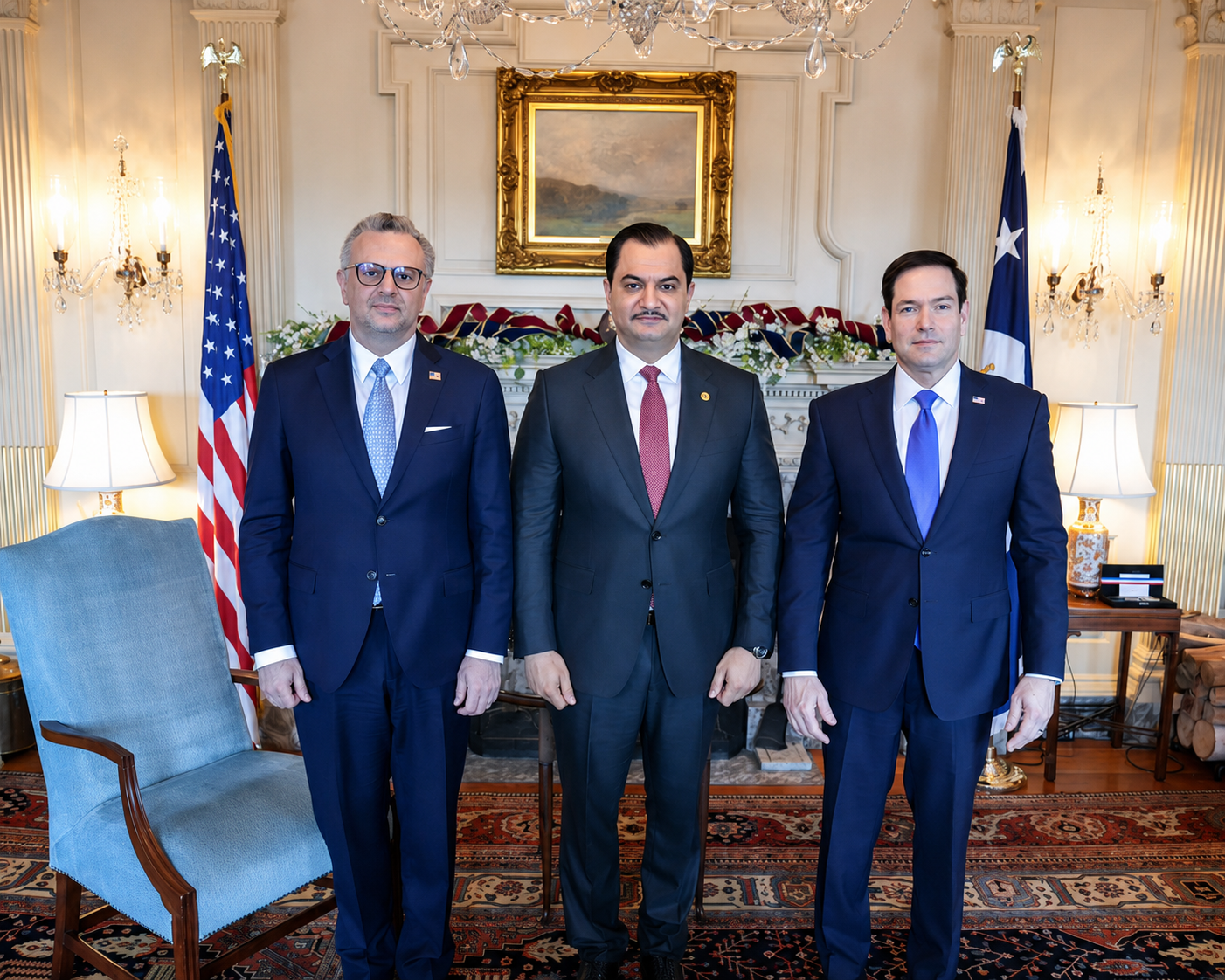
Lieutenant General Saddam Haftar, deputy commander of the eastern-based Libyan National Army (LNA), met US Secretary of State Marco Rubio at the State Department in Washington on Monday 29 June, as the Trump administration pushes a framework to unify Libya's divided institutions.
The State Department said Rubio and Haftar "discussed ongoing Libyan-led efforts to unify the country's military, economic, and political institutions" and possible ways to advance unity and peace in the country, according to a readout attributed to spokesman Tommy Pigott. Rubio expressed appreciation for Libyan leaders' efforts "to overcome divisions and move toward unity," the statement added.
Washington said it would "remain at the forefront of diplomatic efforts to support Libyan unity and create the conditions for a democratically-elected government able to lead Libya forward."
The Boulos initiative
The Washington meetings are the most visible sign yet of a sustained US push led by Massad Boulos, senior White House adviser on Arab and African affairs, to broker a power-sharing arrangement between Libya's two rival administrations: the Tripoli-based Government of National Unity (GNU), led by Prime Minister Abdul Hamid Dbeibah and recognised by the United Nations, and the eastern government backed by the LNA, headquartered in Benghazi under Field Marshal Khalifa Haftar, Saddam's father.
Boulos told Al Hadath television on Friday that Libyan parties would be invited to Washington to sign a final agreement in the presence of President Donald Trump, should one be reached. Sources close to Boulos's team, cited by the Libyan news site Bawabat Al-Wasat, have pointed to 30 September as a target date for a signing ceremony under White House auspices, though that timeline has not been officially confirmed.
Rubio also held parallel meetings with representatives of the GNU, The National reported, reflecting Washington's stated approach of engaging both camps simultaneously.
Momentum and scepticism
Diplomatic activity around Libya has accelerated sharply this month. On 21 June, Abdul Hakim Belhaj, a prominent Tripoli political figure and former commander of the Tripoli Military Council, publicly endorsed the US initiative — the most notable signal of western Libyan support to date. His endorsement followed Field Marshal Haftar's forces and more than 100 members of the eastern-based House of Representatives expressing backing for the Boulos proposal.
In April, for the first time on Libyan soil, forces from both rival camps conducted joint military training under US supervision. Libya's three main governing bodies also agreed this month on a road map to hold presidential and parliamentary elections within eight months.
Regional intelligence contacts have run alongside the political track. Egyptian intelligence chief Hassan Rashad visited Tripoli this month — the first such visit by a senior Egyptian official since 2021 — while the head of Italy's foreign intelligence service, Giovanni Caravelli, also travelled to the Libyan capital last week to discuss the US proposal with Dbeibah, Italian media reported. Earlier this month, Turkish intelligence chief Ibrahim Kalin visited Benghazi to meet Saddam Haftar on institution-building and stability, Al Jazeera reported.
The proposal, as reported by the Financial Times and corroborated by multiple analysts, envisions a transitional power-sharing structure in which Saddam Haftar would lead a unified presidential council while Dbeibah would remain as prime minister. Washington has presented the arrangement as a bridge to eventual elections rather than a permanent settlement.
The initiative has drawn criticism. Political analyst Abdulsalam al-Rajhi, speaking on Al Jazeera Arabic, described the effort as "closer to a deal than an initiative," arguing it is structured around specific individuals rather than institutions. The Atlantic Council's Karim Mezran and Dario Cristiani have written that the plan, even if realised, would not resolve Libya's deeper structural problems.
Background
Libya has been split between rival administrations since 2014, when a disputed election fractured the country's post-Gaddafi political order. The LNA consolidated control over the east from 2016 onward. A 2019 LNA offensive to capture Tripoli was repelled by Turkish-backed forces, and a ceasefire was reached in 2020, but political reconciliation has remained elusive.
Saddam Haftar was appointed LNA deputy commander in August 2025. He has conducted an intensive round of foreign meetings in recent weeks, including with Egypt's defence minister and French President Emmanuel Macron, and is widely regarded as the LNA's heir apparent. Human rights organisations, including Amnesty International, have documented serious abuses by forces under his command, allegations the LNA disputes.
The US Embassy to Libya operates from Tunis due to security conditions in Libya.