
Sfax military hospital performs first awake brain surgery in the region
Tunisia's Military University Hospital of Sfax successfully removed a brain tumour using the awake craniotomy technique on Wednesday evening, with the patient kept conscious during the procedure to allow real-time monitoring of neurological function — the first such operation recorded in Sfax govern
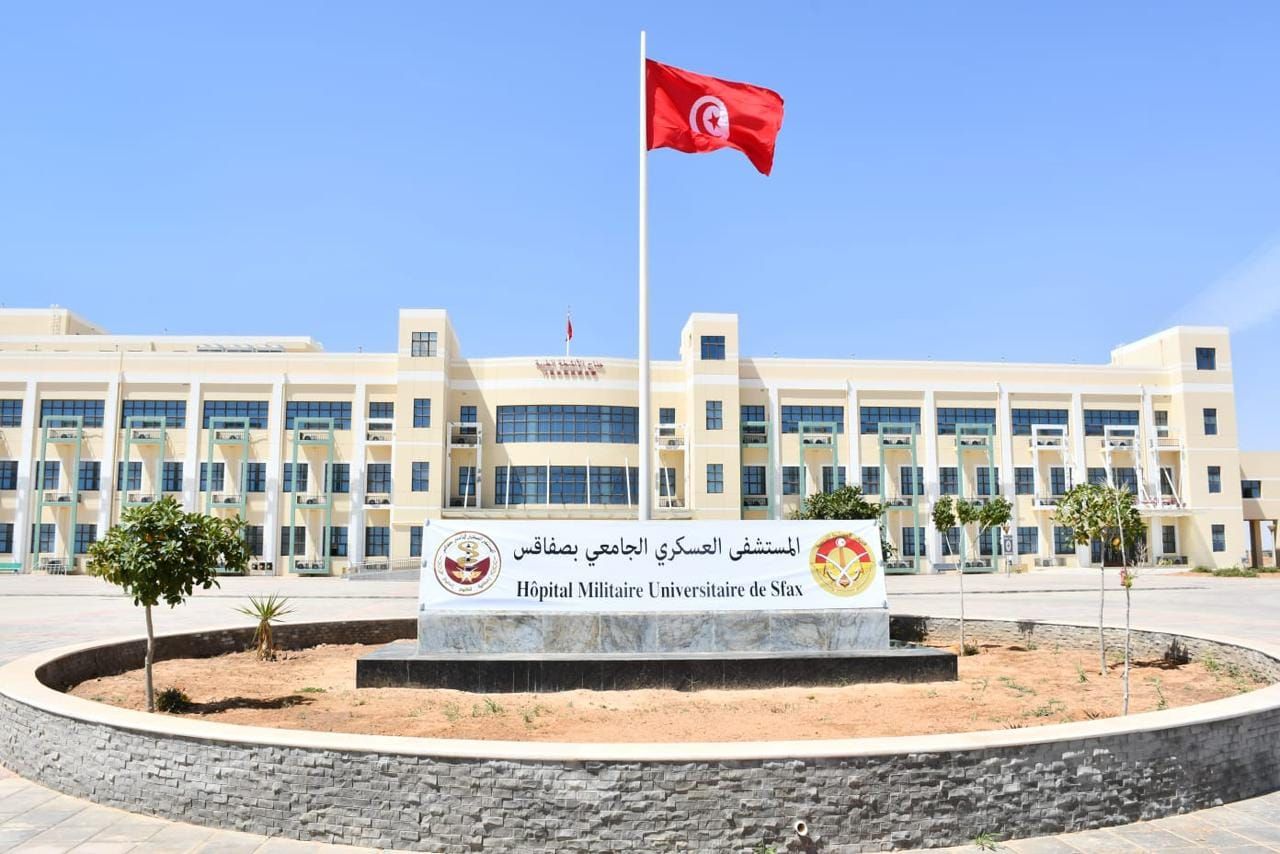
The neurosurgery team at the Military University Hospital of Sfax carried out the first awake craniotomy recorded in the governorate and the south of Tunisia on Wednesday 10 June, removing a brain tumour while the patient remained conscious, the Ministry of National Defence said in a communiqué on Thursday 11 June 2026.
In the procedure, known in French as neurochirurgie éveillée, surgeons woke the patient during the critical phase of tumour resection so that the team could monitor vital neurological functions in real time and ensure those functions were preserved as the tumour was removed.
The operation was performed jointly by the hospital's neurosurgery team and its anaesthesiology and resuscitation unit, the ministry said, describing the outcome as the product of multidisciplinary collaboration that allowed the highest levels of surgical precision and patient safety.
Why patients are kept awake
Awake craniotomy is used when a tumour lies close to areas of the brain that govern speech, movement, memory or vision. Because brain tissue contains no pain receptors, patients can be fully conscious — and asked to speak, move or respond to simple tasks — during the most critical stages of the operation, while the scalp and skull are kept numb through local anaesthesia.
That real-time feedback allows the surgical team to map functional zones precisely and avoid damaging them during resection, achieving a more complete removal of the tumour while reducing the risk of postoperative neurological deficit.
Regional significance
The Ministry of National Defence described the operation as the first of its kind in Sfax governorate and in southern Tunisia. It marks a significant addition to specialist neurosurgical capacity in a region where such procedures have not previously been available locally, reducing the need for patients to travel to hospitals in Tunis or abroad.
The Military University Hospital of Sfax functions as both a military and a university teaching hospital, and the ministry's communiqué placed the achievement in the context of the hospital's broader academic and research mission.