
Tozeur ranks second in the world for extreme heat as a Mediterranean heatwave grips the region
The southern Tunisian city of Tozeur recorded the second-highest temperature on the planet on Sunday, according to the Institut National de la Météorologie, as an exceptional heatwave breaking records across the Mediterranean pushed temperatures to near 49°C in the Tunisian interior.
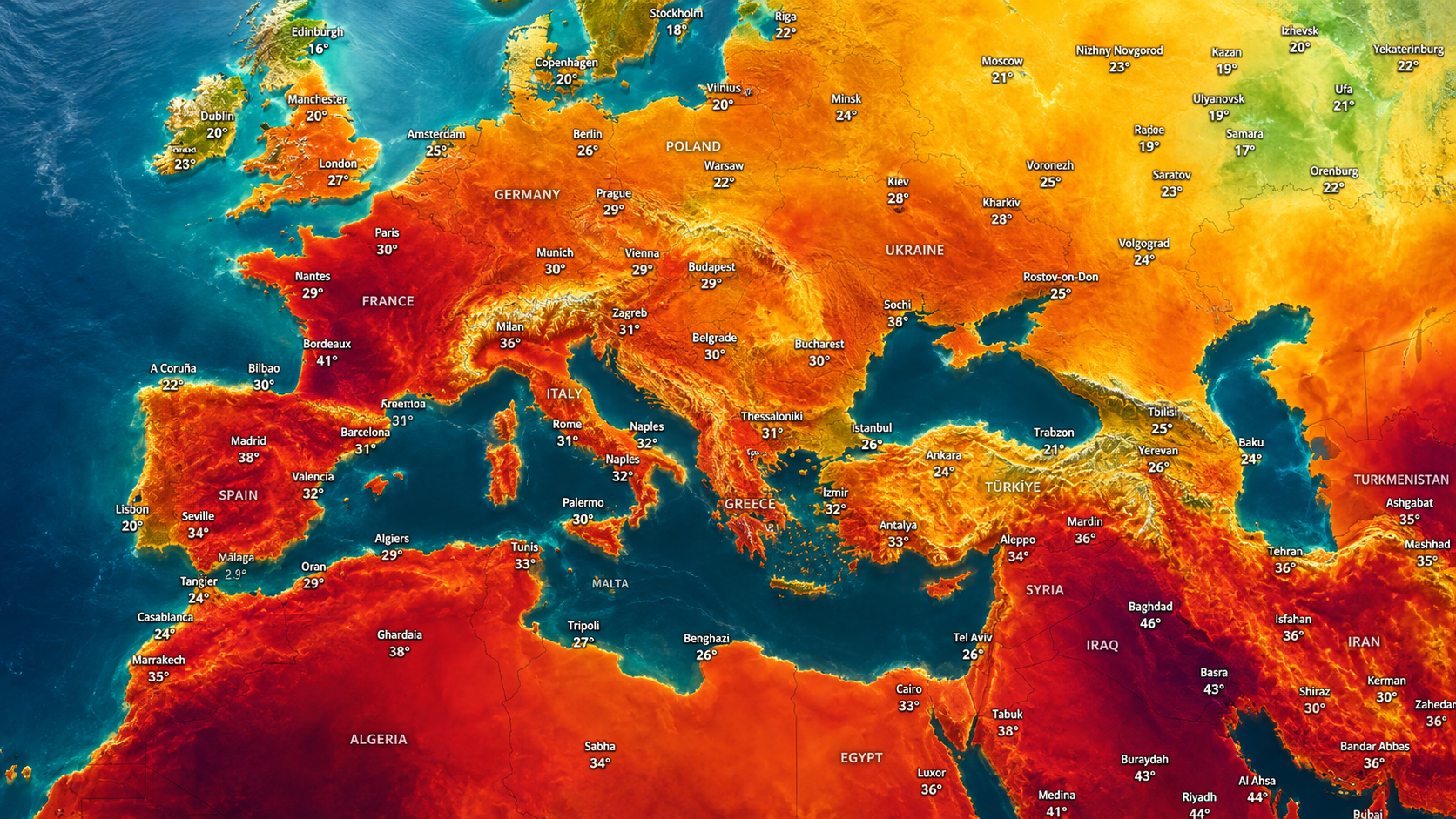
The city of Tozeur recorded the second-highest temperature on Earth on Sunday 28 June, according to official data from the Institut National de la Météorologie (INM), as an exceptional heatwave gripping the Mediterranean pushed the desert south to the edge of its own station record.
Temperatures at the Tozeur station reached around 48.9°C in the shade and 57.3°C in direct sunlight, the INM said, placing the city second in the world on the global temperature ranking for the day.
The reading falls just short of Tozeur's all-time station record of 49.2°C, set on 5 July 2018. Tunisia's national record remains 50.3°C, registered in Kairouan in August 2021, when that governorate ranked second in the world and first in Africa.
A regional crisis
The Tozeur reading sits within a much broader heat emergency across the Mediterranean and Europe. The World Meteorological Organization (WMO) confirmed last week that extreme heat was breaking records across the region, warning that heat stress remains one of the leading causes of weather-related death globally.
France recorded its hottest day since measurements began on 24 June, with a national average temperature of around 30°C, according to Météo-France. Copernicus Sentinel-3 satellite data captured land surface temperatures of around 49°C above North Africa on 23 June, with the WMO noting that Europe is the world's most rapidly warming continent.
The INM had already signalled in its seasonal outlook, published in late May, that temperatures across Tunisia for June, July and August 2026 were expected to exceed the 1991–2020 climatological baseline across the entire country, with Tozeur identified as the station most likely to record the country's highest readings.
What 48.9°C means on the ground
Tozeur sits in south-western Tunisia beside the Chott el Djerid, a vast salt lake that remains dry for most of the year. The city's subtropical desert climate — classified BWh under the Köppen system — means summer heat waves regularly push daytime maxima above 45°C, with near-zero humidity offering little relief.
The gap between the shade temperature (48.9°C) and the direct-sunlight reading (57.3°C) illustrates the intensity of solar radiation in the Saharan interior at this time of year. Authorities typically advise residents to avoid outdoor exposure between late morning and early evening during such episodes, with particular warnings for the elderly, children and those with respiratory conditions.
The INM has forecast that temperatures in the south will remain well above seasonal norms through July, the driest month of the year in Tunisia, when precipitation across the south is effectively zero.