
Trump administration withholds findings of Minab school bombing investigation, AP reports
The Associated Press has reconstructed the 28 February strike on the Shajareh Tayyebeh Elementary School in Minab that killed 156 people, mostly children, revealing that US forces had evidence of their own responsibility almost immediately — yet no Pentagon findings have been formally released more
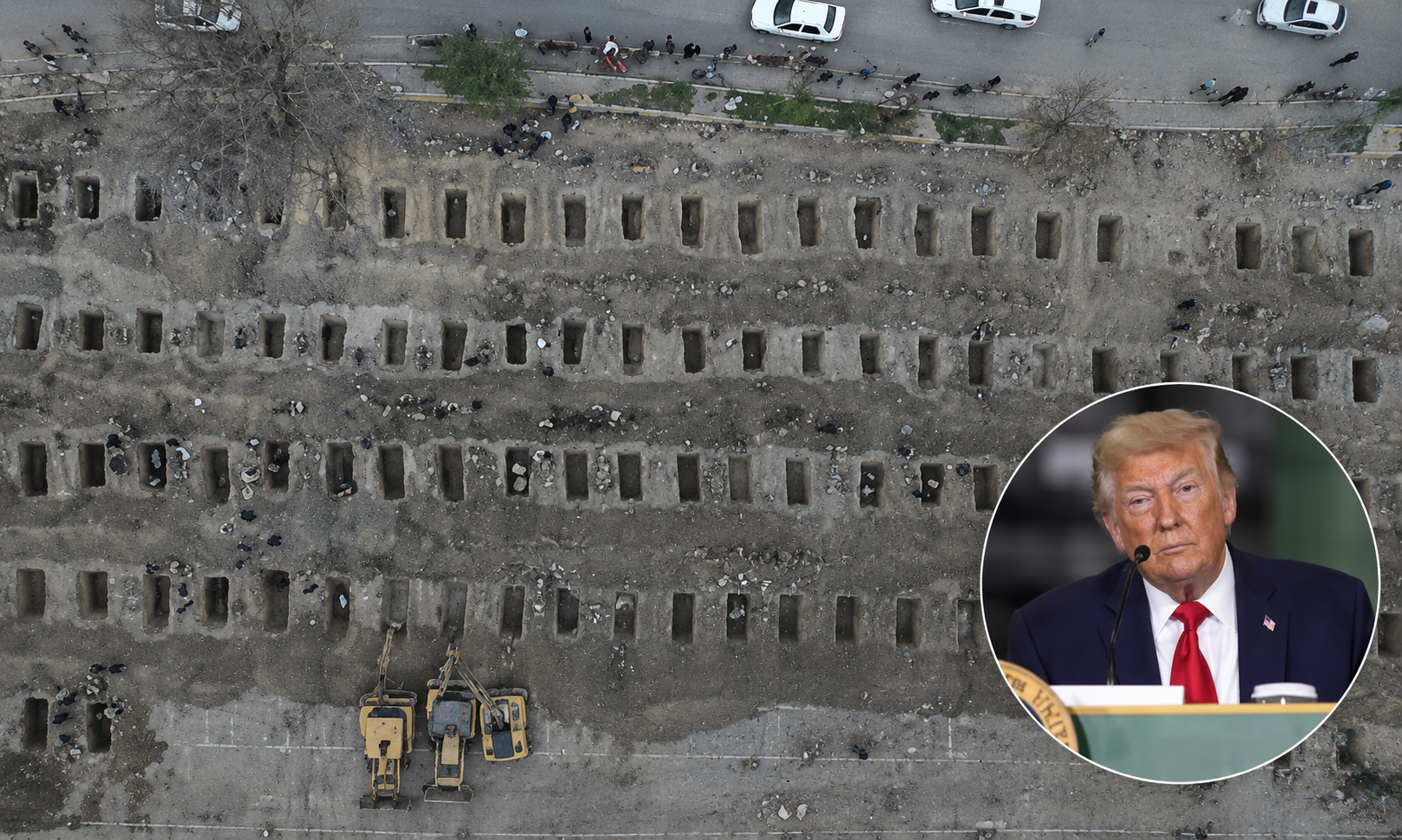
The Trump administration has yet to formally release the findings of the Pentagon's investigation into the bombing of a girls' primary school in Minab, Iran, more than 120 days after the strike killed 156 people — most of them children — even though US forces possessed evidence of their own responsibility almost immediately, the Associated Press reported on Wednesday 1 July.
The AP reconstruction, bylined by Julia Frankel and based on interviews with US officials, Iranian human rights workers, a Minab resident and researchers in direct contact with victims' families and rescuers, reveals previously unreported details about the attack and names the resulting accountability vacuum as a source of ongoing anguish for bereaved families.
The strike and its victims
The Shajareh Tayyebeh Elementary School — the name means "Good Tree" in Farsi — was struck on 28 February 2026, the first day of joint US and Israeli military operations against Iran. The school sits in Minab, a city in Hormozgan province in southeastern Iran, roughly 25 kilometres from the Strait of Hormuz.
Amnesty International's in-depth investigation concluded that 156 people were killed, including 120 children. Other tallies vary: Iranian authorities cited at least 150 "innocent school girls" killed; Human Rights Watch reviewed a confirmed list of 168 dead by 4 March; and the New York Times and other outlets have cited figures above 170. The AP noted on Wednesday that a complete list of the dead remains among the unresolved questions.
The school lay within the same walled compound as an Islamic Revolutionary Guard Corps naval base, according to an AP assessment of satellite imagery and open-source mapping. It was once part of that base before being fenced off and converted into a school more than a decade ago. Preliminary findings from the US military's own investigation determined that US Central Command officers created the strike's target coordinates using outdated data supplied by the US Defense Intelligence Agency, the New York Times reported in March, a finding corroborated by NBC News and Human Rights Watch.
Evidence withheld
A US official with knowledge of the situation told the AP, speaking anonymously to discuss an ongoing investigation, that the military held evidence the school had been struck by a US munition almost immediately after the attack. The administration has nonetheless neither accepted direct responsibility nor published the investigation's conclusions.
NBC News reported in mid-June that US Central Command had completed the investigation and that senior military officials were preparing to share results with lawmakers. Four congressional officials and a person familiar with the probe told NBC there was growing concern in Congress and the Pentagon that the administration would classify the findings and shield them from the public.
CENTCOM's commander, Admiral Bradley Cooper, told lawmakers in sworn testimony last month that he was "fully committed to transparency" once the investigation was complete and that it was near done at the time. A Pentagon spokesperson subsequently said the matter remained under investigation.
Defense Secretary Pete Hegseth told reporters the investigation had been taken "very seriously" and that findings would be released at the "appropriate time." The Senate Armed Services Committee responded by passing a provision in its version of the National Defense Authorization Act that limits Hegseth's travel funds until he releases the Minab investigation findings, along with two separate civilian-harm investigations in Yemen, Amnesty International USA said.
Trump's public statements
Asked on 24 June about the strike, Trump said he had not read the Pentagon's report and had seen nothing to make him believe the US was responsible. "I don't think it was us," he told reporters in the Oval Office, the Washington Times reported. He did not offer evidence. At the G7 meeting in France he said the incident was still under investigation, adding: "Mistakes are made. War is nasty."
Trump had initially blamed Iran for the attack. When independent analysis identified fragments consistent with a US Tomahawk cruise missile, he suggested Iran might have obtained such missiles — a claim contradicted by decades of US arms embargo.
What independent investigations found
Multiple organisations investigated the strike independently and concluded the US was responsible: Bellingcat, the New York Times, NPR, the BBC, Reuters, Al Jazeera, CNN and Amnesty International all reached the same conclusion. A CBC visual investigation found the school was struck as part of a precision attack on the adjacent military complex and that the strike was either a weapons system failure or a serious CENTCOM intelligence-gathering error.
The US Chairman of the Joint Chiefs of Staff, General Dan Caine, confirmed at a Pentagon briefing on 2 March that the US Navy had fired Tomahawk missiles in southern Iran on 28 February. A map he presented at a subsequent briefing on 4 March showed Minab among the locations struck.
A UN investigation was initiated on 17 March and remains ongoing. UN experts found that the victims were "mainly girls aged between 7 and 12" and that the school had been destroyed while classes were underway, concluding the attack "raises the most serious concerns under international law."
Amnesty International USA said on 27 June that "it's been four months since the deadliest US airstrike against civilians in recent memory, yet we are no closer to getting answers." The organisation called on the Pentagon to finish its investigation, release the findings publicly, and consider prosecutions where evidence of criminal responsibility is sufficient.
The AP noted on Wednesday that the number of munitions that hit the school and a definitive list of the dead remain unresolved — an accountability vacuum, the agency said, that leaves victims' families without resolution.