
Tunisair is a machine for burning public money, and everyone at the top knows it
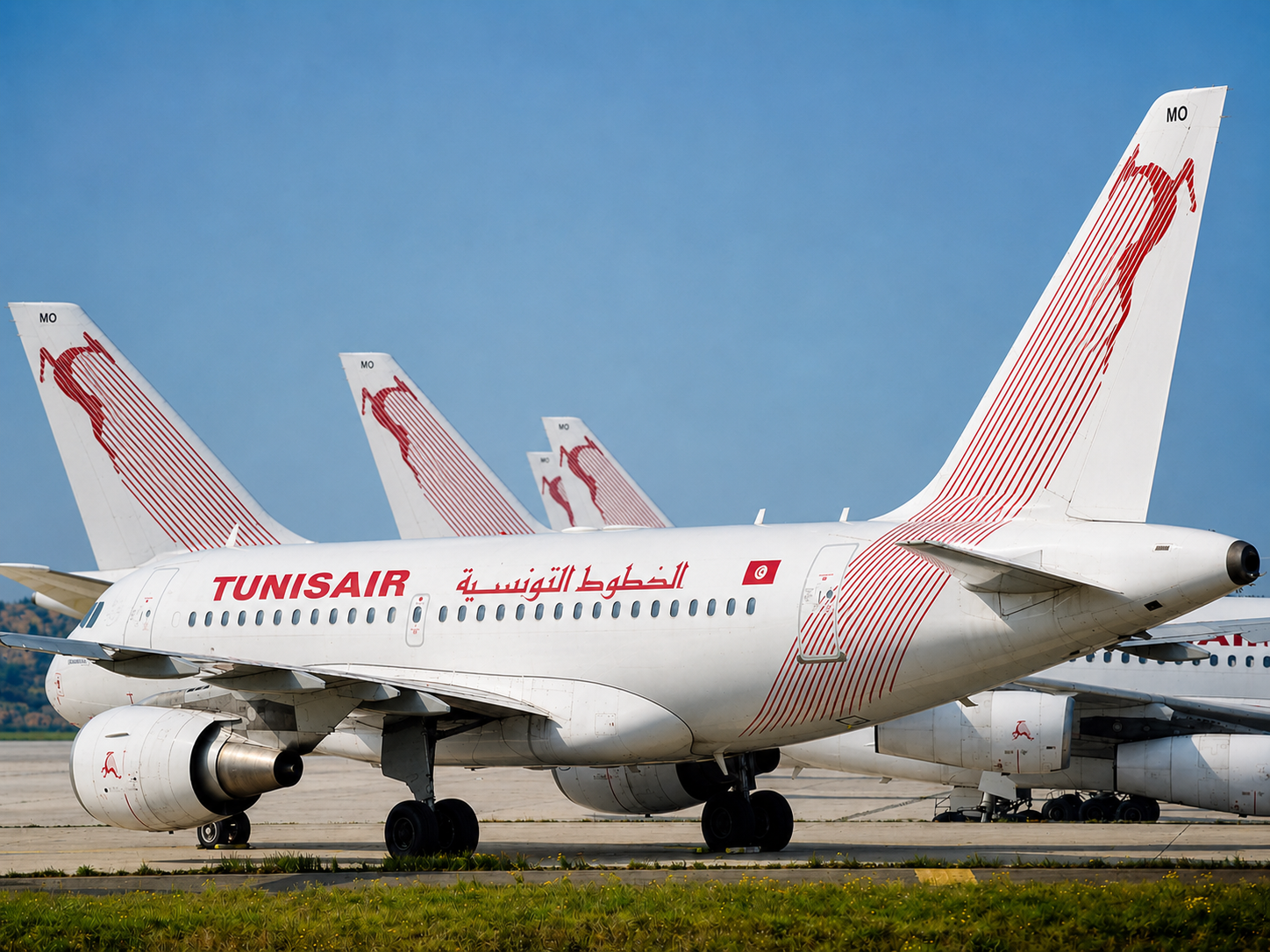
Strip away the flag on the tail and look at what Tunisair actually is. A company 2.6 billion dinars in debt that no bank on earth will lend to. A company that went years without publishing accounts, validating its 2021 and 2022 books only now, with the rest promised for some future date, which is another way of saying the national carrier operated for half a decade without telling its own shareholder, the Tunisian people, where their money went. A company whose cumulative losses passed 1.8 billion dinars, whose share of its own home market has shrivelled to a quarter, and whose operational collapse became so flagrant that its chairman was sacked mid summer after weeks of cancelled flights left thousands of citizens sleeping in terminals.
And what did those citizens receive for their ruined journeys, their missed weddings, their lost work? Nothing. No compensation scheme worth the name, no enforcement, no apology that survived the press release. Tunisair's treatment of its passengers belongs on the same charge sheet as the banks that mislead, the telecoms that overbill and the merchants who ignore every consumer protection statute in the country, a charge sheet that grows because the institutions meant to enforce those laws answer to the same state that owns the airline. The referee and the offender share a payroll.
Who the rescue actually rescues
Follow the money and the story tells itself. Every rescue plan since 2009, and there have been many, has transferred wealth in one direction: from taxpayers, most of whom will never board an aircraft, toward a protected enclave of the state economy. The bond issues, the deferred debts to the treasury, the guarantees, the recapitalisations, all of it drawn from a budget in which 93 percent of tax revenue is already consumed by wages, interest and subsidies, in a country borrowing from its own central bank to stay afloat.
Ask who benefits and the answer explains the immortality. Successive governments benefit, because a bankrupt flag carrier on their watch is a headline they will spend anything to avoid. The unions benefit, because the company remains the fortress whose fall, they have always argued, would breach the walls of the entire public sector. Suppliers, intermediaries and the encrusted management layers benefit. The presidency benefits, having ruled out privatisation in 2025 in the name of sovereignty, as though sovereignty were a paint scheme rather than the capacity of a state to run things that work. Everyone benefits except the two groups the airline nominally exists to serve: the passenger, who pays premium prices to be delayed, and the taxpayer, who pays again so the delay can be repeated.
This is what makes the Tunisair question bigger than aviation. The airline is the purest specimen of a political economy in which failure is a protected status, in which public enterprises account for over a fifth of the public deficit while their reform remains untouchable, and in which the language of national pride is deployed, cynically and successfully, to keep the arrangement beyond criticism. Object to the losses and you will be accused of objecting to Tunisia.
Call time
Enough. The honest policy fits in three sentences. The state announces that the current support is final. The company then lives or dies by its revenues, like every airline that competes against it for the same passengers. If it dies, the state winds it up cleanly, pays its workers a genuine transition settlement funded by a fraction of one year's rescue money, and lets a successor rise on the cleared ground, as happened after Swissair and Sabena, whose countries, it turns out, still have planes.
The objections are already drafted, they always are: strategic asset, national connectivity, thousands of jobs. Answer them with the record. The strategic asset cannot finance a spare part. The national connector cancels its own connections. The jobs are hostages, held not by reformers but by the very immobility their defenders protect.
Thirty years of rescue have produced this. The definition of seriousness now is the willingness to stop. Let Tunisair meet its own destiny, and if that destiny is the end, then the end will be the first honest balance sheet the company has produced in a generation.