
Tunisia enters net external debt reduction phase, central bank governor says
Central Bank of Tunisia governor Fethi Zouhaier Nouri told an investment forum on Friday that long-term external debt has fallen by around 18 percent since 2022, marking a structural shift in how Tunisia finances itself, as bond yields and foreign exchange reserves point to recovering market confide
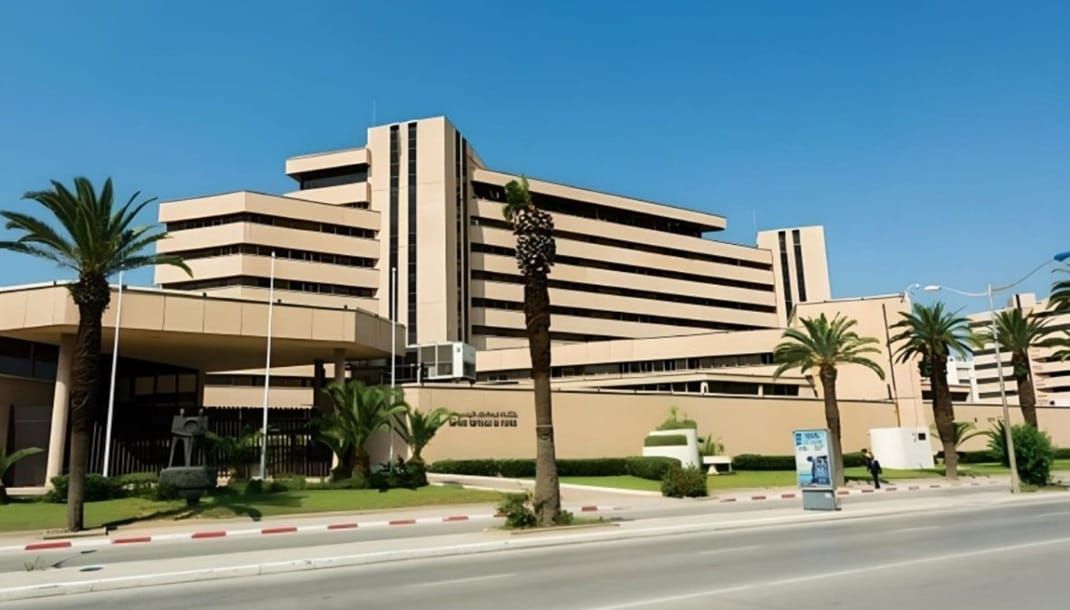
Tunisia has entered a sustained phase of net external debt reduction, Central Bank of Tunisia (BCT) governor Fethi Zouhaier Nouri said on Friday 26 June, presenting data showing long-term external debt has fallen from 82 billion dinars in 2022 to 68 billion dinars in 2025, a decline of around 18 percent.
Nouri told an investment forum in Tunis that the shift has been under way since 2023, when repayments of external obligations began to outpace new external borrowing on a net basis. The governor said Tunisia had honoured every external financial commitment across that period, despite assessments by several international analysts in 2023 that a sovereign default was highly probable.
The figures mark a structural change in the composition of Tunisia's public debt. At the end of 2025, the outstanding stock of external public debt stood at around 57 billion dinars, representing 39.3 percent of total public debt — a share that has fallen steadily as the government has relied more heavily on domestic financing.
Yields and ratings signal recovering confidence
Nouri pointed to the movement in Tunisian sovereign bond yields as evidence that market confidence has improved. Yields on Tunisian bonds fell from above 30 percent in 2023 to around 7 percent during the first five months of 2026, the governor said.
That trend has been accompanied by upgrades from international rating agencies. Moody's raised Tunisia's sovereign rating from Caa2 to Caa1 with a stable outlook in February 2025, the first improvement in more than a decade. Fitch followed in September 2025, lifting its rating one notch to B– with a stable outlook.
Foreign exchange reserves now stand at around 25.5 billion dinars, equivalent to roughly 107 days of import cover, according to BCT data — up from 22.4 billion dinars and 98 days at the same point a year earlier.
Tourism and remittances underpin the external account
The improvement in the external position has been driven in large part by services and transfers rather than merchandise trade. BCT monetary indicators published in April 2026 showed remittances from Tunisians abroad rising 5.6 percent in the year to 20 April, exceeding 2.6 billion dinars. Tourism revenues rose 4.4 percent over the same period to 1.8 billion dinars.
Together those inflows covered 182 percent of external debt service costs, which reached 2.4 billion dinars in the same period, according to the BCT data.
The current account deficit narrowed to 1.6 percent of GDP in 2024 and widened slightly to 2.3 percent in 2025, but BCT data through end-April 2026 showed it at 1.5 percent of GDP — an improvement on the 1.7 percent recorded at the same point in 2025.
Growth and inflation backdrop
The governor cited an economy recovering at a moderate pace. GDP growth reached 2.6 percent in the first quarter of 2026, compared with 1.6 percent in the same quarter of 2025. Inflation, which exceeded 10 percent in 2023, has fallen to around 5.5 percent. The BCT cut its key interest rate gradually to 7 percent in early 2026 as price pressures eased.
Nouri said the banking sector remains the main source of financing for the Tunisian economy. Outstanding loans reached 118 billion dinars in 2024, deposits grew by more than 10 percent, and the banks' liquidity coverage ratio stands at 138 percent, above regulatory requirements. He said that capacity should be directed more systematically towards private investment.
Upcoming external obligation
The external debt calendar carries one significant pressure point in the near term. A euro bond issue of 700 million euros — Tunisia's last recourse to the international capital market, contracted in 2019 — matures in July 2026. Principal repayment is estimated at around 2.35 billion dinars, with interest of approximately 150 million dinars.
The government has planned to mobilise around 6.8 billion dinars in external financing in 2026 against principal repayments of 7.9 billion dinars, a net outflow that is consistent with the deleveraging trajectory the governor described.