
Tunisia launches beach enforcement crackdown with fines up to 50,000 dinars and prison terms for violations
Tunisia's coastal authority has moved from warnings to active enforcement this summer, reminding operators and beachgoers that illegal occupation of the maritime public domain carries fines of up to 50,000 dinars and up to one year in prison under a 1995 law that has long gone under-enforced.
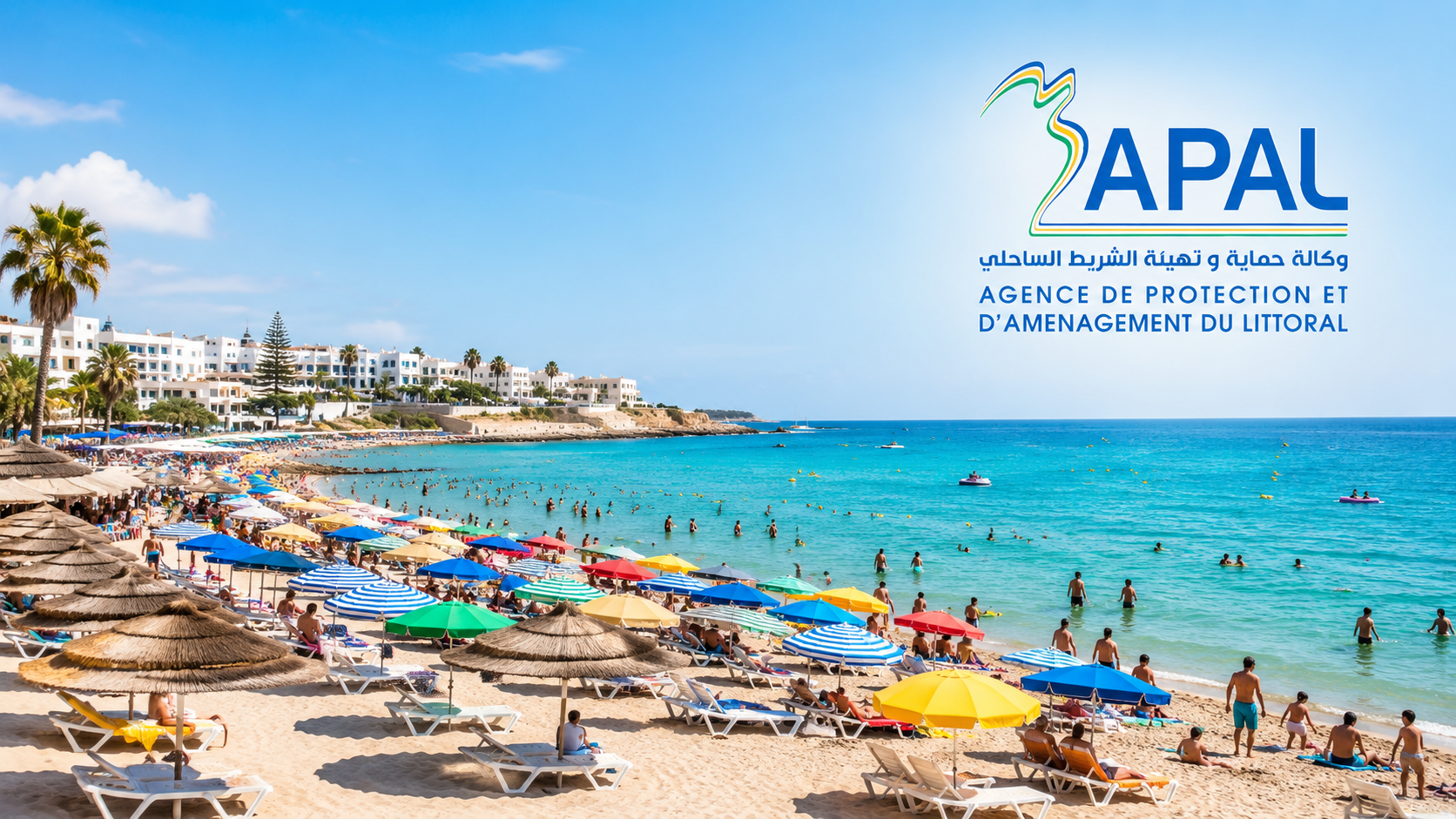
Tunisia's coastal regulator warned on Wednesday 1 July that operators illegally occupying public beach space face fines of between 100 and 50,000 dinars and prison terms of between 16 days and one year, as authorities moved from a month of awareness activity into active enforcement for the 2026 summer season.
Mehdi Belhaj, head of management at the Coastal Protection and Planning Agency (APAL), made the announcement in a Radio Nationale interview, reaffirming that access to Tunisia's maritime public domain is guaranteed by law to be "free, equal and free of charge" for all citizens.
The penalties are set out in Article 28 of Law No. 95-73 of 24 July 1995 on the maritime public domain, as amended in 2005. Penalties double on a second offence. Equipment can also be seized and unlawful structures demolished.
The half-beach rule
Operators holding authorisations to use the maritime public domain may not occupy more than half the width of a beach. The second half must remain reserved for the general public.
Decree No. 1847 of 2014, which governs temporary occupations of the maritime public domain, fixes precise rules: authorisations for the installation of parasols, chairs or other equipment remain temporary and spatially limited, and may not prevent the free movement of beachgoers or occupy the beach in its entirety.
Anyone who witnesses a violation can now report it directly to authorities. A freephone hotline, 1820, has been made available to the public, with a promise of immediate intervention by the competent authorities.
From awareness to enforcement
Following the awareness campaign that APAL launched on 11 June, authorities have now moved into an enforcement phase. APAL is operating in close coordination with the Interior Ministry, municipalities and the Tourism Ministry to apply the law, protect the maritime public domain and guarantee the safety of summer visitors.
More than 1,200 violations were recorded in a single week, the majority involving operators without any authorisation, according to Directinfo, which reported the figure on 26 June.
Operations are already under way along the coast. On 27 June, a joint operation targeted the Sidi Bou Saïd waterfront, where maritime guard units and APAL inspectors removed illegal installations and parasols. In Sousse, a large joint operation involving the national police district, municipal brigades and APAL inspectors targeted hotels, bars and cafés that had extended their terraces onto the sand beyond legal limits, resulting in the mass seizure of equipment and mobile structures and the issuing of fines.
In Bizerte, the governor, Salem Ben Yaâcoub, conducted several inspection visits to the beaches of Ghar El Melh, Rafraf and Aïn Mestir, ordering stepped-up controls to ensure compliance with temporary occupation authorisations. The operations mobilised the governorate services, the relevant municipalities, APAL representatives, the National Guard and the Maritime Guard.
A recurring seasonal problem
Each year at the start of the summer season, the same pattern repeats itself along Tunisia's 1,300-kilometre coastline. From Bizerte to Sfax, including the tourist centres of Cap Bon, Hammamet, Sousse and Mahdia, the demand for beach access is accompanied by pressure on the maritime public domain and the aggressive privatisation of public space.
APAL's own scientific assessments indicate that close to 50 percent of the total surface area of Tunisia's coastline is now covered with concrete, with correspondingly large volumes of solid waste and untreated wastewater discharged into the sea.
The annual cost of beach cleaning operations runs to around 3 million dinars, Belhaj said.
The enforcement campaign is expected to continue throughout the summer, with the aim of restoring order along the coast and protecting the right of Tunisians to enjoy beaches freely.