
Tunisia moves to overhaul hydrocarbons code as output falls 30 percent in four years
The government has committed to rewriting the 1999 hydrocarbons code and introducing new investment incentives as national oil and gas output continues a structural decline that has cut energy independence from 93 percent to 41 percent since 2010.
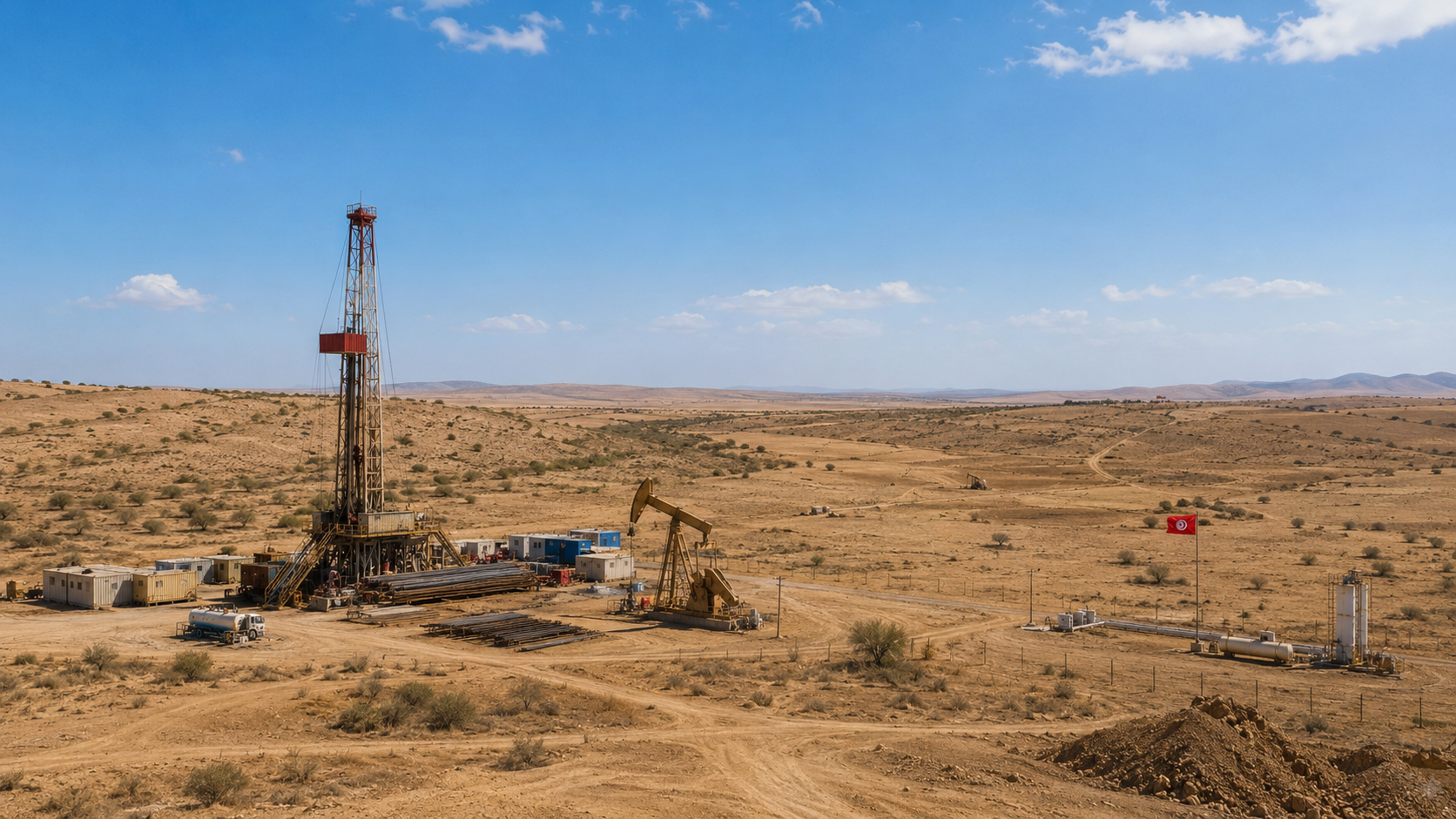
Tunisia has committed to a comprehensive overhaul of its hydrocarbons sector, including a rewrite of the country's 1999 oil and gas code and new legislation designed to attract investment, as national production continues a steep structural decline.
Prime Minister Sarra Zaafrani Zenzri announced that the state intends to revitalise the sector by adopting investment-friendly legislation and revising the hydrocarbons code, with the objective of strengthening energy sovereignty and reducing a growing deficit caused by the decline in domestic output.
Presenting the draft state budget and the 2026 economic budget before a joint plenary session of the Assembly of People's Representatives (ARP) and the National Council of Regions and Districts (CNRD), Zaafrani Zenzri said hydrocarbon production fell by almost 30 percent between 2021 and 2025. The decline reflects reduced profitability at several fields, notably El Borma and Ashtart, alongside the withdrawal of large international companies, and has pushed the country's energy independence rate down from 93 percent in 2010 to 41 percent in 2024.
Code overhaul and the 2026–2030 plan
The Prime Minister said Tunisia is entering a pivotal phase with the launch of the 2026–2030 national development plan, which is accompanied by major legislative reforms including a full revision of the hydrocarbons code alongside the foreign exchange and mines codes, and a complete digitalisation of investment procedures through a new national investment platform.
A restricted cabinet meeting had already examined a draft bill amending the hydrocarbons code, with the stated aim of reconciling national energy sovereignty with improved attractiveness for investment in exploration, exploitation, transport and refining.
The new code is designed to introduce greater flexibility into the legal framework governing the sector, with a view to increasing its attractiveness while preserving the interests of the Tunisian state.
Experts have described the existing licensing system — based on an "open-door" principle — as carrying significant weaknesses in terms of transparency and competition, creating scope for the reforms the government is now pursuing.
Declining fields and investor retreat
Oil production in Tunisia continued to fall in the first quarter of 2026, with output down around 13 percent by end-March compared with the same period in 2025, driven by a combination of geological, economic, regulatory and global energy-transition factors.
The number of exploration and production licences has fallen sharply, from around 54 in 2010 to about a dozen in 2026, reflecting both reduced investor interest and a deficit of exploratory drilling. Several international companies have reduced their presence in Tunisia or left the market entirely.
The Ashtart field, operated by SERPT — a joint venture between the national oil company Entreprise Tunisienne des Activités Pétrolières (ETAP) and the Perenco group — currently produces around 5,000 barrels per day, accounting for roughly 14 percent of total national output. Experts say only a deep reform of the investment framework, accompanied by regulatory stability and faster permitting, could reverse the overall trend.
Tunisia relies on Algeria for nearly three quarters of its gas supply, and gas accounts for around 95 percent of its power generation mix. Natural gas production fell 13 percent by end-April 2026 while purchases of Algerian gas rose by 12 percent over the same period.
Parliamentary hearings and concession bills
The investment and international cooperation committee of the National Council of Regions and Districts held a hearing on 17 June 2026, chaired by deputy Bilel Saïdi, examining two draft laws on hydrocarbon exploration and exploitation, in the presence of ETAP officials.
The first bill concerns an amendment to the exploration permit known as "Chaâl"; the second relates to the approval of the convention and annexes governing the "Sersina" production concession. Participants at the hearing emphasised the importance of both texts given their link to the public interest and the need to support national hydrocarbon production and reduce the energy deficit.
The development programme attached to the Sersina concession aims to preserve production sustainability and improve recovery of remaining reserves through infrastructure modernisation, reservoir re-evaluation, and new drilling operations.
Renewable energy alongside hydrocarbons
The government is also pressing ahead on energy sovereignty through the ELMED electricity interconnection project with Italy and has signed five renewable energy concession agreements targeting 600 MW of new capacity, as part of a national goal to reach 35 percent renewables in the power mix by 2030.
Tunisia ranked 62nd out of 120 countries in the World Economic Forum's 2026 Energy Transition Index, scoring 62.4 points for energy system performance against 46.3 for transition readiness, a gap that reflects the distance between current energy stability and longer-term transformation capacity.
The hydrocarbons code amendment bill has not yet been put to a full parliamentary vote. Its timetable will depend on the pace of the 2026–2030 legislative programme the government outlined at the Tunisia Investment Forum this week.