
Tunisia moves toward 'premium licence' scheme to attract investors as new investment law takes shape
A new investment law under preparation in Tunis would grant qualifying foreign and domestic investors a fast-track exceptional authorisation regime, part of a wider overhaul unveiled at the Tunisia Investment Forum on 25 and 26 June, where the government reported GDP growth of 2.6 percent in 2025 an
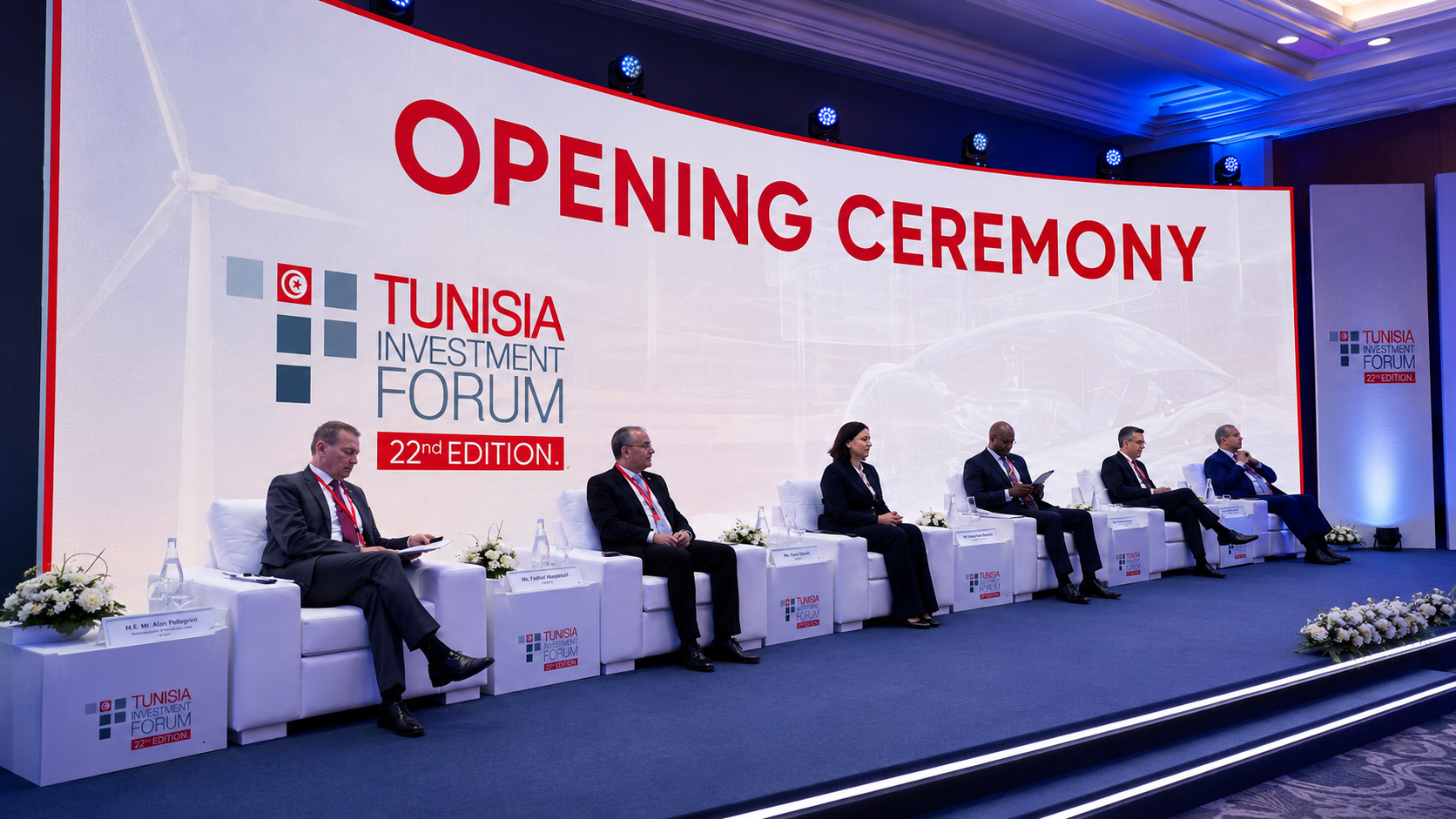
Tunisia is preparing a new investment law that would introduce a fast-track "premium licence" for qualifying investors, a measure at the centre of a broader overhaul of the country's business framework presented on Thursday 25 June at the 22nd Tunisia Investment Forum (TIF 2026) in Tunis.
The two-day forum, organised by the Foreign Investment Promotion Agency (FIPA-Tunisia), under the auspices of the Ministry of Economy and Planning and in partnership with the African Development Bank (AfDB), was held at the El Mouradi Gammarth hotel under the theme "Tunisia: Renewed Dynamic, New Opportunities."
Around 1,200 participants attended, including senior government and institutional officials, international investors, multinational companies, international institutions, development banks, employers' organisations and chambers of commerce from more than 30 countries.
The premium licence proposal
The measure, described as a "licence premium", forms part of a new draft investment law that goes beyond a technical revision of existing rules. Examined at a restricted ministerial council on 31 December 2025, the draft aims to redefine relations between the administration, investors and economic operators in order to create a smoother, more transparent ecosystem oriented towards value creation.
Key innovations in the proposed framework include the creation of a Superior Investment Authority, the establishment of a genuine single window, a reduction in administrative constraints, the introduction of an exceptional authorisation regime for qualifying investors, and the creation of a national digital platform dedicated to investment.
The initiative comes as international competition to attract capital has grown particularly intense, with states differentiating themselves not only through tax incentives but through the quality of their economic governance, the speed of their administrative procedures and the level of digitalisation of public services.
Growth figures and reform package
Head of Government Sarra Zaafrani Zenzri opened the forum on Thursday, presenting an economic assessment marked by improved growth indicators and renewed attractiveness for international investment.
She said GDP grew 2.6 percent in 2025, up from 1.4 percent in 2024, driven primarily by the performance of the agricultural sector and manufacturing industries. She also reported a rise in foreign direct investment of more than 30 percent in 2025 compared with the previous year.
Tunisia now hosts 4,296 foreign companies, representing a total investment volume of 53 billion Tunisian dinars.
Zaafrani Zenzri said Tunisia was entering a pivotal phase with the launch of the 2026–2030 Development Plan, accompanied by major legislative reforms including the full digitalisation of investment pathways via a new National Investment Platform, and the revision of legislation governing startups, foreign exchange, hydrocarbons and mines.
She said the direction required "modernising the legislative and institutional framework governing investment, simplifying procedures and digitalising services."
Energy and regional positioning
Particular emphasis was placed on energy sovereignty, notably through the ELMED electricity interconnection project and the development of renewable energy. Zaafrani Zenzri noted the conclusion of five concession agreements targeting 600 MW of generation capacity, with a national goal of integrating 35 percent renewables into the energy mix by 2030.
The head of government also reaffirmed Tunisia's ambition to act as an economic crossroads between Europe, sub-Saharan Africa and the Arab world, with integration into the African Continental Free Trade Area (AfCFTA) and the Common Market for Eastern and Southern Africa (COMESA) forming the basis of that regional positioning.
FDI targets and investment awards
Tunisia has set a target of doubling the value of foreign direct investment to reach 4 billion Tunisian dinars in 2026, with a focus on high-value-added sectors including automotive, aeronautics, pharmaceuticals, the digital economy, agri-food and technical textiles.
The forum's first day included an awards ceremony honouring 13 organisations, companies and investors for their contribution to Tunisia's economic, social and environmental development. Recipients included KPIT Engineering, ODW-Elektrik, Valeo Tunisie, Groupe Cimpress, Vermeg, Dual Borgstena, Versigent Tunisia, Groupe LAPP, Proverdy, the France-Tunisia Chamber of Commerce, Autoelectric Tunisia, Taurus Textile and Thuasne Tunisie.
The forum's second and final day continues on Friday 26 June 2026. The new investment law, including the premium licence mechanism, is expected to proceed through further legislative stages in the months ahead; no enactment date has been officially announced.