
Tunisian company IRIS unveils locally made autonomous sea drone
The vessel can navigate autonomously or under remote control and has been delivered to ENSIT following sea trials conducted with the Tunisian Customs School.
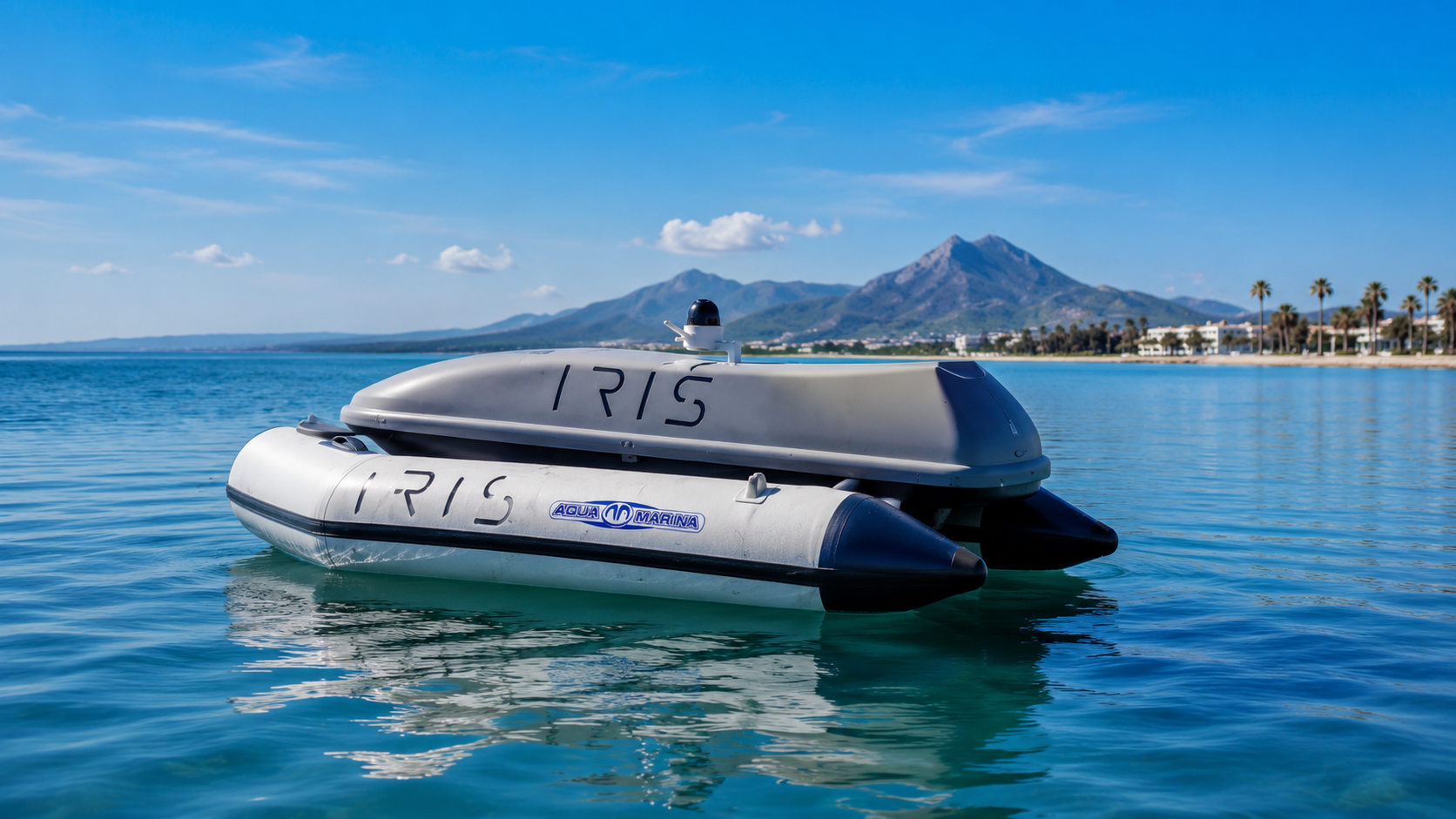
Tunisian deep-technology company IRIS has unveiled an autonomous surface vessel that it describes as the first sea drone designed and manufactured entirely in Tunisia.
The craft, which is also called IRIS, can operate autonomously or be controlled remotely by an operator. The company said it was developed for civilian applications and tested in real maritime conditions in cooperation with the Tunisian Customs School.
The first unit has been delivered to the National Higher Engineering School of Tunis, known as ENSIT, for scientific research.
IRIS is an unmanned surface vehicle, or USV: a robotic craft that travels across the surface of the water and can carry cameras, sensors or other equipment according to its mission.
The venture is presented publicly as IRIS, a Tunisian deep-tech company founded by Foued El Kamel. Further details about its ownership, corporate structure and relationship with El Kamel’s aviation company, AVIONAV, were not included in the launch announcement.
From aircraft to maritime robotics
El Kamel is also the director of AVIONAV, a Tunisian manufacturer of certified light aircraft. He acquired the company in 2017 after it encountered financial difficulties and later expanded its international footprint by purchasing the Italian manufacturer Storm Aircraft in November 2021. The acquisition gave AVIONAV ownership of Storm Aircraft’s rights, designs, licences and certifications.
AVIONAV entered the unmanned aircraft sector in 2023 with the U Storm, an aerial drone measuring nine metres in length. The company said the aircraft could fly for up to 20 hours, reach a maximum speed of 200 kilometres per hour and carry a payload of 250 kilograms.
IRIS extends that work from aviation into maritime robotics. It is the latest publicly announced unmanned vehicle project associated with El Kamel and the first focused on operations at sea.
According to the company, the vessel’s hybrid navigation system allows it to complete missions independently while retaining the option of direct human control. Its cooperation with the Customs School also suggests that customs enforcement, coastal observation or wider maritime security uses may be under consideration, although the developer has framed the project publicly around civilian and scientific applications.
Tunisian media reports have also identified surveillance, maritime logistics and scientific research among its possible uses. The company has yet to say which equipment is installed on the first unit or which missions it is currently capable of performing.