
Tunisian rights defender Sihem Bensedrine sentenced to 25 years, says verdict 'condemns those who issued it'
A Tunis financial crimes court convicted the former president of Tunisia's Truth and Dignity Commission in two separate cases overnight, drawing immediate condemnation from international rights groups who have long described the prosecution as retaliation for her transitional justice work.
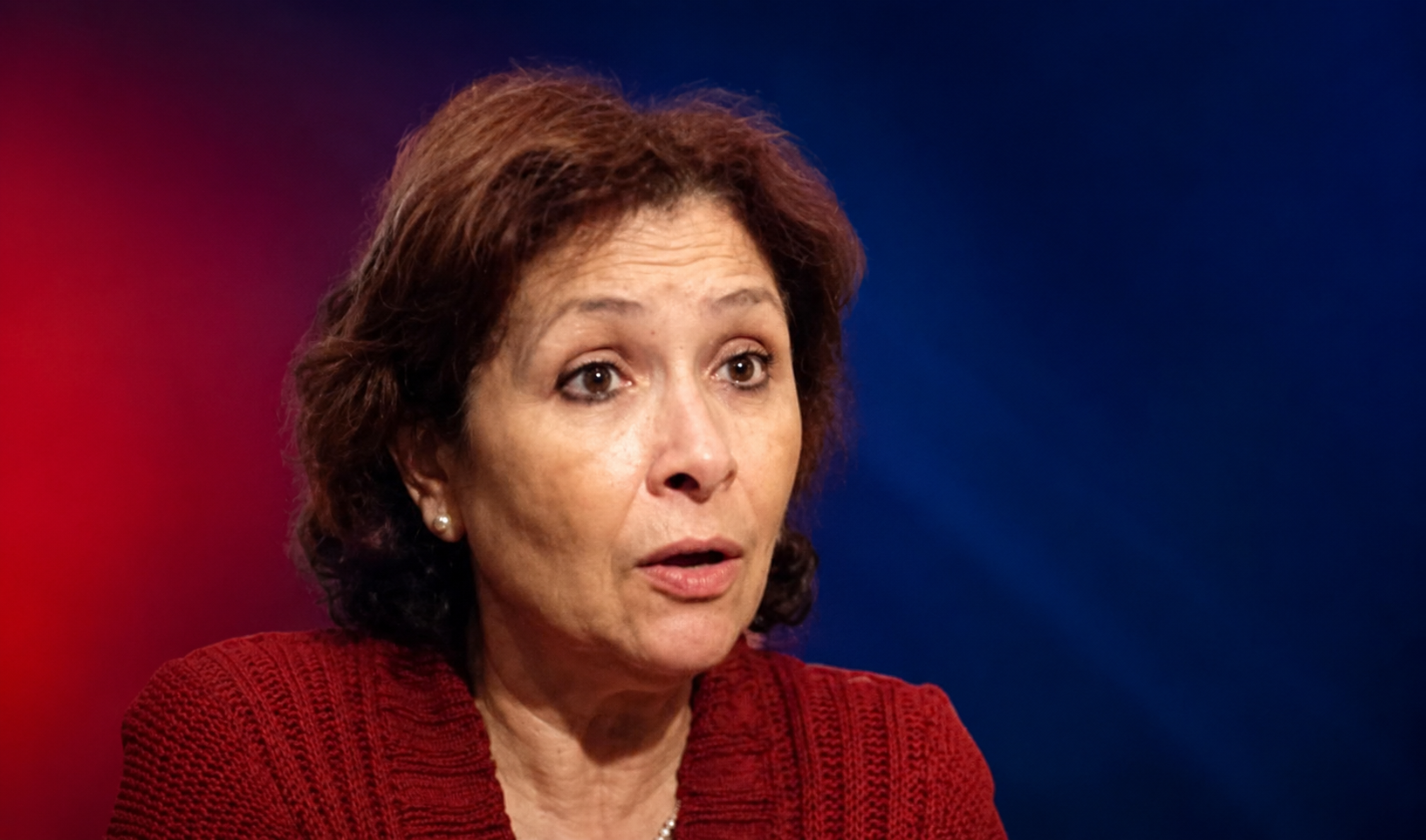
A Tunis financial crimes court convicted Sihem Bensedrine, the former president of Tunisia's Truth and Dignity Commission (Instance Vérité et Dignité, IVD), on two counts overnight on Thursday 26 June, sentencing her to a combined 25 years in prison in cases arising from her leadership of the country's transitional justice body.
Bensedrine, 76, told Al Jazeera on Friday that the verdict did not affect her. "This ruling condemns, first of all, those who issued it," she said, adding that she had refused during the hearing to recognise the legitimacy of the proceedings and told the judges they held "no legal legitimacy to try the IVD."
How the sentence breaks down
The Specialised Criminal Chamber for Financial Corruption at the Tunis Court of First Instance ruled on two linked cases. In the first, concerning a disputed arbitration and reconciliation agreement concluded between the IVD and businessman Slim Chiboub, the court found Bensedrine, former IVD member Khaled Krichi and former State Property Minister Mabrouk Korchid guilty of deliberately exploiting public office to cause material harm to the state while obtaining an undue advantage for a third party. It sentenced Bensedrine and Krichi to five years each and Korchid to six years, with immediate execution. Chiboub received five years for participation in the offence.
The court also fined each defendant 1,776,170,000 dinars and ordered them jointly to reimburse the same amount to the state.
In the second case, centred on the Banque Franco-Tunisienne (BFT), Bensedrine, Krichi and Korchid faced the same abuse-of-office charge alongside former BFT chief executive Abdelmajid Bouden, convicted of complicity. The court sentenced Bensedrine and Krichi to five years each, Korchid and Bouden to six years each, all with immediate execution, and fined each defendant 16,985,003.774 dinars, ordering joint reimbursement of the same sum to the state.
Bensedrine alone faced an additional charge of forgery, possession and use of forged documents. The court convicted her on that count and, applying the rule of the most serious offence under Article 55 of the Penal Code, sentenced her to 15 years. The three sets of penalties together total 25 years.
The case against her
Between 2014 and 2018, Bensedrine served as president of the IVD, which was established to pursue accountability for historic human rights violations and corruption committed by Tunisian state officials and their associates. In December 2018, the IVD concluded its work and transferred 205 cases of alleged human rights violations and corruption for prosecution before Tunisia's 13 Specialised Criminal Chambers.
The IVD's final report was published on its website on 26 March 2019 and in the Official Gazette on 24 June 2020. In May 2020, a former IVD commissioner filed a complaint against Bensedrine with the National Higher Instance Against Corruption, accusing her of "forging the final report" by adding a section on corruption in the Tunisian banking system, specifically regarding a dispute between the government and the French Tunisian Bank.
On 2 March 2023, an investigating judge charged Bensedrine with "fraud", "forgery" and "abuse of official capacity", further to accusations of having unduly added a section on corruption allegations in the Tunisian banking system to the IVD report's final version. On 1 August 2024, the Tunis Court of First Instance remanded Bensedrine into pre-trial detention.
Bensedrine was released in February 2025 after a prolonged hunger strike. On 19 February 2025, the indictment chamber of the Tunis Court of Appeal ordered her release subject to a travel ban. Trial proceedings opened on 1 June 2026.
International criticism
The International Commission of Jurists (ICJ) said the court's decision on 18 June 2026 to exclude Bensedrine's family members, all journalists and representatives of civil society from that hearing, without providing any reasons, called into question the court's independence and impartiality.
In February 2025, independent UN human rights experts had expressed concern that Bensedrine's prosecution appeared to be in retaliation for her work as IVD president, in particular as a result of the IVD's referral of corruption cases for prosecution.
Human Rights Watch had described the prosecution as retaliation and noted that three UN experts said in August 2024 that her arrest "could amount to judicial harassment … for work she has undertaken" as head of the commission and that it "appears to be aimed at discrediting" the commission's report.
Tunisia was the only country in the Middle East and North Africa to establish a national truth commission in the wake of the 2011 uprisings. President Kais Saied brought the process to a halt following his 2021 power seizure. Since 2022, Saied has systematically undermined judicial independence, taking control of the Temporary High Judicial Council, arbitrarily dismissing judges and prosecutors, and using the judiciary to serve his political ends, according to Human Rights Watch.
Between July 2025 and April 2026, a Tunis court ordered the temporary suspension of at least 25 civil society associations, including the Tunisian Association of Democratic Women, Aswat Nissa, the Tunisian office of the World Organisation Against Torture, I Watch, Nawaat journalists' association and the Tunisian Forum for Economic and Social Rights.
No statement from the Tunisian government or presidency on Friday's verdict was available at the time of publication. Bensedrine's defence team and international rights organisations were expected to issue formal responses. The verdict is subject to appeal.