
Tunisia's 2026–2030 development plan sets 3% deficit ceiling and 80% debt cap as parliament scrutinises ambitious growth targets
Tunisia has submitted its 2026–2030 Development Plan to parliament, committing to cut the budget deficit to below 3 percent of GDP and cap public debt at 80 percent — goals that independent economists describe as ambitious given a current deficit running above 5 percent.
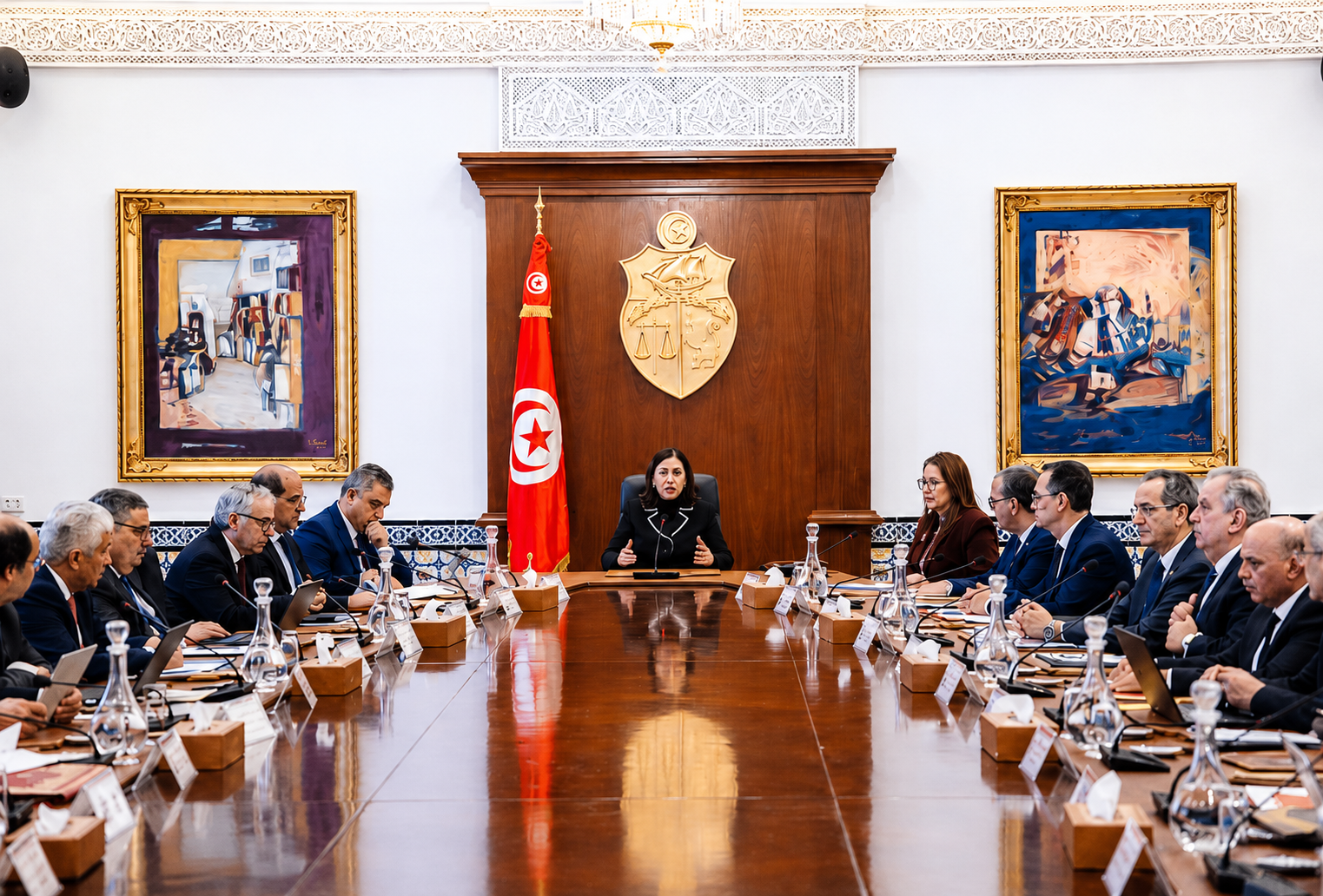
Tunisia has formally submitted its 2026–2030 Development Plan to the Assembly of the Representatives of the People (ARP), setting out a target to reduce the budget deficit to below 3 percent of GDP and cap public debt at no more than 80 percent by the end of the decade.
The plan, elaborated by the Ministry of Economy and Planning in application of articles 75 and 77 of the Constitution, aims to break with previous development policies and lay the foundations of a new economic and territorial model.
At its core, the plan targets average annual growth of 4.2 percent at constant prices over the 2026–2030 period, against 2.4 percent recorded between 2021 and 2025. The minister said that target should reach 5 percent by 2030.
Fiscal targets and the starting point
Both targets — the deficit ceiling and the debt cap — represent a significant tightening from today's position. The budget deficit narrowed to 5.2 percent of GDP in 2025, supported by improved revenue collection and lower energy subsidies. Public debt stabilised at 82.1 percent of GDP, but heavy reliance on domestic financing is further crowding out the private sector.
In public finance terms, the plan aims to contain the public debt ratio to no more than 80 percent of GDP, while also bringing the budget deficit below 3 percent, through mobilising state own-resources, improving the performance of public enterprises and upholding the principle of self-reliance.
The document sets a series of major quantitative objectives for the next five years: raising the rate of mobilisation of state own-resources above 80 percent, integrating more than 50 percent of the informal sector into the formal economy, and digitising tax, customs and financial systems.
Growth, investment and the informal sector
The minister of Economy and Planning, Samir Abdelhafidh, stated the 4.2 percent growth target at the 22nd edition of the Tunisia Investment Forum (TIF), held in Tunis on 25 and 26 June 2026.
The plan sets an investment target of 20 percent of GDP — a sharp rise from current levels. Investment has remained weak, constrained by limited fiscal space and an unattractive business environment. The investment rate fell from 26 percent to 11.2 percent of GDP between 2012 and 2024, according to the International Monetary Fund.
The prime minister, Sarra Zaafrani Zenzri, emphasised that the goal on the economic front is to elevate the growth rate by supporting high value-added sectors, promoting innovation and research and development, and stimulating productive investment — with the aim of improving competitiveness, creating decent jobs and reducing unemployment, particularly among youth and higher-education graduates.
Social goals and the bottom-up process
On the social side, the plan sets a target to reduce the poverty rate to below 15 percent, and aims to push Tunisia's human development index above 0.8, which would place the country in the category of very high human development.
The document also sets a target of keeping inflation at no more than 5 percent, in order to preserve citizens' purchasing power.
The plan was drawn up through an approach described as unprecedented. For the first time in Tunisia, a bottom-up method was adopted: development priorities were gathered from local councils, then consolidated at regional and district level before being brought to the national level. More than 3,696 work sessions were organised across the country, generating around 50,000 project proposals.
A credibility gap, economists warn
Independent economists have questioned whether the headline figures are achievable. Economist Ridha Chkoundali described the jump from 2.4 percent average growth over 2021–2025 to 4.2 percent over 2026–2030 as too optimistic, as are sectoral projections that show, for example, agriculture rising from 0.1 percent to 3.1 percent growth and industry from 1.8 percent to 5.1 percent.
International institutions project a more modest near-term trajectory. The African Development Bank forecasts growth at 2.1 percent in 2026 and 2.8 percent in 2027, driven by momentum in the tourism sector and a recovery in industrial exports. Key risks include slow progress on structural reforms, weak European demand, the Middle East conflict, public debt pressures, volatile energy prices and intensifying climate shocks.
The plan seeks simultaneously to reduce unemployment, regional disparities and poverty while reinforcing social justice — objectives Chkoundali says the document does not adequately reconcile in operational terms.
Unemployment stood at 15.2 percent in the fourth quarter of 2025, but remains high among youth at 38.4 percent, women at 22.4 percent, and college graduates at 24.9 percent.
The bill now awaits parliamentary review. The ARP's outcome will determine the formal legal standing of the plan and its binding targets for each ministry over the five-year period.