
Tunisia's beaches ranked: the official quality label that matters more than social media
Two bodies have quietly been scoring Tunisia's beaches on water quality, safety and environmental management since 2007 — and their verdicts diverge sharply from the resort strips that dominate travel feeds, with Kélibia, Mahdia and Djerba's quieter shores consistently coming out on top.
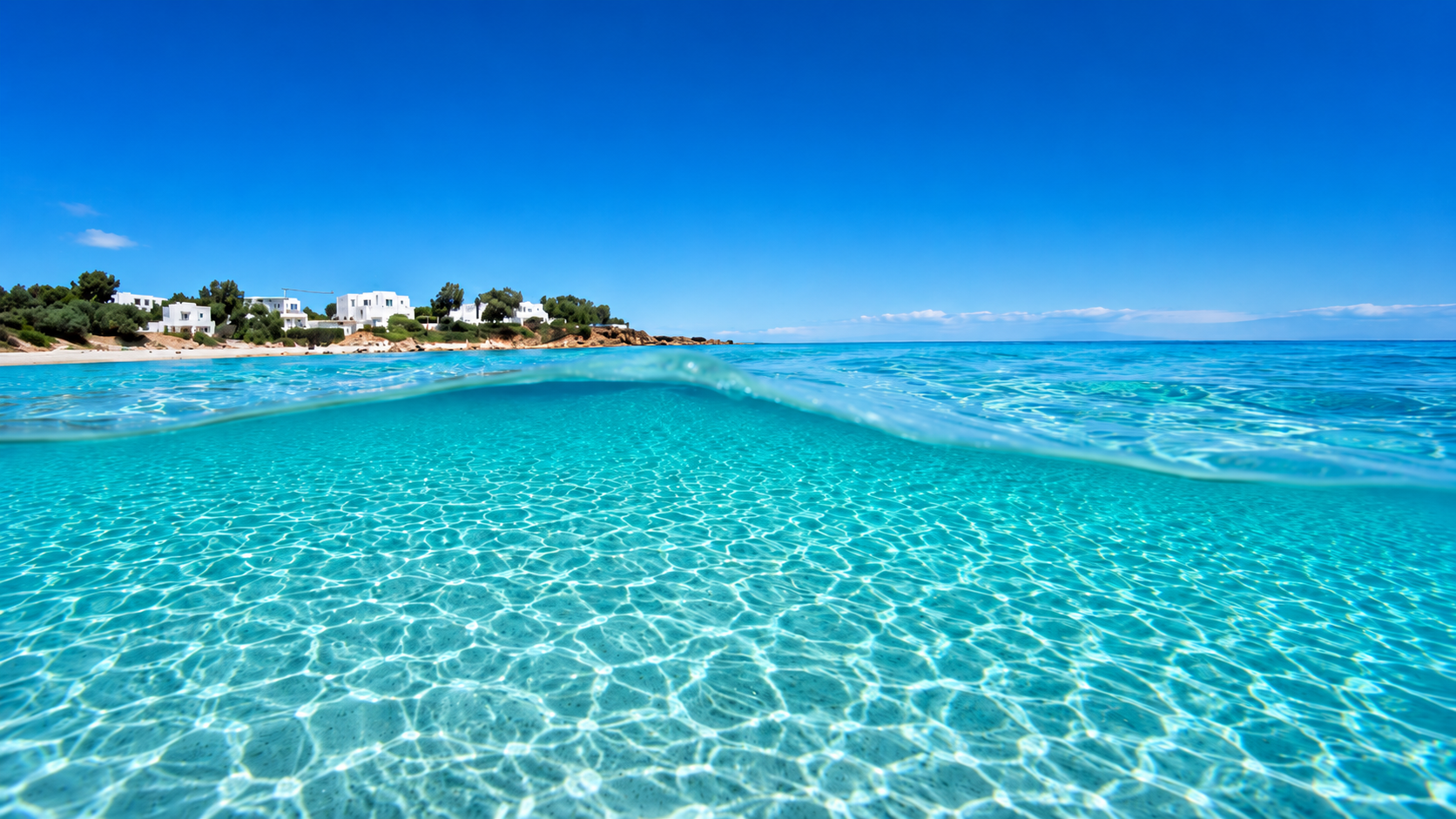
Tunisia has an official system for ranking its beaches. It is not an algorithm, and it is not a popularity vote. It is a rigorous environmental certification that has been running for nearly two decades — and its verdicts look very different from the sun-bed strips that fill travel feeds every summer.
The Blue Flag eco-label, known in Tunisia as the Pavillon Bleu, is an international programme run by the Foundation for Environmental Education and has been operating in Tunisia since 2007 through the Agence de Protection et d'Aménagement du Littoral (APAL) and the Association Tunisienne pour la Protection de la Nature et de l'Environnement (ATPNE). The label is awarded to beaches and marinas that satisfy criteria covering environmental education and information, water quality, safety, services, and environmental management.
The Blue Flag is a certification by the Foundation for Environmental Education that a beach, marina, or sustainable boating tourism operator meets its standards. For a beach to be awarded, it must meet at least thirty of the Blue Flag's criteria spanning four categories. The awards are renewed annually, meaning a beach must maintain standards year after year — not simply clear a one-time inspection.
The beaches that hold the distance
Hammamet and Korba are the two names that appear most often in official Blue Flag lists since the programme launched in Tunisia. Both offer public beaches with free access and low-cost parking — their regularity in the rankings makes them a reliable benchmark rather than a one-off distinction.
Hammamet's standing reflects more than its hotel infrastructure. The coastal ribbon at Hammamet stretches for over 14 kilometres along the eastern coast, and all beaches here offer free public access. Pavillon Bleu certifications have been awarded in both Hammamet Nord and Hammamet Sud, as well as at the Hammamet marina.
Kélibia, on the Cap Bon peninsula, is a standout: its public beach at Sidi Mansour has been distinguished multiple times by the Pavillon Bleu, and the American magazine Daily Dig, ranked it seventh most beautiful beach in the world. The sand is particularly white and fine, overlooked by a Byzantine fortress perched on the adjacent cliff.
El Mansoura at Kélibia is regularly cited among the finest stretches of the Tunisian coast, its reputation resting on water transparency described as among the clearest in the country, fine sand, and the backdrop of the Kélibia fort, which adds a historical dimension to the setting.
The south's best-kept secret: Mahdia
Mahdia figures in continental rankings of Africa's finest beaches for its white sand and clear water. Several of its sectors, including Plage Mnirat, have been awarded the Pavillon Bleu. Its advantage is a comparatively modest tourism footprint next to Sousse or Hammamet.
Situated in the Tunisian Sahel, Mahdia, a former Fatimid capital, offers beaches of immaculate white sand edged by some of the most transparent water in the country. The coastal town sits around 200 km south of Tunis; among its beaches, Salakta and Chebba are the most prominent, though rocky sections of the shoreline conceal quieter coves for those willing to look.
Djerba and beyond
Djerba's coastline runs to long, powdery stretches regularly ranked among the finest in the country. The most sought-after spots concentrate in the northeast, where public areas sit alongside private shores attached to larger resorts.
The Pavillon Bleu has also been awarded to the beach at the Penelope Magic Life resort on Djerba, as well as the marina at Monastir, confirming that the island's certification record extends beyond the main resort zone.
For those willing to take a ferry, the Kerkennah Islands, off the coast of Sfax, offer a radically different experience: shallow, almost motionless water, and an atmosphere of rare calm. The archipelago is valued for its authenticity, unhurried pace and absence of large tourist infrastructure.
In the north, Bizerte's coastline remains comparatively untouched. Plage Rimel and the area around Cap Angela, the most northerly point of Africa, stand out for their natural character — a combination of sea, forest and gentle relief that keeps the area well clear of mass-market tourism.
The global confirmation
The official domestic ranking now has an international counterpart. Yasmine Hammamet Beach ranked as the overall winner of TUI's "Beautiful Beach Index" for 2026, scoring 8.10 out of 10, assessed by examining water colour and brightness, sand quality and surrounding natural scenery.
The study drew on satellite image analysis using artificial intelligence tools. Researchers evaluated water colour and luminosity, sand quality, the balance of the coastal landscape and the level of visible urbanisation. Yasmine Hammamet was distinguished by its turquoise water, golden sand and a relatively low level of visible concrete development.
The beach extends for around four kilometres. Turkey was the most represented country in the top ten with four entries, but none overtook the Tunisian station. İçmeler Bay Beach at Bodrum came second with 7.87 out of 10, ahead of Reduit Beach in Saint Lucia at 7.83.
The TUI study is a commercial exercise conducted by a tour operator, and its methodology rewards visual characteristics captured by satellite — not water quality, safety or environmental management. For those latter measures, the Pavillon Bleu remains the relevant benchmark.
A practical note for this summer
For 2026, Tunisia's Ministry of Health has identified 49 points along the coastline where swimming is inadvisable — 21 more than the previous year, a rise of around 75 percent. The governorate of Ben Arous accounts for 17 of those points, with several sites at Radès, Hammam-Lif, Hammam Chott and Ezzahra on the list. Bizerte follows with 11 flagged points, including areas around Menzel Bourguiba, Bizerte Nord and Jarzouna. Tunis records eight sites, mainly at Le Kram and La Goulette.
The Ministry advises the public to use supervised beaches and to follow health recommendations issued during the summer season. The full list of inadvisable sites is publicly available to help visitors choose bathing spots safely.
Tunisia's coastline runs to around 1,400 km, alternating between dramatic rocky shore lined with maquis and Aleppo pines and long sandy beaches. The busiest stretches run south from Cap Bon, at the country's north-east tip, all the way to Djerba — a distance of around 500 km. The Blue Flag list, updated each June, is the fastest way to identify which parts of that arc are performing to a verifiable standard this season.