
Tunisia's foreign currency reserves slip to 97 days of import cover, down three days on the year
The Central Bank of Tunisia published its monetary indicators on Friday showing net foreign assets at 24.53 billion dinars — the lowest daily reading since the spring peak — as summer inflows from tourism and diaspora remittances moderate against a backdrop of rising import costs.
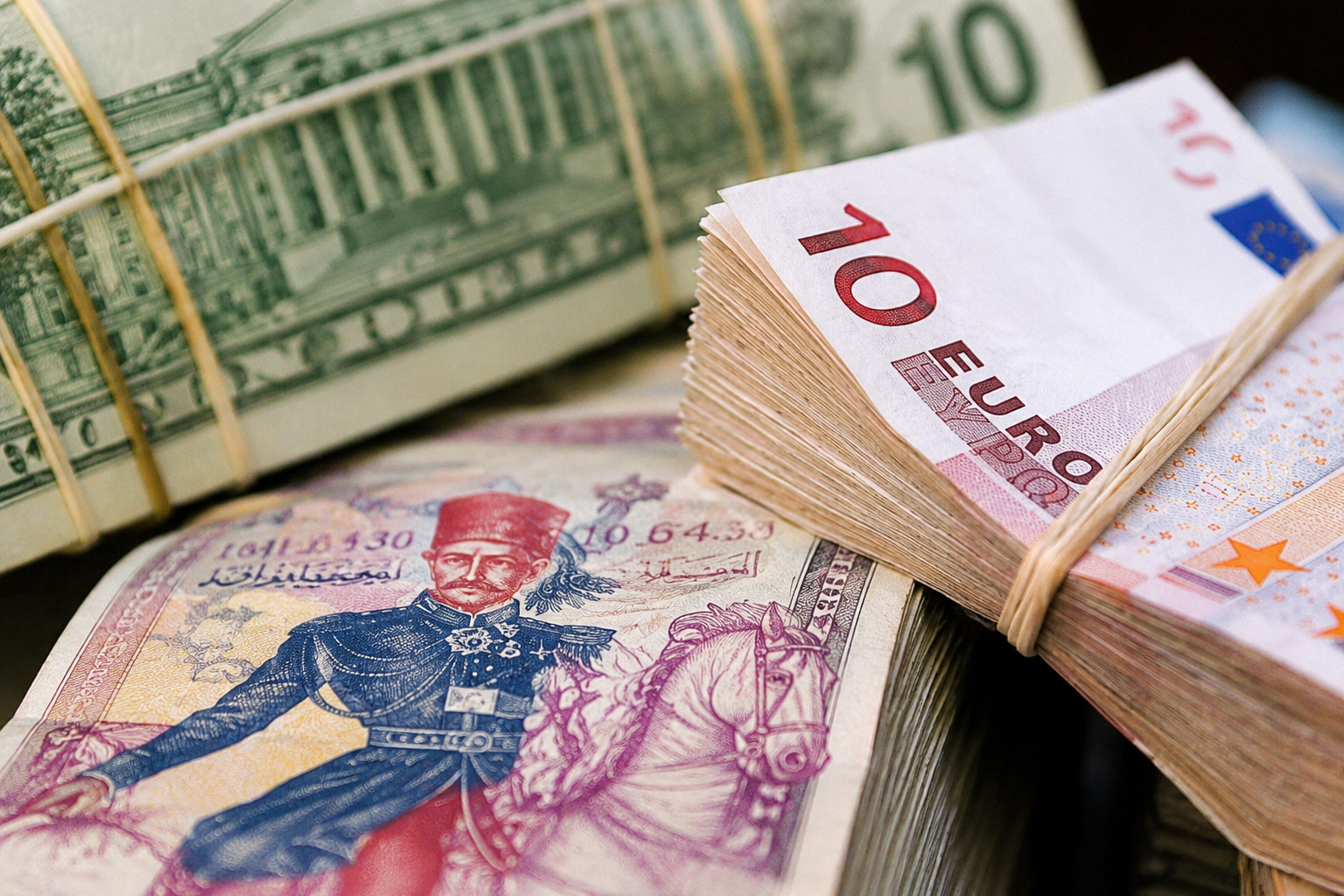
Tunisia's net foreign currency reserves stood at 24.53 billion dinars on Thursday 3 July, the equivalent of 97 days of import cover, according to monetary and financial indicators published that day by the Central Bank of Tunisia (BCT).
The reading marks a decline of three days compared with the same date in 2025 , reversing much of the gains the country had recorded in the first quarter of the year.
The figure follows a steady daily slide from the 2026 peak. Net foreign exchange reserves stood at around 25.4 billion dinars — the equivalent of 107 days of imports — as recently as mid-March 2026. By 1 July they had retreated to 101 days of import cover, with net assets at 24,887 million dinars. A day later, on 2 July, the BCT recorded net assets of 24,894 million dinars, covering 98 days of imports — before the further dip to 97 days on the final reading of the week.
Dinar holds against the euro, slips on the dollar
As of 4 July 2026, the US dollar traded at 2.9 dinars, against 2.8 dinars in 2025, a depreciation of 2.05 percent. The dinar's rate against the euro remained practically stable, with the euro at 3.37 dinars on 2 July 2026 compared with 3.36 dinars on the same date last year.
The dollar weakness of the dinar is significant because Tunisia's energy and commodity imports — the main driver of import costs — are largely denominated in dollars, raising the dinar cost of the same volume of goods and compressing the effective import cover even as the absolute dinar value of reserves has risen year-on-year.
Tourism and remittances provide support
The two main sources of foreign currency inflows held up through the first half of the year. Tourism revenues stood at 3,352.4 million dinars as of 30 June 2026, compared with 3,211.2 million dinars on the same date in 2025 — an increase of 141.2 million dinars year-on-year, according to BCT data.
Remittances from the Tunisian diaspora reached 4,405.2 million dinars as of 30 June 2026, up around 5 percent on the same period in 2025. Combined, the two inflow streams totalled nearly 7.76 billion dinars in the first six months of the year.
The summer peak of both categories typically falls in July and August, when visitor numbers are highest and diaspora transfers cluster around the holiday season, which may offer some support to the reserve position in the weeks ahead.
Context: a year of declining cover
The 97-day reading is the lowest daily figure published since late 2025. As of 19 February 2026, the BCT had reported reserves of 25,152.4 million dinars — 106 days of import cover — compared with 101 days a year earlier. The trajectory from that point has been consistently downward: reserves covered 105 days of imports as of 22 May 2026, against 99 days on the equivalent date in 2025.
The BCT publishes its monetary and financial indicators daily on its website. The next reading is expected on Monday.