
Tunisia's insurance sector sets out five-year plan to cover natural disasters as climate costs mount
The Comité Général des Assurances has published a strategic roadmap for 2026–2030 that places a national natural disaster insurance regime at its centre, with legislation to make such cover compulsory and new risk-modelling tools to price it, as Tunisia faces projected climate losses of up to 6.5 pe
Tunisia's insurance regulator published a five-year strategic roadmap on Sunday that places a compulsory national natural disaster insurance regime at the top of its agenda, as the country confronts rising climate costs and a warning from the World Bank that unmanaged climate risks could shave 6.5 percent from GDP by 2030.
The roadmap for 2026–2030, drawn up by the Comité Général des Assurances (CGA), sets out a comprehensive transformation of Tunisia's insurance sector. Its stated priorities include strengthening the sector's financial solidity and its capacity to fund the national economy, broadening insurance coverage, and improving governance and digitalisation.
At the heart of the strategy is the creation of a national natural disaster insurance system, built on a dedicated legal framework that would guarantee broad, compulsory coverage, alongside advanced technical tools to assess costs and analyse the financial impact on insurers' solvency.
Four pillars of the disaster regime
The authorities plan to establish an integrated natural disaster coverage system anchored in a dedicated legal framework designed to make cover compulsory for all sectors and individuals.
A technical modelling tool will be developed to estimate the precise cost of that coverage and define its parameters, while further studies will assess the effect of the new regime on insurance companies' financial solvency. Public awareness campaigns are also planned to introduce the scheme to the general population.
In parallel, insurers will work on an actuarial model to price the guarantee accurately and calibrate its technical parameters.
The risk backdrop
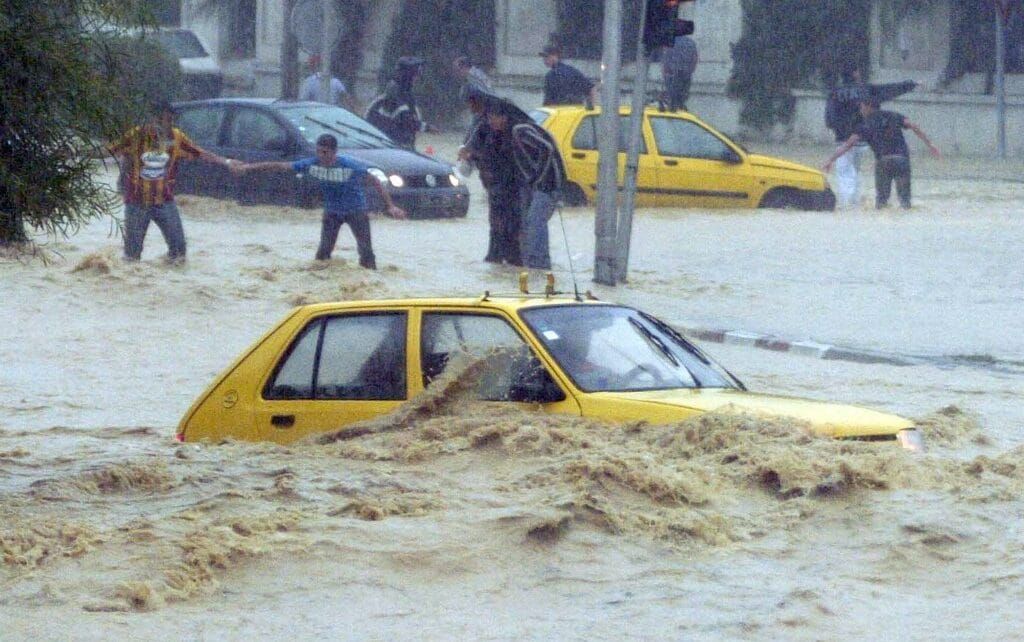
Tunisia is exposed to floods, droughts and coastal erosion; floods alone account for 60 percent of disaster-related economic losses and have affected over 560,000 people. The severity of the problem was underlined in January 2026, when flooding brought the heaviest rainfall in more than 70 years, causing widespread disruption across several regions.
Without adequate mitigation, the economic impact of climate-related challenges could reach 6.5 percent of GDP by 2030 and 9.4 percent by 2050, the World Bank has warned.
Finance Minister Michket Slama Khaldi has noted that Tunisia, as a Mediterranean country, is among the nations most exposed to climate change. Drought accounts for more than half of all natural disasters recorded historically, while floods have generated close to 60 percent of economic losses, with costs reaching up to 1.9 percent of GDP.
Tunisia's climate adaptation financing needs for the period 2026–2035 are estimated at $29 billion, representing 53 percent of total financing needs under the country's Third Nationally Determined Contribution. The water sector carries the largest share of that requirement, at $10.7 billion, followed by agriculture and food at $8 billion.
Agriculture, the Insurance Code and motor reform
The 2026–2030 strategy also covers agricultural insurance, with plans to improve risk management, diversify products and progressively extend mandatory cover to certain categories, backed by training programmes for farmers, intermediaries and damage assessment experts.
A revision of the Insurance Code is planned, with the aim of strengthening life insurance, developing supplementary pension products and broadening the distribution network to include financial institutions and the stock exchange as authorised intermediaries.
The roadmap also envisages an overhaul of the motor insurance framework, including modernisation of its regulatory structure.
World Bank engagement
The World Bank and the Tunisian government are expanding their existing partnership through additional financing for the $125 million Tunisia Integrated Disaster Resilience Program, known as ResCat, with an extra $50 million earmarked to extend urban flood protection to Western Tunis, Gabès and Djerba.
The parent programme, co-financed with the French Development Agency, has already helped protect nearly 170,000 vulnerable people from urban flooding and supported the rollout of pilot early warning systems, as well as work on a disaster risk financing strategy and a permanent institutional structure to coordinate resilience efforts.
The CGA's broader objective is to consolidate the dual economic and social role of the insurance sector, channelling a greater share of national savings into productive investment while raising the industry's contribution to GDP.