
Tunisia's main trade union sets out tax and spending demands for the 2027 budget law
The Tunisian General Labour Union has sent the Finance Ministry a formal position paper calling for a higher income tax threshold, a sharp rise in public investment and a rebalancing of state borrowing, warning that the government's draft budget guidance points towards austerity.
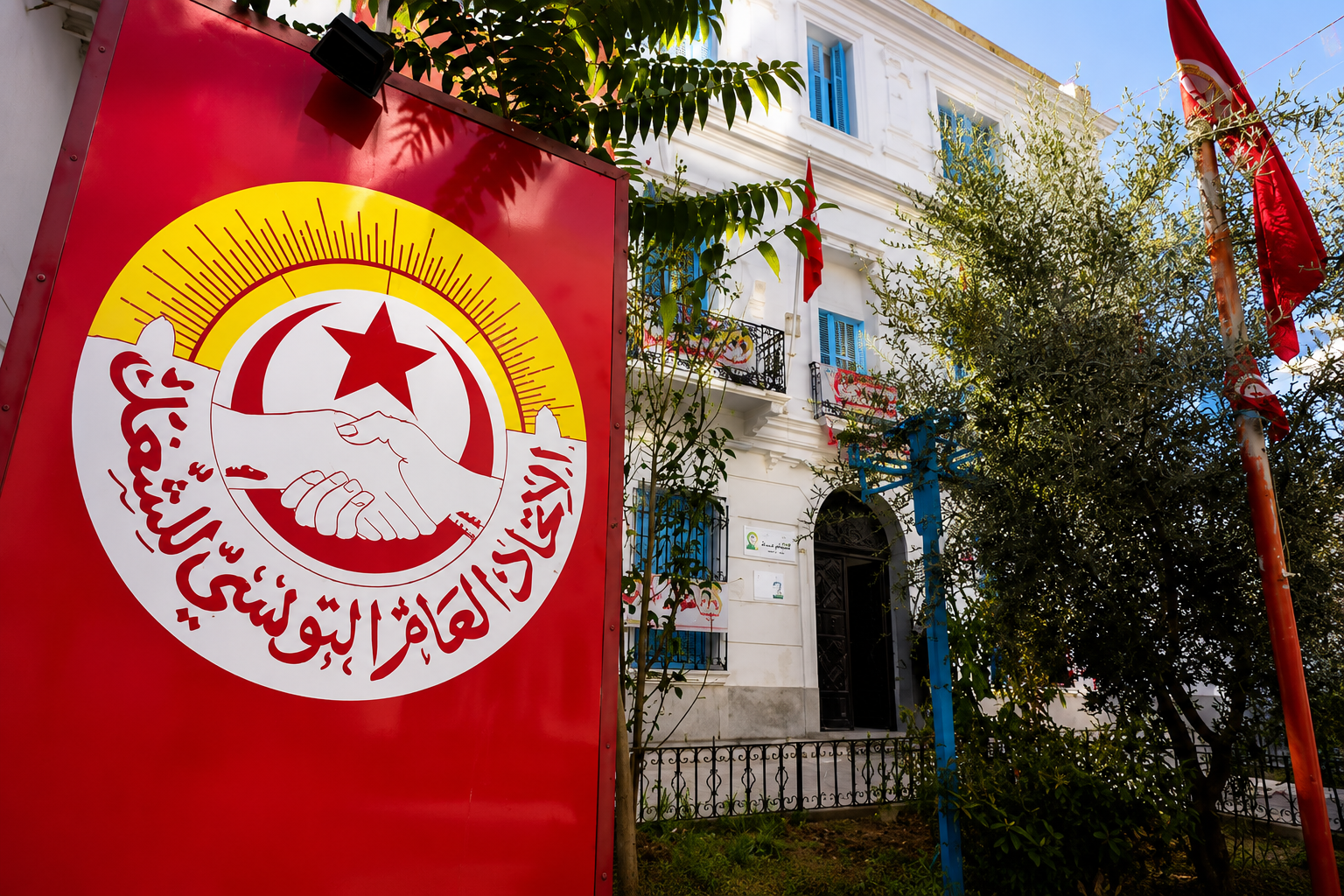
Tunisian General Labour Union (UGTT), submitted a formal position paper to the Finance Ministry on Thursday 2 July setting out its proposals for the 2027 finance law, calling for a higher income tax threshold, a substantial increase in public investment and a restructured approach to state borrowing.
UGTT Secretary-General Slaheddine Selmi signed the document and addressed it to the Finance Minister in response to a formal consultation the ministry had opened with social partners on the preparation of the 2027 budget, the state news agency TAP reported.
Income tax overhaul
On personal taxation, the union called for an overhaul of the personal income tax (IRPP) schedule to strengthen its progressivity. Its proposals include raising the tax-free threshold from 5,000 to 7,000 dinars, extending the bracket structure from seven to nine tranches, and setting the ceiling of the top bracket at 100,000 dinars to ease the burden on upper-middle earners.
The 7,000-dinar threshold would align the exemption limit roughly with the level of the minimum wage.
The UGTT also called for a review of salary-related tax deductions, either by removing the cap on professional expense deductions or raising it to 4,000 dinars a year, alongside an increase in the family-head deduction to 1,000 dinars and the child deduction to 300 dinars.
Public investment
The union noted that public investment had averaged only 6 percent of the state budget over the past five years. While the 2026 finance law raised investment credits by around one billion dinars to reach 6.4 billion dinars, the UGTT said that level remained well below the historical norm of between 10 and 15 percent of the budget.
It proposed raising investment credits to 8 billion dinars, equivalent to 10 percent of the state budget, to revive major structural projects in infrastructure, construction and transport.
Debt and borrowing
On public debt management, the UGTT called for a better balance between domestic and external resources, stronger financial diplomacy to mobilise foreign funding, and greater transparency in the borrowing strategy. It recommended restricting Central Bank of Tunisia (BCT) advances exclusively to investment expenditure and reactivating the national bond mechanism.
BCT advances have reached what the union described as an unprecedented level of around 11 billion dinars. The national bond had been abandoned since 2024.
The union said greater mobilisation of external resources would reduce pressure on BCT foreign currency reserves and diversify external financing, which it described as now heavily concentrated around the African Export-Import Bank (Afreximbank), which had become the principal external budget lender over the previous three years.
It noted that 1.9 billion dinars of external resources programmed in the 2026 budget still had no clearly identified origin. It also flagged the absence of a precise roadmap for Tunisia's return to international financial markets, through which 1.374 billion dinars had been planned.
Public enterprises
On the public commercial sector, the UGTT proposed replacing the current policy of financing deficits with one focused on investment and restructuring plans, naming the Gafsa Phosphate Company and Tunisair specifically, and suggested the creation of a dedicated national fund for public enterprise reform.
Austerity objections and social dialogue
The UGTT also expressed reservations about the government's budget preparation circular, which it said reflected an austerity approach likely to affect the quality of public services. It criticised the cap on civil service promotions, the absence of concrete measures against precarious employment and the lack of provisions to protect the purchasing power of low-income households and the middle class.
The union said the 40-percent ceiling on promotions was an affront to the principle of professional merit.
The UGTT called on the Finance Ministry to open a genuine consultation process on the 2027 finance bill, to incorporate agreements already reached with the union into the draft law, and to publish the bill and all accompanying budget documents as soon as the Council of Ministers adopts them, so that social partners can examine them before the text is transmitted to parliament.
Secretary-General Selmi formally requested a working meeting between Finance Ministry officials and the UGTT's team of experts to go deeper into the budget orientations and examine the union's proposals.