
Tunisia's Remittance Engine Is booming
Tunisians abroad sent home $3.26 billion in 2024 — more than ever before, and nearly 4.5x the country's FDI. Here's how the diaspora became Tunisia's most reliable economic lifeline.
📊 Data Story
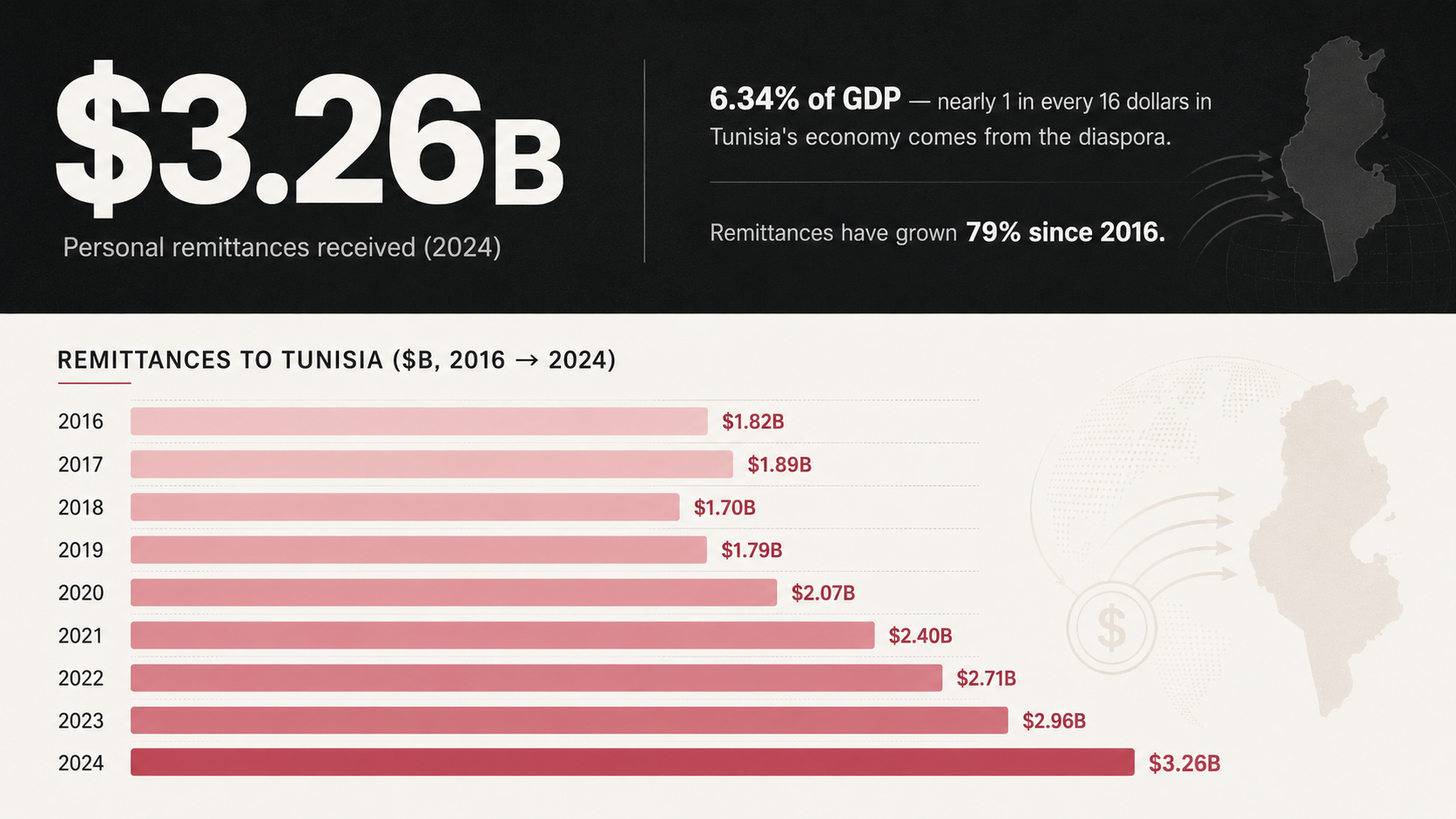
$3.26B
Personal remittances received (2024)
6.34% of GDP — nearly 1 in every 16 dollars in Tunisia's economy comes from the diaspora. Remittances have grown 79% since 2016.
Remittances to Tunisia ($B, 2016 → 2024)
📈 The gradient from light pink to deep red tells the story — 79% growth since 2016, with the post-pandemic surge sustained into a new all-time high in 2024. Source: World Bank.
The Diaspora in Numbers
~1.5M
Tunisians living abroad — roughly 12% of the population
Europe is home to ~80%
$2,173
Average annual remittance per Tunisian abroad
Above MENA average
79%
Growth since 2016 — from $1.82B to $3.26B
Outpacing inflation
How Tunisia Compares
Remittances across MENA ($B, latest available)
🇪🇬 Egypt
$29.56B
🇲🇦 Morocco
$12.51B
🇱🇧 Lebanon
$6.70B
🇯🇴 Jordan
$4.43B
🇹🇳 Tunisia
$3.26B
🇩🇿 Algeria
$1.80B
Tunisia ranks 3rd in the Maghreb by total remittances, but adjusted for population size ($486 per capita), it leads the region.
Why This Matters
Remittances vs Other Foreign Currency Sources (2024)
$3.26B
Remittances
4.3×
larger than FDI
$0.76B
Foreign Direct Investment
More stable than exports. Remittances are counter-cyclical — they rise when Tunisia's economy struggles, acting as an automatic stabiliser.
Lifeline for the dinar. Remittance flows help offset Tunisia's trade deficit and support foreign exchange reserves.
$9 million every single day. That's how much Tunisians abroad send home — quietly, without negotiations or conditions.
The Takeaway
The diaspora has become Tunisia's most reliable economic partner.
While governments debate investment codes and IMF programmes, Tunisians abroad are already voting with their wallets. The challenge for policymakers is no longer how to attract more remittances — it's how to channel this $3.26 billion annual flow into productive investment that creates jobs at home.