
Tunisia’s young doctors return, but the public hospital crisis remains
The Tunisian Young Doctors Organisation resumed activity on May 19 after a five day suspension, days before releasing a study showing widespread violence against medical staff.
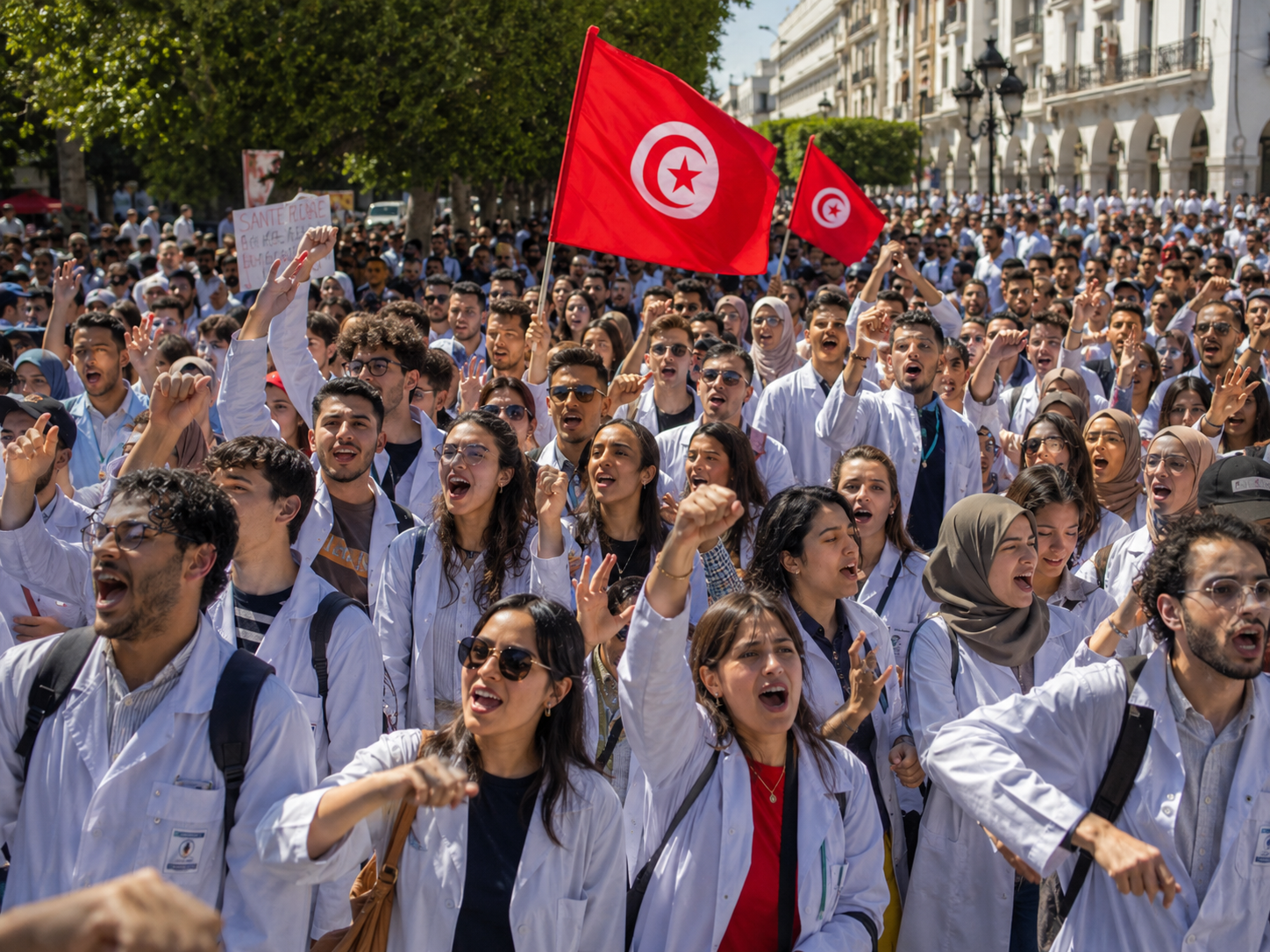
The Tunisian Young Doctors Organisation resumed its activities on May 19 after negotiations with the Health Ministry, five days after it was notified of a one month suspension by the Presidency of the Government.
The suspension, issued on May 14, came less than 24 hours before the organisation was due to hold a press conference on the state of public hospitals and security failures affecting medical staff. The organisation later rescheduled the event for May 22, when it presented a survey on violence in hospitals.
According to the organisation's president, Wajih Dhokkar, the survey covered around 730 young doctors across Tunisia's 24 governorates. La Presse reported that 73 percent of respondents said they had experienced at least one episode of violence during the first three to four years of their careers.
The timing of the suspension turned a health sector dispute into a civic space issue. Dhokkar described the decision as political rather than legal. The organisation said it did not receive public funding or foreign donations and operated through contributions from young doctors. Several Tunisian and regional rights groups read the measure as part of a wider tightening around associations and independent professional bodies.
TAP reported that the May 14 decision was officially lifted on May 19 following the negotiations. The organisation called the reversal a victory for the right of independent structures to organise, speak and act freely.
The episode came during a long confrontation between young doctors and the public health system they help keep running. In 2025, strikes and protests by interns, residents and medical students focused on pay, hospital security, medical equipment, compulsory civil service and the conditions under which doctors are trained before entering the profession.
The departure figures give the dispute its weight. Le Monde reported in May 2025 that around 6,000 doctors had left Tunisia over the previous four years, most of them young practitioners. It cited professional sources saying that between 1,300 and 1,500 doctors had been leaving the country each year since 2021, compared with roughly 800 new graduates annually. Tunisian outlets later reported figures from the Young Doctors Organisation indicating that about 1,600 of 1,900 doctors trained in 2025 had left the country, more than four fifths of the class.
The pressure on the health system is felt by patients before it appears in official statements. Nawaat reported in March that families were exchanging pharmacy addresses between regions and using social media groups to locate vital medicines, sometimes even abroad. Families have been improvising like this for years. In an earlier report from the Béchir Hamza Children's Hospital in Tunis, a mother named Fatima said Hydrea, a treatment used for cancer and blood disorders, had been unavailable for two months at the hospital pharmacy while she waited for one of her children to undergo a scan.
Those cases sit inside a wider supply problem. In January 2026, the National Council of the Order of Pharmacists warned of shortages affecting vital medicines, including treatments for thyroid conditions, bipolar disorder and hyperactivity, as well as powerful painkillers used by cancer patients, including morphine. Pharmacists said some supplies had been interrupted for more than two months, with several imported medicines lacking substitutes on the Tunisian market.
For young doctors, these shortages are part of the working environment. A doctor facing an angry family, a missing drug, a crowded service and limited security is dealing with a system problem at bedside level. The violence documented in the organisation's May 22 survey is difficult to separate from that daily pressure.
That is why the suspension mattered. It interrupted a professional body preparing to document violence against medical staff at the moment when that violence had become one of the clearest symptoms of the public hospital crisis.
The reinstatement on May 19 ended the immediate confrontation. Tunisia still faces a health system strained by insecurity in hospitals, shortages of medicines and equipment, and the departure of doctors the country has spent years training.
The next test is whether the Health Ministry treats the young doctors' study as a warning, or whether the brief suspension becomes another episode in a cycle of confrontation, negotiation and delay.