
U.S. marks 250th anniversary in Tunis as defence ties remain central to partnership
The US Embassy in Tunis has marked the 250th anniversary of the Declaration of Independence at its annual reception, days after the US government handed over 48 armoured vehicles to the Tunisian Army at El Aouina Military Base.
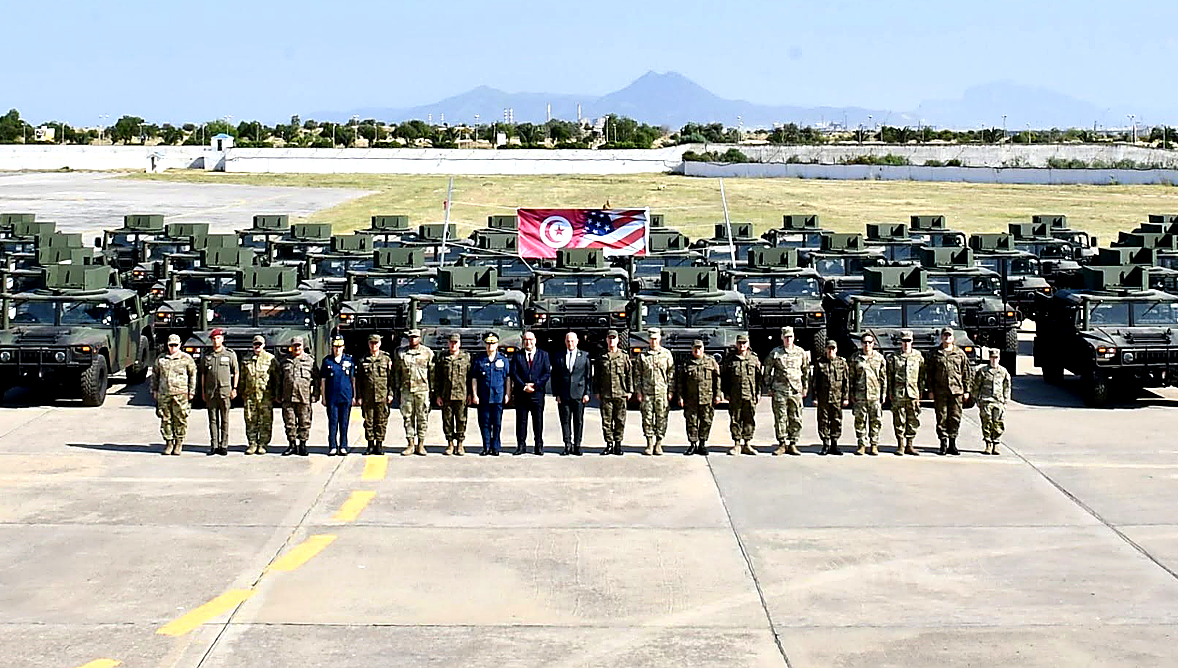
The US Embassy in Tunis has marked the 250th anniversary of the Declaration of Independence at its annual Independence Day reception, as Washington continues to underline security cooperation as a central part of its relationship with Tunisia.
US Ambassador Bill Bazzi hosted the reception in Tunis, attended by Foreign Minister Mohamed Ali Nafti, senior Tunisian officials, diplomats and partners.
The event formed part of wider commemorations ahead of the United States' 250th anniversary on 4 July 2026.
In a separate ceremony, the US government handed over 48 armoured High Mobility Multipurpose Wheeled Vehicles to the Tunisian Army at El Aouina Military Base in Tunis, according to the US Embassy.
The embassy said the transfer was part of long running US support for Tunisia's defence capabilities and its security partnership with the Tunisian armed forces. The vehicles are intended to support mobility, protection and operational readiness for army units.
Tunisia and the United States have maintained close defence cooperation over the past decade, including training, equipment transfers and joint exercises such as African Lion, focused on border security, counter terrorism and regional stability. Washington designated Tunisia a major non-NATO ally in 2015, a status held by a small group of close partners outside the alliance.
The partnership deepened after the spread of the Islamic State across the region and Tunisia's 2016 Ben Guerdane attack, when Islamic State fighters crossed from Libya and stormed army and police posts in the southern border town in an attempt to seize it. Much of the US assistance since has been directed toward Tunisia's long frontier with Libya and the threat from cross border armed and smuggling networks.
The latest handover follows US approval earlier this year of a possible 95 million dollar foreign military sale to support the next phase of Tunisia's border security project. That package includes surveillance, detection, communications and command systems designed to strengthen border monitoring and response capacity.
The embassy's anniversary reception placed the security relationship within a wider diplomatic frame. US officials have described ties with Tunisia as longstanding, pointing to cooperation in education, trade, cultural exchange and defence.
Tunisia has also broadened its defence suppliers in recent years, ncluding through the acquisition of armoured vehicles and drones from Turkey alongside older American and French equipment, under a military modernisation plan running to 2030.
The US partnership remains among Tunisia’s oldest and largest defence relationships, and one of several the country maintains.
For Tunisia, the relationship remains important at a time of economic pressure, regional instability and continuing security demands along its borders with Libya and Algeria. For Washington, the anniversary year is an occasion to restate the areas where the partnership stays active, with defence cooperation at its core