
Venezuela earthquake death toll reaches 1,719 as NASA satellite data shows nearly 59,000 buildings damaged or destroyed
Twin earthquakes that struck northern Venezuela on 24 June have killed at least 1,719 people and injured more than 5,000, while a preliminary NASA satellite assessment puts the number of buildings likely damaged or destroyed at 58,870 — a scale of destruction that experts warn may still be a signifi
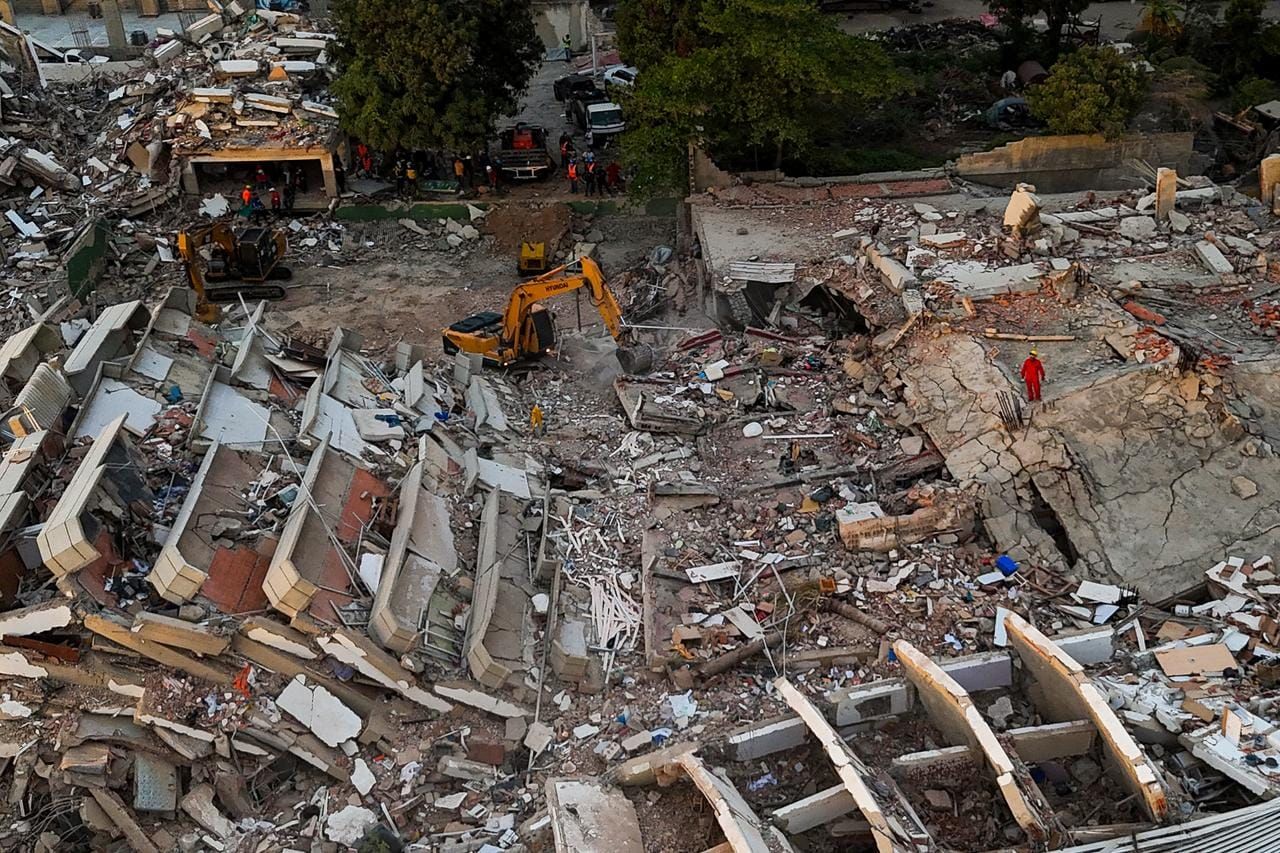
Twin earthquakes that struck northern Venezuela on Wednesday 24 June have killed at least 1,719 people and injured more than 5,034, while a preliminary assessment of satellite data published by NASA puts the number of buildings likely damaged or destroyed across the affected region at 58,870 — a figure that researchers caution is still unverified on the ground.
Venezuelan National Assembly president Jorge Rodríguez confirmed the latest toll on Monday. Tens of thousands of people remain missing, with rescue operations still under way more than six days after the disaster.
The earthquakes
The first tremor, a magnitude 7.2, struck at 18:04 local time, with its epicentre near Yumare in Yaracuy state, roughly 160 kilometres west-northwest of Caracas. A magnitude 7.5 mainshock followed just 39 seconds later from nearly the same location. Both events were shallow-depth strike-slip ruptures along the San Sebastián fault system, part of the complex boundary between the Caribbean and South American tectonic plates.
Seismologists describe the sequence as an "earthquake doublet" — two distinct events with near-identical hypocentres and magnitudes. The Mw 7.5 mainshock is the strongest to hit Venezuela since a magnitude 7.7 earthquake struck northeast of Caracas in 1900. The US Geological Survey issued a red PAGER alert for both events, indicating that high casualties and extensive damage were probable.
Strong shaking was also felt in Bogotá and parts of northeastern Colombia, in northern Brazil, and in the Caribbean islands of Aruba, Bonaire and Curaçao. More than 130 aftershocks have since been recorded. A 4.6-magnitude aftershock jolted the northern coast on Monday, sending residents in Caracas into the streets; the USGS placed its epicentre north of Caraballeda. National Assembly president Rodríguez said there were no immediate reports of additional damage from that tremor.
Scale of destruction
The satellite damage assessment, published by NASA and conducted by researchers Corey Scher and Jamon Van Den Hoek of Oregon State University, drew on radar imagery from the European Space Agency's Sentinel-1 satellite gathered on 25 June — the day after the quakes. The researchers compared those images against a database of 65 reference images from the preceding year.
"Approximately 58,870 buildings were likely damaged or destroyed across the affected region," the researchers wrote, adding that the figure "reflects abrupt surface change consistent with damage" and should be read as an indicator rather than a confirmed count. NASA said its satellites were providing "critical support, capturing imagery and data to help teams on the ground assess impacts and guide response efforts."
Sentinel-1 analysis found that more than half the buildings in Caraballeda, Macuto, Naiguatá, La Guaira and Catia La Mar had a damage probability of at least 75 percent.
Venezuelan authorities have separately reported that nearly 800 buildings collapsed nationwide, including 189 total collapses. The gap between that official figure and the satellite estimate reflects both the difficulty of ground verification and concerns — raised by the Venezuelan human rights organisation PROVEA — about inconsistencies in government casualty and damage updates. The New York Times reported on 29 June that the official death toll may be a "substantial undercount", and that it could take weeks to establish the true scale of destruction.
Heavy damage has been attributed in part to substandard construction and the collapse of older residential buildings, particularly multi-storey apartment blocks along the La Guaira coastline.
Response
Acting president Delcy Rodríguez declared a nationwide state of emergency in the hours after the quakes, designated La Guaira a disaster zone and ordered medical staff to report for duty as hospitals struggled with rising casualties. The main road between La Guaira and Caracas was closed to allow emergency vehicles through, with civilians requiring permission to pass checkpoints.
Venezuelan authorities say they have received support from 24 countries, which together have sent more than 500 tonnes of supplies, around 2,700 rescue and support personnel and approximately 86 teams with search dogs. The United States has committed $150 million in aid and deployed around 300 first responders on the ground, alongside two dozen C-17 military transport aircraft bringing supplies daily, a senior State Department official said. Three American citizens have died; 12 remain missing.
UN aid chief Tom Fletcher said the organisation was determined to get help to those still trapped. The International Federation of Red Cross and Red Crescent Societies released $2.5 million to support recovery efforts. India sent two aircraft carrying a 41-member medical team, a field hospital unit and 36 tonnes of relief supplies and medicines.
On Sunday, Venezuelan authorities said rescue teams pulled a 21-year-old man named Aaron Levi alive from a collapsed building in La Guaira after 106 hours trapped under rubble — a rare success in what officials and aid organisations describe as an increasingly desperate humanitarian situation. The USGS's PAGER modelling indicates the eventual death toll could climb significantly higher as rescue teams reach areas that remain inaccessible.
This is a developing story.