
Venezuela earthquake death toll rises to 235 as international rescue teams flood in
Two back-to-back earthquakes measuring 7.2 and 7.5 struck northern Venezuela on Wednesday evening, flattening buildings across Caracas and La Guaira in the country's worst seismic disaster in more than a century, with officials warning the toll could climb far higher as hundreds remain trapped.
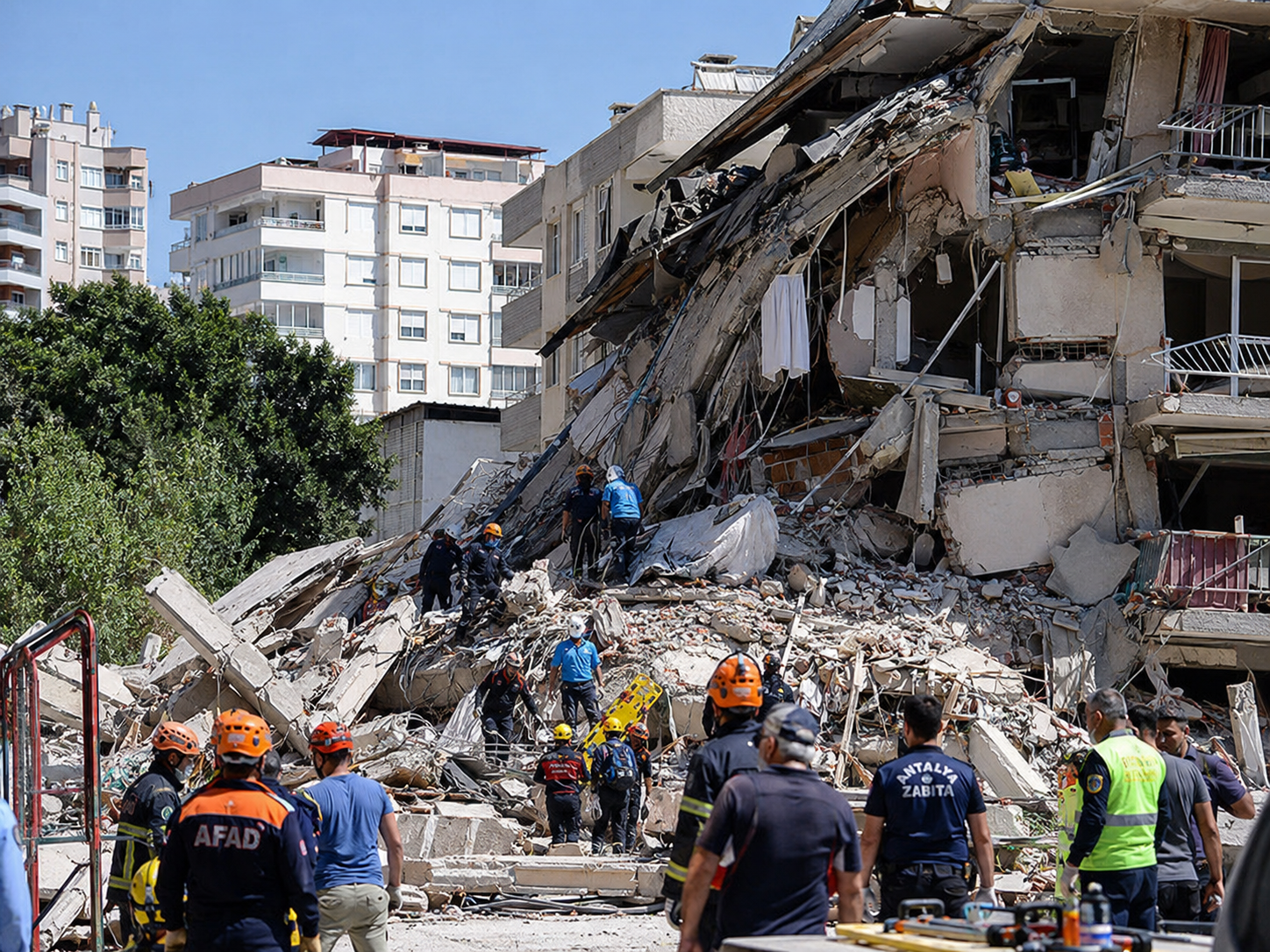
Two devastating earthquakes struck northern Venezuela on Wednesday 24 June, killing at least 235 people and injuring more than 4,300, as international rescue teams raced to reach survivors still trapped under rubble across the capital, Caracas, and the hard-hit coastal state of La Guaira.
Venezuelan Health Minister Carlos Alvarado confirmed the toll on Friday, cautioning that it reflected casualties recorded at hospitals and was likely to climb. A missing persons tracking site has listed tens of thousands of people as unaccounted for, though the figure has not been officially confirmed by the government.
The magnitude 7.5 earthquake was the mainshock in a double event, following a magnitude 7.2 foreshock by 39 seconds, and struck northern Venezuela west of Caracas. It is the largest earthquake to hit Venezuela since 1900, when a magnitude 7.7 tremor struck northeast of the capital.
The first quake struck at around 6:04 p.m. local time, with its epicentre near the coastal town of Morón, about 168 km west of Caracas, at a depth of 22 km. Just 39 seconds later, an even larger tremor ruptured almost the same patch of crust, this time only 10 km deep. The USGS says the mainshock occurred as a result of shallow strike-slip faulting near the complex plate boundary between the Caribbean and South American plates.
24 June is a national holiday in Venezuela, commemorating the 1821 Battle of Carabobo, meaning many people were at home rather than at work when the earthquake struck.
Collapse and crisis
The United Nations reported more than 100 buildings collapsed in La Guaira. Damage has been reported in 250 buildings across La Guaira, Caraballeda and Playa Larga. Simón Bolívar International Airport in Maiquetía sustained significant damage, forcing its closure.
In La Guaira city, volunteers dug through wreckage with their bare hands as families waited for news of missing relatives. Almost 24 hours after the earthquakes, they were still limited to using their hands as the city faced a shortage of heavy machinery. The high number of injured began to overwhelm the José María Vargas Hospital, and some casualties had to be treated outdoors.
Acting President Delcy Rodríguez declared a state of emergency, saying several Venezuelan states had sustained heavy damage, with La Guaira, north of Caracas, hit the hardest. At least 138 aftershocks have followed Wednesday's earthquakes, and seismologists expect they will continue in the coming days.
About 80 percent of Venezuela's population lives in quake-prone areas and many live in houses not built to withstand strong earthquakes. In the Altamira area of Caracas, many of the buildings that collapsed are built on sediments, making them more vulnerable to seismic waves. Informal housing across several areas of the country also offers little protection against strong tremors.
International response
International rescue teams have joined an urgent search for survivors, with countries from across the Americas — including Brazil, Canada, Mexico, Colombia, El Salvador, Cuba and the United States — as well as the United Nations, continuing on Friday to send search and rescue teams and humanitarian aid.
The United States pledged what it called a "whole-of-government response," including plans to deploy warships, transport planes and helicopters, as well as to mobilise $150 million in aid. US Southern Command said it was surging available forces in the region to support relief operations, directing the amphibious transport ship USS Fort Lauderdale and the littoral combat ship USS Billings to the effort. Two elite urban search and rescue teams — from Fairfax County, Virginia, and Los Angeles County — are also deploying.
The US Treasury announced it will allow "all transactions" with Venezuela related to earthquake relief efforts, with the temporary easing of sanctions restrictions authorised from 26 June through 23 October.
Brazilian President Luiz Inácio Lula da Silva announced the dispatch of a field hospital, as well as dozens of firefighters and other support personnel. El Salvador's President Nayib Bukele said he had readied 300 rescuers and paramedics, and 50 tonnes of equipment, medicines and basic supplies. Cuban health workers were already "fully mobilised and providing medical services to the affected population," said Havana's Foreign Minister Bruno Rodríguez.
China, which has close ties to Venezuela, said it was "willing to provide assistance within its capabilities," with Chinese-funded companies in Venezuela already mobilised to help with rescue and clean-up operations. Pope Leo sent an initial aid package worth 100,000 euros. The European Union said it "stands ready" to mobilise assistance if it receives a request.
The UN's top humanitarian official, Tom Fletcher, said his office was coordinating the deployment of teams from around the world, noting that nearly 8 million people in Venezuela were already in need of humanitarian support before the earthquakes struck.
Communications blackout
Venezuela has one of the most restricted media landscapes in the world, which has made it difficult for residents and concerned loved ones abroad to obtain information about damage or casualties. More than 200 websites in the country are blocked, including local and international news outlets, social media sites and censorship circumvention tools such as VPNs.
A nearly two-year ban on X in Venezuela has been partially lifted, according to VE sin Filtro, a Venezuelan organisation that monitors internet freedom. The United Nations called on Venezuelan authorities to urgently lift restrictions on access to media outlets, saying the ability to receive information would soon become "a matter of life and death."
Toll likely to rise
The USGS, using predictive modelling to estimate the eventual death toll, said it would most likely run into the thousands and has a substantial probability of exceeding 10,000. The agency assessed that "high casualties and damage are probable, and that the disaster is likely widespread."
Venezuela's acting president announced an initial $200 million reconstruction fund, using resources from the International Monetary Fund, for hospitals and homes damaged by the earthquakes.
This is a developing story.