
Washington's patience with Israel is running out, and Netanyahu knows it
From a leaked phone call in which Trump called Netanyahu "crazy" to a US-Iran ceasefire deal that excluded Israel entirely, the signals of a fraying alliance are now too consistent to dismiss as tactical friction.
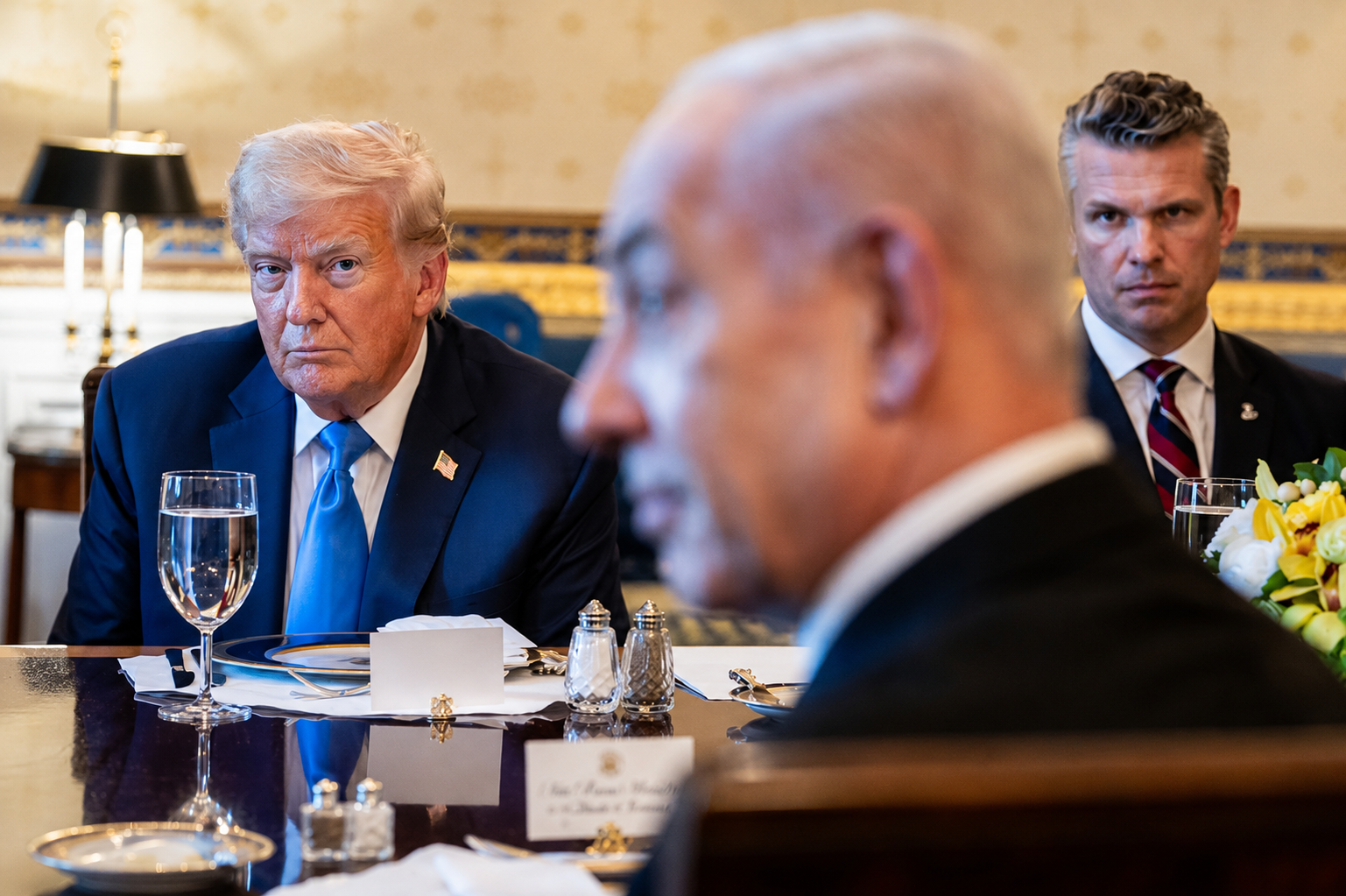
On Monday 6 July, a question that would once have seemed almost unthinkable is circulating openly in Israeli political and media circles: is Washington finally preparing to distance itself from Israel?
The evidence is not a single rupture. It is a pattern — a leaked phone call, a peace deal signed without Israel at the table, a steady erosion of US public support, and a prime minister fighting for his political survival ahead of an October election while his corruption trial grinds on.
The phone call that changed the tone
In late May, President Donald Trump lashed out atBenjamin Netanyahu in an expletive-laden call, calling him "crazy" and accusing him of ingratitude, according to two US officials and a third source briefed on the call, as reported by Axios. Trump's anger was driven by Netanyahu's decision to escalate in Lebanon, which was threatening to implode his negotiations with Iran.
Two of the sources said Trump claimed he had helped keep Netanyahu out of jail — a reference to his support during Netanyahu's corruption trial. Trump subsequently confirmed the exchange, acknowledging he had used strong language during the call as he sought to curb Israeli military action in Lebanon, with reports by Axios and ABC News indicating he was angered by Israeli threats to target Beirut, fearing that further escalation could undermine efforts to revive negotiations with Iran.
Iran had suspended its ceasefire negotiations with Washington, citing Israel's fresh strikes on Lebanon as incompatible with continued talks. Trump's Iran diplomacy — the signature foreign policy gamble of his second term — was on the edge of collapse. Tehran needed convincing, urgently, that the United States retained genuine authority over Israeli military conduct.
A peace deal that left Israel out
On 17 June 2026, Trump and Iranian President Masoud Pezeshkian signed the Islamabad Memorandum of Understanding to end the war between both countries and Israel, with Trump signing it during dinner with French President Emmanuel Macron at the Palace of Versailles following the G7 summit.
Although Israel participated in the strikes against Iran alongside the US from 28 February 2026, it was not directly participating in the Pakistan-mediated talks. The MOU's first paragraph called for a "permanent termination of military operations on all fronts", including between Israel and Hezbollah in Lebanon — neither of whom were party to the memorandum or the talks.
Israeli officials saw the decision to include Lebanon in the MOU as a concession to Iran by Trump's envoys. Neither Iran's missiles nor its backing for regional allies was mentioned in the US-Iran memorandum of understanding. Ongoing talks, which do not directly include Israel, may expose some divergences between US and Israeli objectives.
Iran has made the end of Israel's war in southern Lebanon a key demand in its negotiations with Washington on an eventual peace deal between the two countries, setting the US and Israel on course for major disagreements.
The domestic pressure on Netanyahu
Netanyahu faces charges of bribery, fraud and breach of trust in three separate cases launched in 2019. The longest-serving prime minister in Israel's history, he is also the first to be criminally charged while in office, and could face up to ten years in prison if found guilty. His cross-examination was completed in June 2026 following, in the court's count, 98 hearings.
Netanyahu is due to run again in a general election in October, but polls remain challenging, with a recent survey showing that a majority of Israelis want him to leave office. Public opinion is critical of the war that Israel and the US launched on Iran in late February, whose ceasefire talks Israel was left out of, leading to a deal viewed as unfavourable to Israel. A recent poll by the Hebrew University of Jerusalem found that over 92 percent of Israelis believe Iran won the war, and support for Netanyahu's premiership fell from 40.5 percent in early March to 29.4 percent in June.
In an interview with Axios, Trump said that Netanyahu "knows who the boss is" — an admission that relations between the two leaders are tense. In a media conference in June, JD Vance described Trump as the only world leader presently sympathetic to Israel.
A structural shift in US public opinion
In 2026, US-Israeli relations remain strategically close, but a key long-term shift is underway: broad US public legitimacy for Israel is eroding, especially among Democrats and younger cohorts. Polling data indicates a sharp decline in Israel favourability and growing opposition to additional military and economic aid, with signs that scepticism is spreading beyond Democratic voters.
Gallup's long-term trend shows the gap in Americans' sympathies narrowing steadily from 2019 onward; by early 2026, Israelis were no longer viewed more sympathetically than Palestinians in the aggregate.
In April, most Democratic senators voted against the sale of $295 million worth of armoured bulldozers and $151 million of 1,000-pound bombs to Israel — the sale was approved anyway, with large Republican support. That was a dramatic shift. Since the start of the war in Gaza in October 2023, Senator Bernie Sanders had tabled four proposals to prevent Washington from selling arms to Israel. The April vote marked the first time a majority of Democratic senators joined him.
The question of military aid is itself being reframed. After months of hints and teases, the Israeli government and its allies in Congress rolled out a new strategy — a package of related measures in the House and Senate — to slowly swap out the nearly $4 billion the US has been spending on direct military aid to Israel each year for a new paradigm of deep technological and supply-chain integration. The ten-year agreement governing US military aid to Israel signed during the Obama administration, which pledged $3.8 billion in annual aid, expires this year, and policy experts have long expected it to be renegotiated under different terms.
Perhaps anticipating this moment, Netanyahu stated in a January interview with The Economist that Israel would not seek a full renewal of the annual $3.8 billion security aid package, and that he ultimately aims to reduce Israeli dependence on the United States to zero.
Not abandonment — but something new
In the short term, policy change will likely remain limited due to entrenched elite consensus and institutional ties, but extraordinary or escalatory support is becoming increasingly politically costly.
The two governments entered the Iran war in late February 2026 in close alignment. In the months since, the divergence has sharpened — not on the question of Iran's nuclear ambitions, where both remain agreed — but on the sequencing of military and diplomatic instruments, and on who gets to decide when the fighting stops. Washington is now managing Israel as a variable in a wider strategic equation rather than treating the alliance as an end in itself.
Netanyahu may be too sanguine about a future for Israel after the end of the special alliance — and, having taken it for granted, he is perhaps more responsible than anyone else for its precipitous decline.
The October election will determine whether Netanyahu remains the man Washington has to deal with. Either way, the alliance that shaped Middle Eastern politics for eight decades is entering territory it has never crossed before.