
World Cup opens under visa rows, ticket anger and immigration pressure
The 2026 World Cup is days from kick-off, but visa denials, airport checks, ticket costs and labour disputes are already testing FIFA’s promise of the biggest global football festival in history.
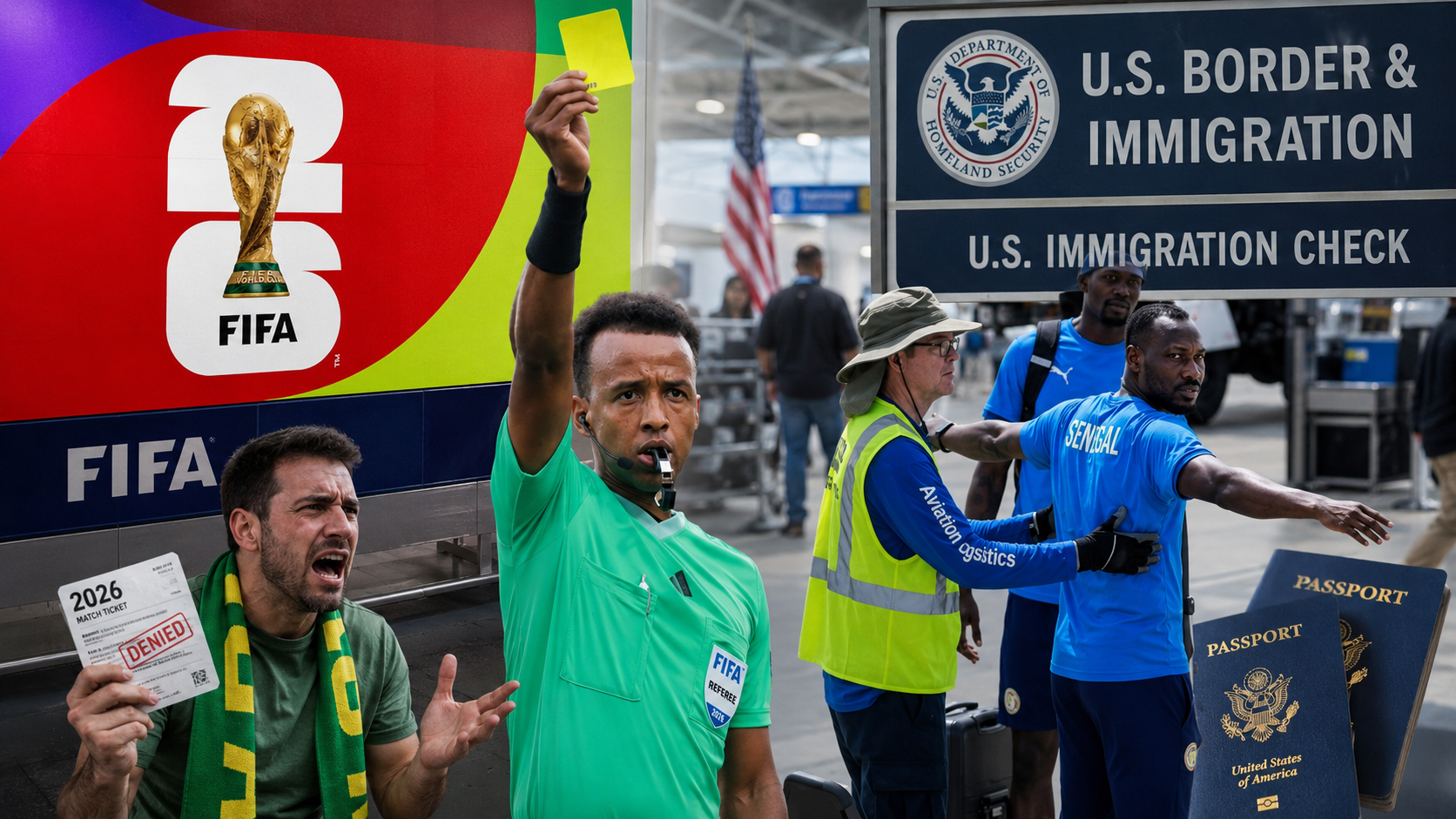
The 2026 World Cup is days from kick-off, but the tournament is already being shaped by a series of visa rows, airport checks, ticket complaints and labour disputes in the United States.
The competition, hosted by the United States, Canada and Mexico, is the largest World Cup ever staged, with 48 teams and 104 matches. FIFA has presented that scale as a celebration of football’s global reach.
The first week has exposed a more difficult question: who can actually enter, work at, officiate or afford to attend the tournament.
The most prominent case is Omar Abdulkadir Artan, the Somali referee selected for the tournament who was denied entry to the United States after arriving in Miami from Istanbul.
Artan had been set to become the first Somali official to referee at a World Cup. Reuters reported that he was on his way back home after the entry denial, while FIFA said he would be unable to train or officiate because tournament referees are based at a Miami hub.
The case drew wide attention because it turned a diplomatic and immigration issue into a football story. Artan was one of the officials selected for the tournament and had been preparing for the biggest appointment of his career.
FIFA has said it is not involved in host country immigration decisions, including visa adjudications, and that final entry decisions rest with the host government.
Iran has also been affected. Its football federation has said its fan ticket allocation for group matches in the United States was revoked. Reports have also pointed to visa problems for Iranian officials and staff, while the team has been based in Mexico despite playing matches in the US.
Iran’s case is politically charged because of the wider conflict with Washington and the travel restrictions affecting Iranian nationals. It also raises a practical issue for FIFA: a tournament marketed as global can be disrupted when host country immigration policy collides with football logistics.
Iraq has faced its own entry problems. Striker Aymen Hussein was questioned for several hours at Chicago’s O’Hare International Airport before being admitted, while team photographer Talal Salah was denied entry.
The Iraqi cases have been reported in the context of suspended US consular services in Iraq, which has made standard visa applications difficult for travelling personnel.
A separate row followed footage of Senegal players undergoing security checks on an airport tarmac before travelling from Raleigh, North Carolina, to San Antonio, Texas, for a warm-up match against Saudi Arabia.
The footage triggered criticism and allegations online of discriminatory treatment. Senegal’s football federation said the checks were carried out under airport security rules and were linked to arrangements allowing the team to board a private flight directly from the tarmac.
The federation’s explanation has not ended the debate, but it gives the incident a different character from the confirmed entry-denial cases. The issue is now one of perception, protocol and the way African teams are treated in highly visible tournament settings.
The problems have fed into broader criticism of the tournament’s organisation. Former England striker Ian Wright described the build-up as a “World Cup of chaos”, pointing to denied entry for referees, fans, officials and journalists, as well as the cost of tickets, accommodation and transport.
Ticket prices have already become a major source of anger. FIFA has said Supporter Entry Tier tickets are priced at $60 for all 104 matches, while wider sales have drawn criticism over variable pricing and high-end prices for premium seats.
The cost pressure goes beyond match tickets. Flights, accommodation, parking, internal travel and replica shirts have all become part of the affordability debate around a tournament spread across three countries and 16 host cities.
Labour tensions have added another layer. Workers at SoFi Stadium in Inglewood, which will be used as Los Angeles Stadium during the World Cup, reached a tentative contract agreement days before the venue’s first match. The deal followed strike pressure from food and beverage workers seeking higher wages and protections linked to immigration enforcement.
Reuters reported that the agreement covers about 2,000 workers and includes a clause allowing strike action if immigration enforcement at the worksite is deemed to threaten worker safety during the tournament.
For fans in Africa and the Middle East, the cases involving Somalia, Iran, Iraq and Senegal have given the build-up a sharper edge. The first ball has yet to be kicked, but the tournament is already being judged on more than football.