
Sidi Bouzid on track to become Tunisia's first governorate to exceed 100 percent electricity self-sufficiency
Tunisia's Agence nationale pour la maîtrise de l'énergie says Sidi Bouzid is set to surpass total renewable electricity self-sufficiency, with more than 400 MW of installed and planned capacity against local demand of around 350 MW, in a model the agency wants replicated across the country.
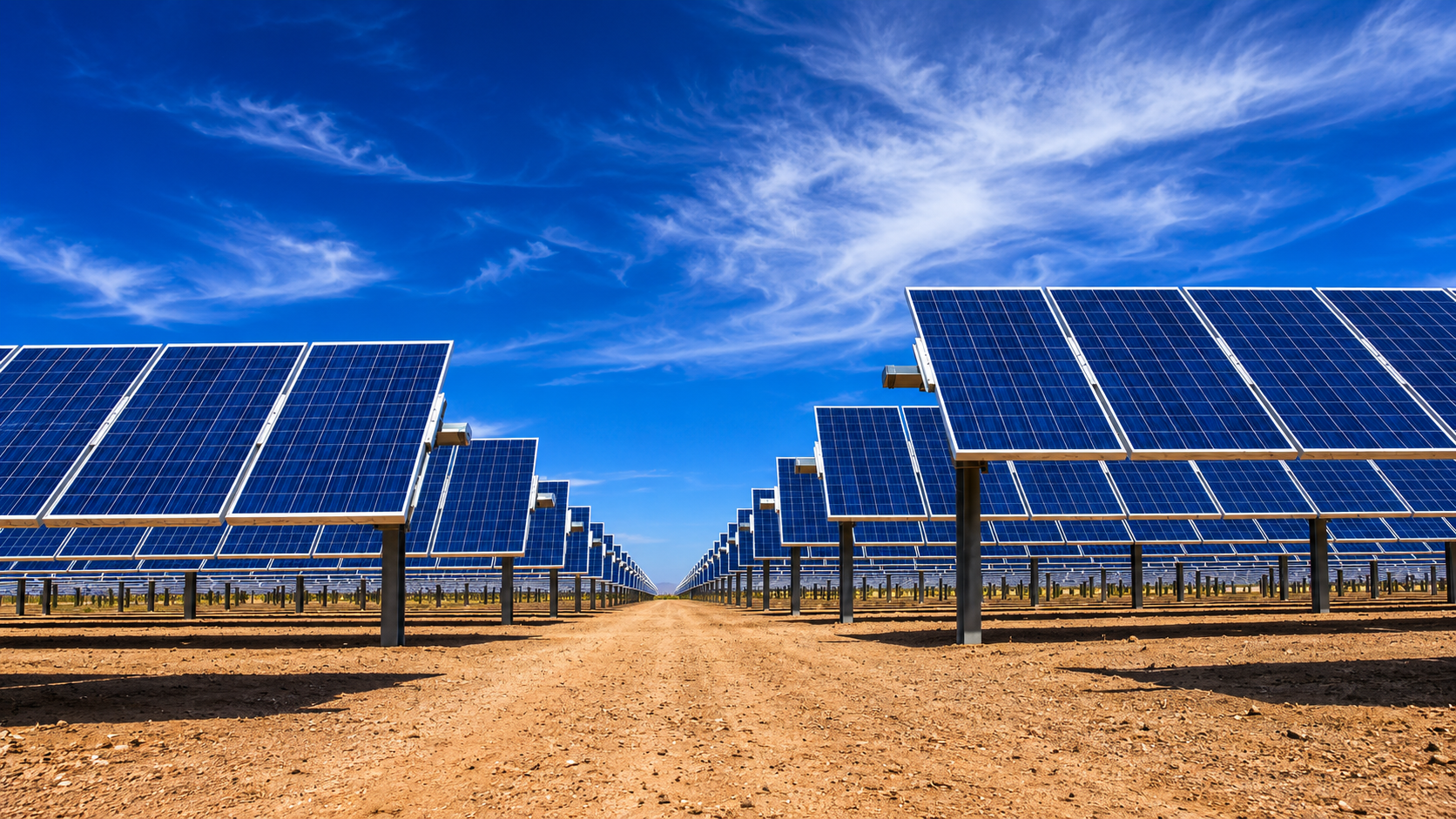
Sidi Bouzid is on course to become the first governorate in Tunisia to produce more electricity from renewable sources than it consumes, the head of the national energy agency said on Thursday 3 July.
Nafâa Baccari, director-general of the Agence nationale pour la maîtrise de l'énergie (ANME), told La Presse de Tunisie that the central governorate's installed and planned renewable capacity is projected to exceed 400 MW against local electricity consumption estimated at around 350 MW — a surplus that would make it Tunisia's first genuinely self-sufficient energy region.
Baccari said the trajectory rests primarily on solar power, with other renewables including wind, biomass and waste-to-energy integrated into the local mix.
Projects already in the ground
The build-up is already well under way. A 60 MW solar plant at Mezzouna, developed by Norwegian firm Scatec ASA and its Japanese partner Aeolus SAS — part of the Toyota Tsusho Group — reached commercial operation with retroactive effect from 1 January 2026 under a 30-year power purchase agreement with state utility Société Tunisienne de l'Electricité et du Gaz (STEG).
A second, larger facility — the 120 MW Sidi Bouzid II plant, also developed by Scatec and Aeolus in equal partnership — reached financial close on 17 June 2026 and has begun construction at a projected cost of €96 million. The plant is expected to reach commercial operation in the second half of 2027 and, according to Scatec, will generate around 276 GWh of electricity a year while reducing CO₂ emissions by approximately 107,000 tonnes annually.
Parliament approved a further set of concessions in April and May 2026, including additional photovoltaic capacity in the governorate granted to French developer Qair International and to the Scatec-Aeolus consortium. Financing for those projects draws on guarantees from the World Bank's Multilateral Investment Guarantee Agency (MIGA), loans from the European Bank for Reconstruction and Development (EBRD) and the European Investment Bank (EIB), and EU grant support through the European Fund for Sustainable Development Plus.
A blueprint for the country
Baccari framed Sidi Bouzid as a test case for a territorial approach to the energy transition, in which each governorate is treated as an autonomous production unit. He said that if around half of Tunisia's governorates achieved 100 percent renewable electricity coverage, the country could reach its overall target of 50 percent renewable generation from that route alone.
Other central and southern governorates are moving in the same direction, he said. Tozeur has the potential to reach up to 80 percent renewable coverage, while Gabès, Gafsa and Kairouan are each progressing towards levels above 50 percent, according to Baccari.
Sidi Bouzid's geographic profile drives the opportunity: the governorate lies around 260 km south of Tunis, in a high-irradiation zone with available land — conditions ANME describes as particularly suited to large-scale solar development.
The national backdrop
Tunisia currently generates around 95 percent of its electricity from natural gas, of which more than 60 percent is imported, leaving the country exposed to price volatility and supply risk. Renewable energy's share of the national electricity mix stood at around 6 percent at the end of 2025 and is projected to reach around 9 to 10 percent by the end of 2026 as new plants come online, according to figures Baccari presented at the ANME's 40th-anniversary national energy congress in May 2026.
Tunisia's stated target is 35 percent of electricity from renewable sources by 2030. Reaching that figure will require sustained investment well beyond what is already committed: the government has in recent years issued tenders for a pipeline totalling more than 1,700 MW of solar and wind capacity across multiple governorates.
ANME's strategy places the centre and south of the country at the core of that buildout, treating regions such as Sidi Bouzid not only as energy consumers but as net producers feeding into a national grid that is also connected to Algeria and Libya and, under the planned ELMED subsea cable, eventually to Italy.